
The Invisibility of Poverty: A Street Art Masterpiece by Kevin Lee
Invincible Art

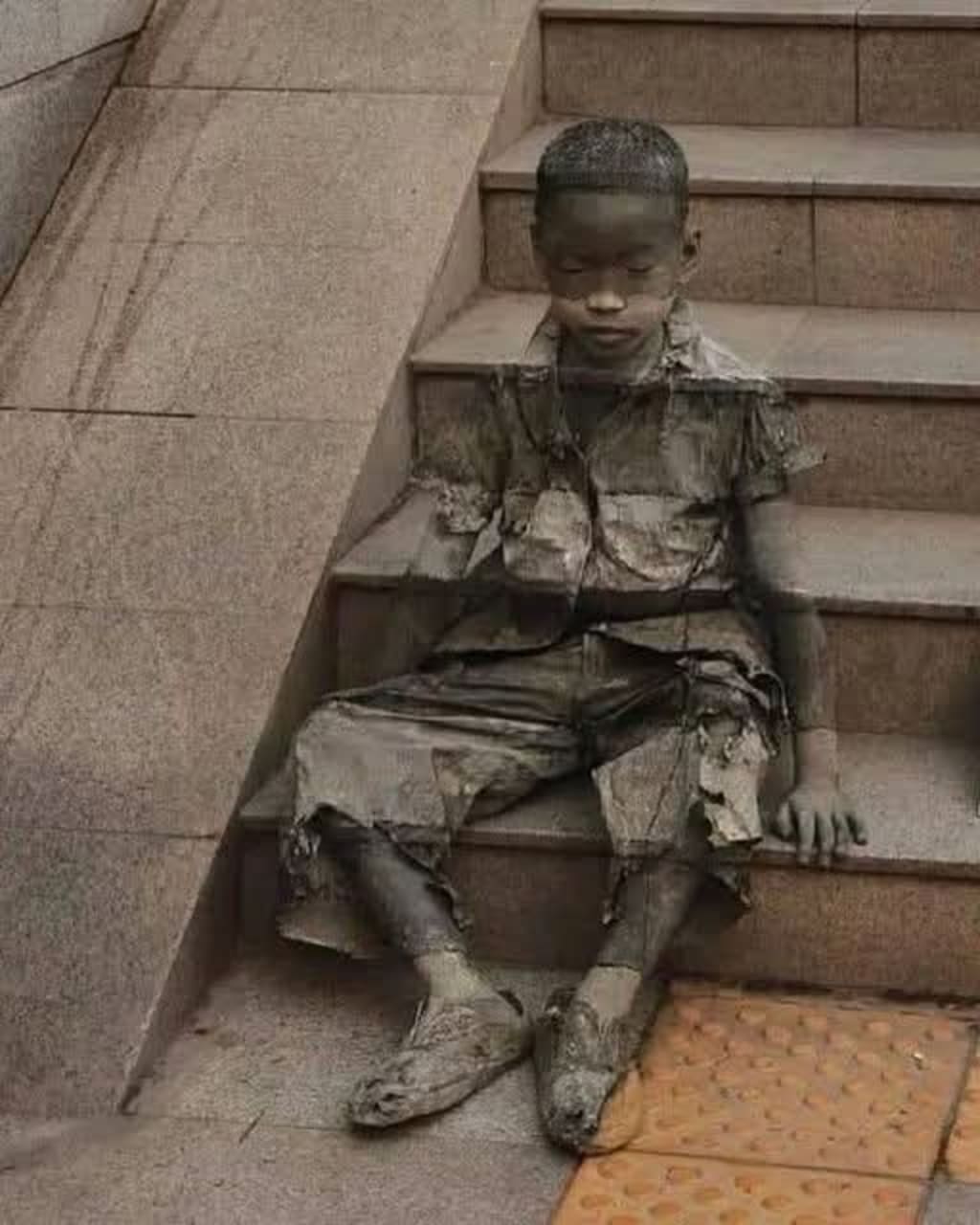
Art has long served as a powerful medium to convey emotions, spark conversations, and shine a spotlight on pressing societal issues. Street art, in particular, carries a rawness and immediacy that few other art forms can match. It exists in public spaces, accessible to all, and often speaks directly to the human condition. One such piece, titled “The Invisibility of Poverty,” created by the street artist Kevin Lee, has recently garnered widespread attention for its poignant commentary on the overlooked struggles of the impoverished.
The Setting: An Urban Canvas
Kevin Lee’s masterpiece graces the side of an abandoned building in an unassuming urban neighborhood. The wall, previously a weathered and graffiti-strewn surface, now serves as the stage for a work of art that stops passersby in their tracks. From a distance, the mural appears deceptively simple, a gray and muted scene that blends into its surroundings. However, as viewers draw closer, they are drawn into a world of intricate details and haunting symbolism that delivers a powerful message about the systemic neglect of those living in poverty.
The Artwork: A Study in Layers
“The Invisibility of Poverty” is a multilayered mural that reflects the complexities of its subject matter. At its center is a shadowy, ghost-like figure representing a person experiencing poverty. The figure appears translucent, blending into the background of bustling urban life. They sit on the ground, hunched over, surrounded by blurred outlines of people walking past, their heads turned away in apathy.
The surrounding environment is painted with vivid, bustling colors—a stark contrast to the muted tones of the central figure. Skyscrapers rise in the background, shining in the golden light of prosperity. People are depicted holding shopping bags, talking on phones, and rushing to their destinations, oblivious to the invisible figure at their feet. The use of contrasting colors and perspectives masterfully highlights the dichotomy between wealth and poverty, presence and absence, visibility and neglect.
Symbolism in the Details
1. The Shadowy Figure: The central figure is deliberately painted in faint, almost ghost-like strokes. This represents how society often overlooks and marginalizes the impoverished, rendering them invisible. Despite their near-transparency, the figure’s posture conveys immense weight—an unspoken testament to the emotional and physical burden of poverty.
2. The Shopping Bags: The brightly colored bags carried by the passing crowd symbolize consumerism and material wealth, juxtaposing the scarcity and need of the central figure. This stark contrast highlights society's focus on excess while ignoring basic human needs.
3. The Background Skyscrapers: The towering buildings in the background represent economic progress and urban development. However, their imposing size and golden hues also serve as a critique of inequality, suggesting that prosperity often leaves the vulnerable behind.
4. The Invisible Hand: In one corner of the mural, a faint, disembodied hand reaches toward the central figure, symbolizing the potential for empathy and intervention that often goes unrealized. The hand is deliberately faint, reinforcing how rare and fragile such gestures can be.
Kevin Lee: The Artist Behind the Vision
Kevin Lee has long been known for his ability to use street art as a form of activism. His works frequently tackle social justice issues, from homelessness to climate change, but “The Invisibility of Poverty” has been hailed as one of his most powerful pieces to date.
In an interview, Lee shared his inspiration for the piece:
> “I’ve walked through cities all my life and seen people struggling, sitting on sidewalks, asking for help, and yet, they’re invisible to so many. It’s not that they’re not there; it’s that we’ve conditioned ourselves not to see them. This piece is a reminder, a mirror, and a challenge to all of us to look closer, to see what we’ve chosen to ignore.”
Lee’s background as a former social worker informs much of his art, lending authenticity and depth to his work. His unique ability to blend realism with abstraction ensures his art resonates both emotionally and intellectually.
Public Reaction
The mural has sparked widespread discussion, both online and in the local community. Visitors have been moved to tears by the piece, with many sharing their personal stories of encountering poverty, either as witnesses or participants.
Activists and organizations addressing homelessness and poverty have praised the mural for bringing visibility to an issue often overlooked in public discourse. Some groups have even used the mural as a rallying point for events, such as food drives and awareness campaigns.
Not everyone has responded positively, however. Some critics argue that art, while powerful, cannot effect tangible change without accompanying action. Others have expressed discomfort with the mural’s stark portrayal of poverty, finding it too confronting. Lee has addressed these criticisms, emphasizing that discomfort is often a necessary precursor to meaningful change.
A Call to Action
At its core, “The Invisibility of Poverty” is not just a work of art—it is a call to action. By highlighting the unseen struggles of the impoverished, Kevin Lee challenges viewers to confront their own biases and assumptions. He invites us to look beyond the surface, to acknowledge the humanity of those often ignored, and to take steps—no matter how small—toward creating a more compassionate and equitable society.
Conclusion
Kevin Lee’s “The Invisibility of Poverty” is more than just a mural on a wall; it is a conversation starter, a mirror reflecting societal apathy, and a beacon calling for change. Through its masterful blend of artistry and activism, the piece leaves an indelible mark on those who encounter it, reminding us all of the power of art to illuminate the unseen and to inspire hope in the face of adversity.
About the Creator
Keep reading
More stories from Deji Akomolafe and writers in Art and other communities.
The Fascinating World of the Fibonacci Sequence
The Fibonacci sequence is one of the most famous and intriguing numerical patterns in mathematics. Discovered by the Italian mathematician Leonardo of Pisa, better known as Fibonacci, this sequence has captivated mathematicians, scientists, and artists alike for centuries. Its applications span mathematics, nature, art, and architecture, making it a universal symbol of balance and harmony.
By Deji Akomolafeabout a year ago in Art
2026 Commercial Space Design:How Fbierglass Sculpture Drives Traffic
Today, offline commercial spaces are facing continuous pressure. With e-commerce offering convenient and fast services, physical stores must showcase unique features to attract customers. In this context, fiberglass sculptures are no longer merely decorative items; they have become visual focal points in shopping malls, brand stores, pop-up shops, and mixed-use commercial projects, playing a crucial role in increasing foot traffic.
By Shenzhen Ruiheng Crafts4 days ago in Art
Why Strategic Branding Is Essential for Long-Term Business Growth
In today’s fast-paced digital environment, businesses face constant pressure to stand out. Consumers are exposed to endless choices every day, making attention harder to earn and trust harder to keep. While quality products and services are important, they are no longer the only factors that determine success. Strategic branding plays a key role in helping businesses grow steadily and remain relevant over time.
By Ayush Bagwari4 days ago in Art



Comments
There are no comments for this story
Be the first to respond and start the conversation.