
The Heir of the Fields
A tale of friendship, fate, and a child’s unimaginable resolve.

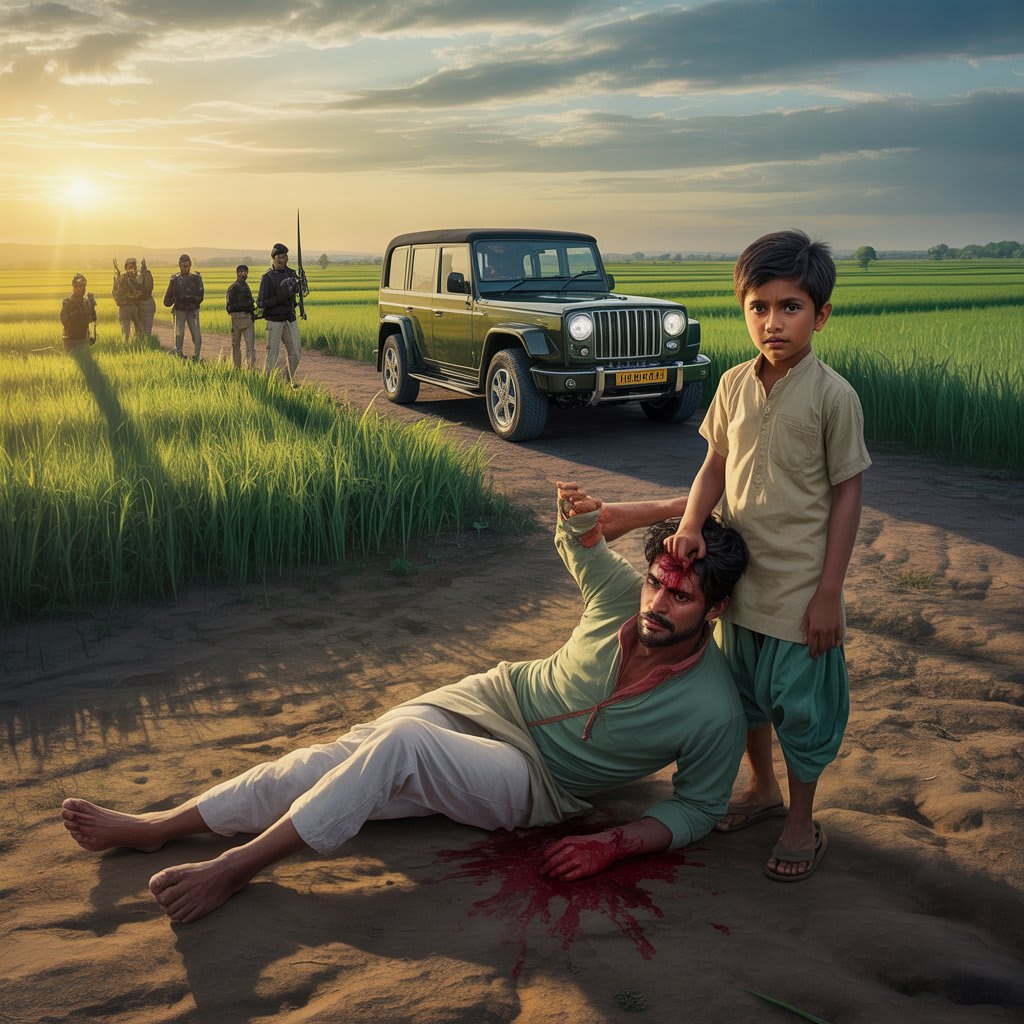
Heir of the Fields
BY:Khan
Zain Shamsi is a strange creature. Sometimes even the greatest grief leaves him untouched, and at other times the smallest joy is unbearable — his heart stops. Something like that happened to me. I was stunned by the purity and obedience of a human behaviour and now I ask you to decide what to call that behaviour. This is what happened.
I was resting at home when my childhood friend Ghulam Qadir — the influential landlord of our area — called. “Tomorrow is Sunday and you’re off. Come with me to the village; I want to show you the new fields I’ve acquired,” he said. At first I didn’t feel like going, but after he pressed me I agreed on one condition: he must send me back to the city by Sunday night. I had work the next day, and being new at the job, asking for leave was almost impossible. Ghulam Qadir promised, so at dawn on Sunday after Fajr we set out for the village.
We stopped for breakfast on the way, and after a long, tiring drive we reached the village. “Jamal, you look exhausted — rest for a while. After lunch, I’ll show you the land,” he said. My back ached from so much time sitting in the car; his offer sounded like heaven, so I accepted. After an hour’s rest I bathed and felt refreshed. No sooner had I finished prayers than the servant brought hot food. “Where is your master?” I asked the servant. “He’s almost here — you should start without him,” the servant replied.
Barely had he finished when Ghulam Qadir arrived. We attacked a hearty meal of chicken cooked in ghee, cornbread, mustard greens, and a jug of fresh lassi. After the meal, Ghulam Qadir put me back in the car and went inside the house himself. I sat in the car and watched the endless green fields spread in every direction. A little while later he came out with a thin lad of about twelve or thirteen clinging to him. When they approached the car I stepped out to greet them.
“Jamal, meet my son Ghulam Muhammad,” Ghulam Qadir said. The boy extended his hand and greeted me. After shaking his hand I laid my palm on his head and prayed over him. He was the spitting image of his father but somehow older than his years — composed and quiet. “My son is the only child I have; he is everything to me,” Ghulam Qadir said, gazing with affection at his boy. I smiled and looked at Ghulam Muhammad; there was a calm strength in his dark, shining eyes.
“I have taught my son one thing only: whatever work you take up, never leave it unfinished. Don’t waste time. A person may pass away, but his work remains,” the father said. “That’s absolutely true,” I replied, patting the boy’s head. He smiled shyly and clung more closely to his father. Then we set off toward the fields.
Ghulam Qadir’s lands were indeed lush and green. After walking some distance we stopped and got out of the car. “Jamal, as far as the eye can see, this is all my land — these trees, fields, orchards, the grazing land, the forests, the livestock. Nothing happens here without my say,” he told me, his face radiant with triumph. “I’ve managed these lands since my father died; I’ve even expanded them. After me, my son will take care of everything.” He looked fondly at his boy when he said that.
Suddenly gunshots rang out from an unknown direction. I was terrified. Ghulam Qadir’s guards jumped out and took positions. The three of us hid behind the car. “Don’t worry, Jamal,” Ghulam Qadir said, trying to reassure me. He and his son stood calmly while I felt even more frightened seeing their composure. The guards fired in several directions; the crack of the guns echoed through the air. Ghulam Qadir explained, “These thieves often come to steal the harvested crops. One thief has been surrounded by my men since last night. We’re waiting for his bullets to finish so we can capture him and teach him a lesson.”
His arrogance calmed me somewhat. But then the unimaginable happened — a stray bullet struck Ghulam Qadir in the head and he collapsed, face down on the ground. I could not believe my eyes. Horror paralyzed me. I was an ordinary city boy who had never seen a gun up close, and now my friend lay before me covered in blood. Ghulam Muhammad clung to his father’s corpse and wailed. The guards soon dragged another body from the nearby bushes — certainly the shooter who had been hiding and firing. When they pulled that body forward, Ghulam Muhammad lifted his father’s head from his chest, wiped his tears, stared at the corpse for a few stunned moments, then looked up at the guards and said, “Oh — this is the munshi (clerk) of the landlord from the neighbouring village.”
The guards nodded in confirmation. I wanted to go to the boy and hold him close; he was so innocent, and his father had just been butchered before his eyes. I stepped forward to embrace him, but Ghulam Muhammad looked at me and said something that hit me like a 440-volt shock: “Come, Uncle Jamal. Take the rest of the land to show you, and take Bachal Baba home. I will finish the work and come back.”
That single sentence — so calm, so determined, said by a child who had just watched his father murdered — stunned me into silence. The boy folded himself into duty and obedience in such a way that there was no room left for grief, no space for a child to be a child. He handed over the world to others and set out to complete his father’s work.
Decide, then, what name you would give to that behaviour: is it courage, coldness, obedience, resignation, or something else entirely?
About the Creator
'Till Death We Do Art
There would be nothing divine in this world without art. Nature may surpass the divine to all intents and purposes, but like everything it absorbs and is absorbed by, it remains here, stuck on the surface of this world, ever-present, physically bound to the universe.
By Avocado Nunzella BSc (Psych) -- M.A.P 19 days ago in Art
Echoes in the Silence
In the distant future, on a planet known as Elara, there was a small village named Felsia. This village was surrounded by vast forests and towering mountains. The people of Felsia lived simple lives, but they had one unique feature—every villager possessed the ability to hear echoes of the past. When someone spoke, their words would create echoes that floated in the air like whispers, allowing others to hear stories long gone.
By Hamad Afridi 6 days ago in Art




Comments
There are no comments for this story
Be the first to respond and start the conversation.