
The Grove That Waited
A Quiet Testament to the Endurance of Wild Places

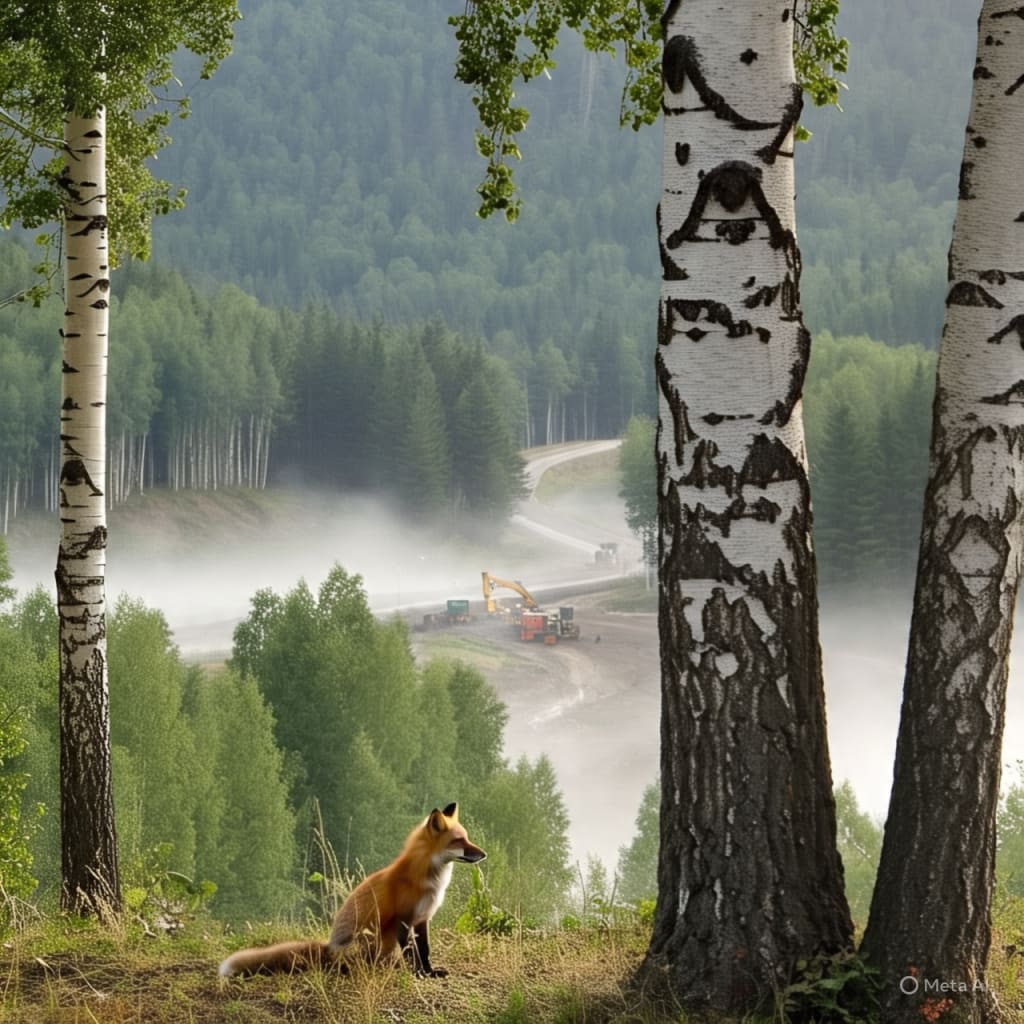
In a narrow valley between two modest ridges, where no road ran and no sign pointed, there was a grove of trees that had stood longer than any house in the county. No one planted them, and no one came often to visit, save the animals and wind. The grove had grown not in symmetry but in understanding—each tree reaching where it could, bending when it must.
The oaks were the elders. Thick-limbed, furrowed like the hills themselves, they had long stopped counting the years in seasons and now measured time by absence—the absence of fires, of floods, of the once-frequent wolves who no longer howled beneath their shade.
Beneath the oaks, younger trees lived in the borrowed patience of those above: maples with leaves like outstretched hands, ash trees with bark that held scars from the cold years. Beneath them, saplings and moss and mushrooms bloomed in shade, unbothered by the world outside the ridges.
The grove was not beautiful in the way humans used the word. It was not made for admiration. There were no vibrant flower beds or convenient trails. Brambles tangled across the floor, and rot made much of the air heavy. Yet everything in that place belonged, and nothing was wasted. When a tree fell, beetles and worms would enter its heart. Moss would spread across its flanks. After enough seasons, it would become soil again. In this way, the grove fed itself.
But the grove was not untouched. At the southern edge, a creek once clear had dulled to a slow brown, choked with silt from somewhere upstream. And sometimes, the air carried foreign smells—metal, heat, the sharp breath of distant engines. Yet still the grove endured, not because it was strong in the way people think of strength, but because it had no need for victory.
Near the northern slope, where sunlight filtered through a broken canopy, a birch tree had taken root in the shadow of a long-dead oak. The birch was slender and crooked, but it reached upward with quiet resolve. Its bark peeled in scrolls, and every spring it shed catkins into the wind, hoping that some would take root before being eaten.
At its base, a fox had made her den. She had raised two litters in the dry cradle of exposed roots. She hunted sparrows and voles, and in winter, she paced the grove in silence. She knew the trails the deer walked and the time of night the owl began its call. She understood the snow, how it blanketed danger but also hid the warmth of breath and the trail of prey.
To the fox, the grove was not a refuge. It was simply home. There was no worship of it, nor rebellion against it. Her life was neither serene nor cruel. It just was.
One autumn, the wind brought with it a sound the grove had not known before. A drone, low and rhythmic. The animals froze. Birds stilled mid-song, and the squirrels paused with acorns in their mouths.
Then came men.
They wore orange vests and marked trees with blue tape. They stepped without listening, talked without looking. They spoke of "surveying," of "extraction plans." One of them took a photograph of a fallen trunk.
“Good decay,” he said. “We can make something of this.”
They did not see the mushrooms along its spine or the ants crawling beneath the bark.
The men left, and the grove resumed its breathing. But the stillness it returned to was not the same. Birds resumed their songs with unease, and the fox paced longer in the dusk.
That winter, no snow came.
Instead, rains fell and the creek overflowed. The lowest saplings drowned in a hush of brown water. Roots loosened, and one tree—an old maple—toppled with a sound like thunder. The birch near the slope bent with the softened earth but did not fall. The fox's den filled with water, and she moved to a higher place near the hawthorn.
And yet, even through change, the grove did what it had always done: it waited.
When spring returned, the soil was damp and thick. Ferns exploded where they had never grown before. Frogs appeared in dozens, croaking in temporary pools. Seeds that had long slept beneath the loam awoke. The birch sent out new shoots. The dead maple became a buffet for larvae and lichen.
But then the machines came.
They arrived with blades and wheels and the growl of industry. They cut a road—not wide, but enough. Enough to take what could not be replaced. Trees marked in blue were felled in rows. Squirrels fled. The owl, confused by the noise, left before nightfall.
The birch was not marked, but its neighbor was. When the larger pine was cut, the fall shook the slope. The birch, unbalanced, leaned at an awkward angle. It did not break, but something shifted in its roots. The fox returned to find her den exposed. The sound of sap being spilled lingered long after the chainsaws left.
Then, after weeks of noise, there was nothing.
No men. No machines. Only the cut stumps, and a gap in the canopy that let in harsh sun. The creek no longer whispered; it rushed too fast, stripped of the sponge of undergrowth. But again, the grove endured.
In time, vines began to thread their way across the bare trunks. Grass took hold where tires had turned the ground. Birds tested new perches, some uncomfortable, some promising. The fox gave birth again—this time to only one kit. She led it carefully, avoiding the raw places.
By the third year, the birch still leaned, but it had adapted. Its roots had thickened on one side. It bore fewer catkins, but enough. The sap still ran in spring, slow and sweet.
Where the pine had stood, a cluster of young beeches began to rise. Their leaves caught the sun where once only shadow had reached. The grove had changed, yes, but it was still itself.
Not because it had triumphed, but because it had not given up.
The grove did not resist change—it absorbed it. It broke, it regrew. It fed on death and built from it. Not for beauty. Not for humans. Not even for survival in the sense that people use the word. But because that is what life does.
And in that valley between two ridges, where no road used to run and now a faint one did, the grove waited still.
It would wait long after the next storm. After the next winter. Even after the next man.
About the Creator
Julia Christa
Passionate writer sharing powerful stories & ideas. Enjoy my work? Hit **subscribe** to support and stay updated. Your subscription fuels my creativity—let's grow together on Vocal! ✍️📖
Keep reading
More stories from Julia Christa and writers in Art and other communities.
The Secret of Beauty
Beauty. It's a word we hear almost every day. We see it in magazines, on screens, in conversations, and even in how we think about ourselves. But what is beauty, really? Is it just about how we look on the outside, or is there something deeper that makes someone truly beautiful?
By Julia Christa7 months ago in Art
“What If It Happens?”
Monday, 11 April 2022 Ishrat Jahan One of our friends, Mr. Farooq, is a middle-aged man, yet he has still not been able to free himself from his deeply suspicious and fearful nature. These days, I happened to have some free time, so I thought it would be a good idea to meet him and try to untangle the puzzle of his constant worries. By coincidence, he himself arrived at my humble home, jolting along in a rickshaw.
By Sudais Zakwana day ago in Art
Introduction to Organic Solutions
In the realm of fitness, the role of nutrition cannot be overstated, and organic supplements are increasingly recognised as essential components of a well-rounded training regime. Unlike their synthetic counterparts, organic supplements are derived from natural sources, ensuring that fitness trainers can provide their clients with products that are free from harmful additives and chemicals. This not only promotes better health but also supports the body’s natural processes, thereby enhancing overall performance and recovery.
By Organic Products 6 days ago in Art



Comments
There are no comments for this story
Be the first to respond and start the conversation.