
The Great Scientist: Albert Einstein
The Genius Who Reshaped Physics and Inspired the World"

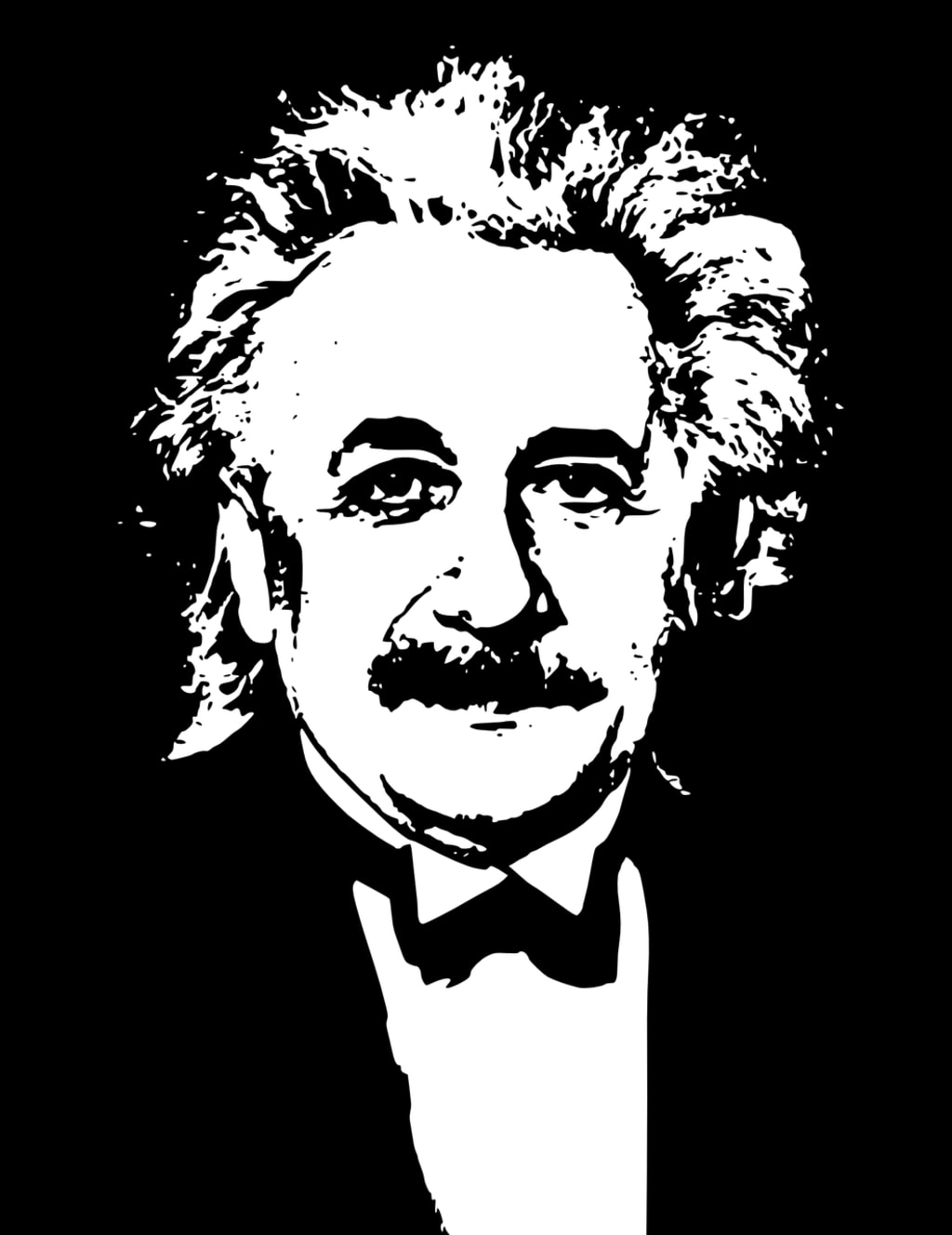
The Great Scientist: Albert Einstein
Albert Einstein is widely regarded as one of the most brilliant scientists in history. His name is synonymous with genius, and his work forever changed the way we understand the universe. More than just a physicist, Einstein was a thinker, a philosopher, and a humanitarian whose contributions extended beyond the world of science. His life’s work has left an indelible mark on the world, making him not only a scientific icon but also a symbol of intellect and curiosity.
Early Life and Education
Albert Einstein was born in Ulm on March 14, 1879, in the German Empire's Kingdom of Württemberg. His family was Jewish, though not particularly religious. As a child, Einstein showed an early interest in mathematics and science. However, he was not always considered a model student. In fact, some of his teachers believed he lacked discipline and would not amount to much.
Despite this, Einstein's curiosity about the natural world drove him to explore physics and mathematics. He eventually enrolled at the Swiss Federal Polytechnic School in Zurich, where he earned a degree in physics and mathematics teaching in 1900. The Miracle Year: 1905
Einstein’s most famous contributions came during what is known as his "Annus Mirabilis" or Miracle Year in 1905. During this year, he published four groundbreaking scientific papers that changed the course of physics.
1. Photoelectric Effect: Einstein proposed that light is made up of particles called photons. This work laid the foundation for quantum theory and later earned him the Nobel Prize in Physics in 1921.
2. Brownian Motion: His explanation of the movement of particles suspended in fluid provided strong evidence for the existence of atoms and molecules.
3. Special Theory of Relativity: This theory introduced the famous equation E=mc², which showed the relationship between mass and energy.
4. Mass-Energy Equivalence: He argued that mass and energy are interchangeable, revolutionizing physics and laying the groundwork for nuclear energy.
These papers established Einstein as a leading scientific thinker, and his fame began to grow throughout Europe.
Theory of General Relativity In 1915, Einstein published his General Theory of Relativity, which expanded upon his earlier work in special relativity. It introduced a new understanding of gravity, not as a force between masses, but as a curvature of space-time caused by mass and energy. British astronomers observed the bending of starlight during a solar eclipse in 1919, as predicted by Einstein, confirming this theory. The event made Einstein a global celebrity.
Life in the United States
As Adolf Hitler rose to power in Germany, Einstein, who was Jewish and an outspoken critic of fascism, fled to the United States in 1933. He accepted a position at the Institute for Advanced Study in Princeton, New Jersey, where he would live and work for the rest of his life.
Though Einstein was a pacifist, he was concerned about the threat posed by Nazi Germany. In 1939, he signed a letter to U.S. President Franklin D. Roosevelt warning that Germany might be developing an atomic bomb. This letter helped spur the U.S. to begin the Manhattan Project, which ultimately led to the creation of nuclear weapons. Although he did not work directly on the project, Einstein later expressed deep regret over his role in it.
Einstein the Humanitarian
Beyond science, Einstein was deeply engaged with social and political issues. He spoke out against racism, supported civil rights movements, and advocated for peace and global disarmament. He was offered the presidency of Israel in 1952, a symbolic role, but he declined, saying he lacked the experience and temperament for politics.
Einstein was also a passionate supporter of education and intellectual freedom. He believed that imagination was more important than knowledge, famously saying, “Imagination is more important than knowledge. For knowledge is limited, whereas imagination embraces the entire world.”
Legacy
Albert Einstein died on April 18, 1955, in Princeton, New Jersey. His legacy lives on not just in physics textbooks but in the culture of scientific inquiry itself. His theories remain central to modern physics, influencing everything from GPS technology to black hole research.
Einstein also left behind a vast collection of letters, essays, and interviews that continue to inspire. His face, with its wild hair and thoughtful eyes, has become a cultural icon—an image of pure genius.
Conclusion
Albert Einstein was more than just a scientist; he was a visionary who transformed our understanding of the universe and challenged us to think differently. His life was a testament to the power of curiosity, the importance of questioning established beliefs, and the role of science in shaping a better world.
Through his scientific achievements and his moral convictions, Einstein showed that the pursuit of knowledge must always be paired with compassion and responsibility. That is why, even decades after his death, the world still remembers and reveres the great scientist—Albert Einstein.
---
About the Creator
Keep reading
More stories from emon Islam and writers in Art and other communities.
The Power and Perception of the Sexy Lady Subtitle
In every corner of modern media—from music videos and magazine covers to fashion runways and films—the image of the “sexy lady” is one of the most recognizable and impactful cultural symbols. It represents a unique combination of physical appeal, confidence, and charisma. But this figure is far more than just a visual element; she embodies the changing ideals of beauty, power, and femininity in society.
By emon Islam10 months ago in Art
'Till Death We Do Art
There would be nothing divine in this world without art. Nature may surpass the divine to all intents and purposes, but like everything it absorbs and is absorbed by, it remains here, stuck on the surface of this world, ever-present, physically bound to the universe.
By Avocado Nunzella BSc (Psych) -- M.A.P 25 days ago in Art
Essential Traditional Performance Arts Around the World for Curious Travelers
Traditional performance arts are powerful cultural expressions that connect communities to their history and identity. Through dance, music, theater, and ceremonial storytelling, societies share values, beliefs, and experiences that have shaped their heritage. These performances often combine artistic creativity with historical traditions preserved across generations.
By Producer James Simon3 days ago in Art
My First Time Skiing and I Got Lost, Alone, in the French Alps
Looking back, I can trace some of my life’s biggest adventures to a simple action from my sister. She’d introduced me to Tommy (a very long time ago), a colleague of hers, who had overshared his penchant for Italian-looking women, and I ticked that box.
By Chantal Christie Weissabout 17 hours ago in Humans




Comments
There are no comments for this story
Be the first to respond and start the conversation.