
The Gothic Mind: Exploring Freud, Kristeva, and the Psychology of Horror
Mapping the Intersection of Fear, Desire, and Identity in the Gothic Tradition

Beneath the symbolic pallor of the Gothic tradition, where shadows linger in abandoned corridors, a deeper psychological haunting emerges—one that resides not in physical spaces, but within the labyrinthine recesses of the mind. Sigmund Freud and Julia Kristeva, two seminal theorists, have significantly shaped our understanding of the Gothic by illuminating the intricate interplay between terror and beauty, and by mapping the psychological terrain where these forces converge.
Freud and the Concept of the Uncanny
Freud’s exploration of the uncanny (das Unheimliche) reveals a world in which the familiar is rendered strange and unsettling. The uncanny arises when ordinary objects or experiences... such as a reflection in a mirror or a childhood memory, become imbued with an eerie sense of alienation. In Gothic literature, this phenomenon frequently manifests through motifs such as the doppelgänger, spectral figures bearing the features of loved ones, or inanimate objects like dolls that appear to possess a sentient gaze. These elements are not merely supernatural curiosities; rather, they serve as manifestations of repressed fears and unresolved psychological conflicts. The uncanny thus functions as a reminder of the persistent presence of the unconscious, suggesting that we are never truly alone, even in the most isolated corners of our psyche.
Kristeva and the Theory of the Abject
Expanding upon the psychological dimensions of the Gothic, Julia Kristeva introduces the concept of the abject; a form of horror that defies categorization and threatens the boundaries of the self. The abject is embodied in entities that resist clear definition, such as corpses that refuse to decay or monsters that exist in liminal states between life and death. In the Gothic tradition, the abject serves as a potent symbol of human vulnerability and the fragility of identity. It is the persistent shadow that clings to the self, the sense of decay that infiltrates dreams, and the unsettling realization that the distinction between self and other is tenuous at best.
The Enduring Allure of the Gothic
Together, Freud’s and Kristeva’s theories provide a profound framework for understanding the enduring appeal of the Gothic. This genre operates as a mirror, reflecting our deepest anxieties and forbidden desires. The Gothic is not merely a literary style, but a psychological space in which readers are invited to confront the uncanny and the abject; not to escape fear, but to engage with it, to find meaning and even beauty in the shadows that haunt us. In embracing these unsettling elements, the Gothic allows us to explore the complexities of the human condition, offering both the comfort of darkness and the thrill of what might be concealed within it.

About the Creator
When the Artist Becomes the Art
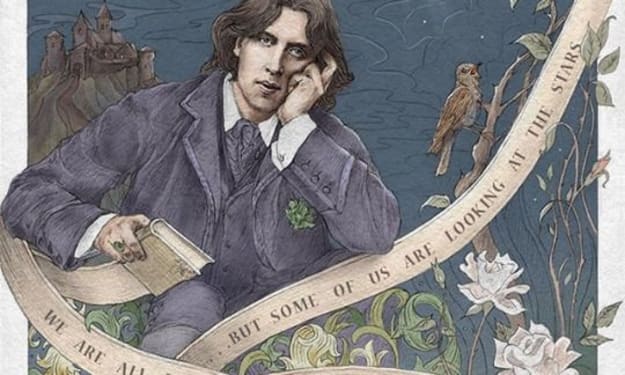
We like to think we can separate the art from the artist, but can we, really? Art is born from the same place as sin. It mainly emerges from conflict: between what is felt and what is permitted, between the self that is lived and the self that must be hidden. No figure embodies this tension more vividly than Oscar Wilde: a man who transformed his own contradictions into style, wit, and devastating clarity. His novel The Picture of Dorian Gray is not merely a tale of aesthetic decadence but the battleground on which this question is fought.
By Yasmine Lagras3 days ago in Art



Comments (1)
Freud's uncanny in Gothic is spot-on. Like when a childhood toy felt off. Kristeva's abject adds another layer of creepiness.