
The Forgotten Sketchbook That Solved a 50-Year-Old Murder
Tucked away behind a loose floorboard, the drawings inside held secrets no one was ever meant to uncover...

It started with a house I didn’t even want.
The property had been abandoned for decades, nestled on the edge of a sleepy countryside town where secrets age like wine—gaining strength with time. My grandfather left it to me in his will, a place I had only heard about in passing. I was a city artist with a studio above a noisy café, not someone who remodeled creaky old homes. But after a rough breakup and a string of failed commissions, I found myself packing up and heading there—if only for a change of scenery.
The house looked like every horror movie cliché: peeling paint, shuttered windows, and ivy crawling up its spine. But inside, it was surprisingly well-preserved. Dusty, yes. Haunted? Not yet.
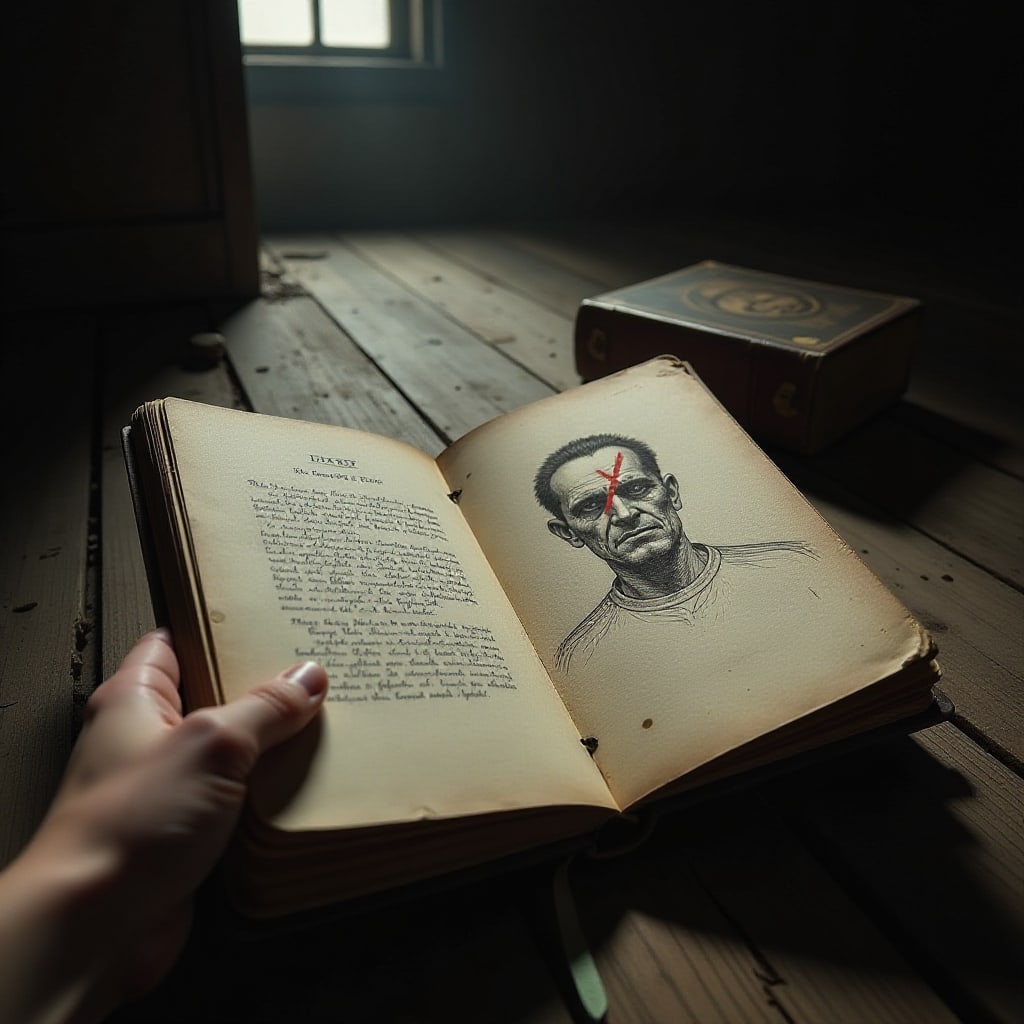
I started cleaning one room at a time, converting what was once a small library into my makeshift art studio. That’s when I discovered the sketchbook.
It was hidden beneath a loose floorboard beneath the corner chair, the wood panel lifted easily with the tip of a screwdriver. Wrapped in a layer of brittle linen, the sketchbook was thick, bound in faded leather, the initials “E.M.” etched into the front.
I thought I’d stumbled onto a forgotten artist’s personal collection. But what I found was far from ordinary.
Each page was meticulously drawn in graphite. The sketches were raw and disturbing. The first few were simple—portraits of women, most of them looking anxious or frightened. Then came darker imagery: a woman screaming, a man holding a knife, a hand gripping a wrist too tightly. Each drawing was labeled with a date.
And then I noticed something that stopped me cold—one of the portraits looked eerily like my late grandmother. Her name, Anaya, was written underneath.
I hadn’t even known she had lived in this house.
That night, I couldn’t sleep. The drawings replayed in my mind like a flickering film reel. I pulled the sketchbook from the drawer again and flipped through the final pages. One was labeled **“April 3, 1975”**, with a drawing of a shadowy figure dragging something through a wooded path. The last page was nearly blank, except for a name scribbled at the top in shaky handwriting:
“Eleanor Moore.”
I googled it out of curiosity. A few pages deep, I found an archived newspaper article: “Local Girl Disappears Without a Trace – April 4, 1975.” The photo alongside it made my blood freeze.
It was the same girl from the sketchbook.
Eleanor Moore, 19. Last seen at a local art exhibit. Police had no suspects. Case cold.
The sketch dated one day before her disappearance. Could it really be a coincidence?
I brought the book to the local library and asked the clerk about the name. Her eyes widened.
“You found something from Eleanor?” she asked, her voice barely above a whisper. “She was... the town’s ghost story. Her disappearance shook everyone. But nobody ever found anything. No body, no suspects. Just whispers.”
I showed her the sketchbook. She flipped through it slowly, her hand trembling. “These... these are real people. That’s Marla Jensen. She was Eleanor’s best friend. And that man—he looks like Henry Pierce. He ran the gallery they went to.”
With her help, we contacted a retired detective who had worked on the Moore case. When he saw the sketches, he went silent for a long time before saying, “This is more than we ever had back then.”
An investigation was reopened. They located Henry Pierce—now in his 70s—and questioned him. With modern forensics, they revisited the gallery basement and discovered traces of blood under the floorboards. DNA matched Eleanor Moore.
Henry confessed within two days.
He had been obsessed with Eleanor and murdered her after she rejected his advances. Her body had been buried beneath the old stone path behind the gallery. Nobody thought to look there before.
The sketchbook, it turns out, had been hers. Eleanor had a gift—not just for drawing, but for capturing emotions and danger in pencil before it ever fully unfolded. She must have known something was wrong. Her art was her only way of speaking up.
The town held a vigil for her the following week. People brought flowers and candles. The path behind the gallery was turned into a memorial garden. Eleanor’s story was finally complete.
As for me—I donated the sketchbook to the local museum. But not before making one final drawing in it.
It was of Eleanor, smiling.
Not the terrified girl in those final pages, but free. At peace. Like she finally knew her voice had been heard, 50 years later.
And now, whenever someone asks why I moved into that old house, I just smile and say
“Sometimes, a forgotten story is just waiting for the right person to find it... and finish it.”
About the Creator
Muhammad Sabeel
I write not for silence, but for the echo—where mystery lingers, hearts awaken, and every story dares to leave a mark
Keep reading
More stories from Muhammad Sabeel and writers in Art and other communities.
From Sketchbook to Cashflow: How I Sold My First Painting and What It Taught Me About Art, Value, and Self-Worth
For as long as I can remember, I’ve carried a sketchbook everywhere I go. It wasn’t for the world to see—just a private space where emotions flowed into lines, shadows, and colors. Art was my therapy, my joy, and often my way of processing a chaotic world. But for years, I believed that what I created held no monetary value. That belief didn’t just stunt my income—it stunted my confidence.
By Muhammad Sabeel11 months ago in Art
'Till Death We Do Art
There would be nothing divine in this world without art. Nature may surpass the divine to all intents and purposes, but like everything it absorbs and is absorbed by, it remains here, stuck on the surface of this world, ever-present, physically bound to the universe.
By Avocado Nunzella BSc (Psych) -- M.A.P 19 days ago in Art
The Politics of Playing Dress-Up
Well, to start off I'd like to say a happy world book day to all who celebrate. I know I haven't really posted anything on my socials about it but I'm not a jubilant kind of person. I lay low most of the time. Let's start off with a popular anecdote from the vaults...
By Annie Kapur3 days ago in Geeks



Comments (1)
"Absolutely chilling and beautiful at the same time. The way this story unraveled felt like reading a lost journal entry that suddenly changed history. Eleanor’s art becoming the voice that finally brought her justice gave me goosebumps. You didn’t just inherit a house—you inherited a truth that had been waiting to be found. Thank you for telling her story with such care. That final drawing… wow. Genuinely moved.