
The Forgotten Pioneers: The World’s First Cotton Farmers of Mehrgarh
Mehrgarh: The Birthplace of Cotton Cultivation and the Dawn of Agriculture

Unraveling the Ancient Threads of History
In the heart of the Balochistan province of present-day Pakistan, on the arid plains of Kachi, an ancient civilization once flourished. Over 7,000 years ago, the people of Mehrgarh laid the foundation for one of the most advanced societies of their time. These early farmers not only cultivated crops and domesticated animals but also left behind an astonishing legacy—the earliest known use of cotton in human history.
Their story remained buried beneath layers of time until the 1990s when a team of French archaeologists uncovered a grave that would change our understanding of early textile production. Inside the grave, nestled beside the left wrist of an adult male, were eight copper beads. When examined closely, these beads revealed something extraordinary—tiny vegetable fibers trapped inside. Further analysis confirmed these fibers were cotton, making this discovery the earliest evidence of cotton use by humans.
But who were these pioneering farmers, and how did they come to cultivate one of the most important crops in history? Let’s journey back to 7000 BC and explore the remarkable world of Mehrgarh.
Mehrgarh: The Birthplace of Agriculture in South Asia
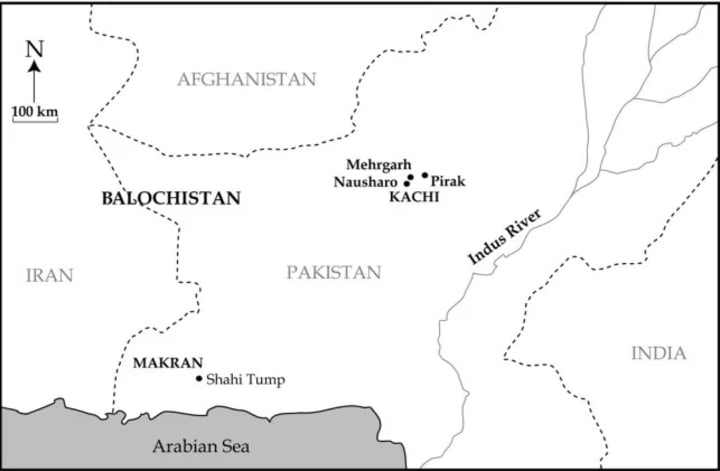
Located near the Bolan Pass, Mehrgarh occupied a crucial position between the fertile Indus Valley to the east and the rugged Iranian plateau to the west. This strategic location made it a melting pot of cultures, technologies, and trade routes.
The settlement, which began as a small community of around a hundred people, rapidly expanded. By 7000 BC, Mehrgarh had developed into a thriving agricultural hub. Its people built mud-brick houses, stored food in granaries, and crafted tools from stone and bone. Unlike their hunter-gatherer ancestors, these farmers cultivated wheat and barley, domesticated cattle, and even engaged in long-distance trade with regions as far as Afghanistan and the Arabian Sea.
However, the question remains: Did agriculture in Mehrgarh originate locally, or was it introduced by migrants from the Near East?
The Mystery of Mehrgarh’s First Farmers
Two competing theories attempt to explain the origins of agriculture in Mehrgarh.
Theory 1: The Near Eastern Influence
Some scholars argue that agriculture in Mehrgarh was introduced by Anatolian farmers who migrated from the Near East. This theory is based on several pieces of evidence:
The wheat varieties found in Mehrgarh closely resemble those from the Near East.
The settlement’s granaries and circular fire pits mirror similar structures found in Mesopotamia.
Skeletal remains at Mehrgarh are positioned in ways similar to those in ancient Iranian sites like Ali Kosh.
According to this perspective, the sudden shift from a nomadic lifestyle to settled farming suggests external influence rather than local innovation.
Theory 2: Indigenous Development
Other researchers challenge this idea, asserting that Mehrgarh’s farming practices developed independently. Archaeologist Jean-François Jarrige examined animal bones from the site and noticed a gradual decrease in their size over time—a strong indication of local domestication rather than imported livestock. Additionally, dental studies revealed that the people of Mehrgarh had healthier teeth compared to their Near Eastern counterparts, who suffered from cavities due to carbohydrate-rich diets.
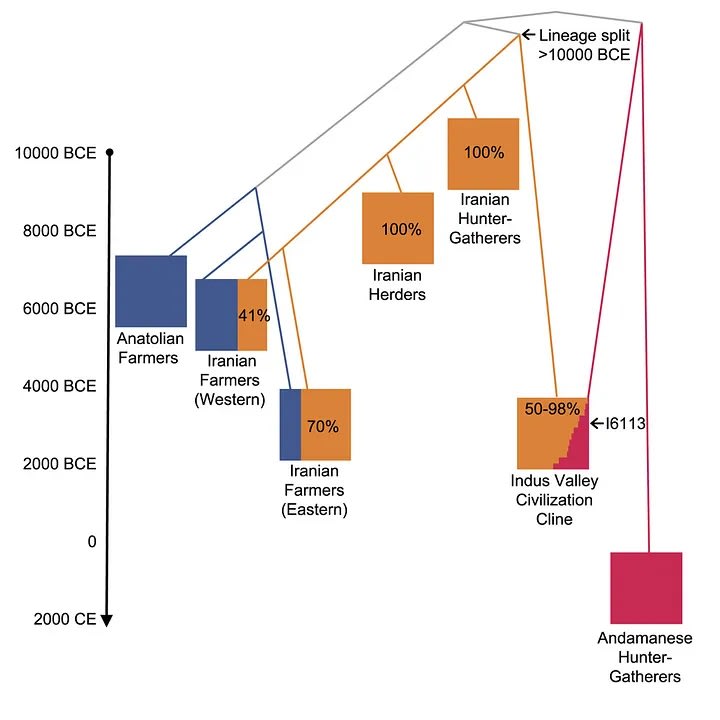
Genetic research further complicates the narrative. DNA analysis suggests that while Neolithic Iranian farmers had Anatolian genetic markers, South Asian farmers did not. This lack of genetic overlap weakens the theory of mass migration from the Near East.
Regardless of its origins, agriculture at Mehrgarh thrived. Among the many crops they cultivated, one stood out—cotton.
The First Cotton Cultivators

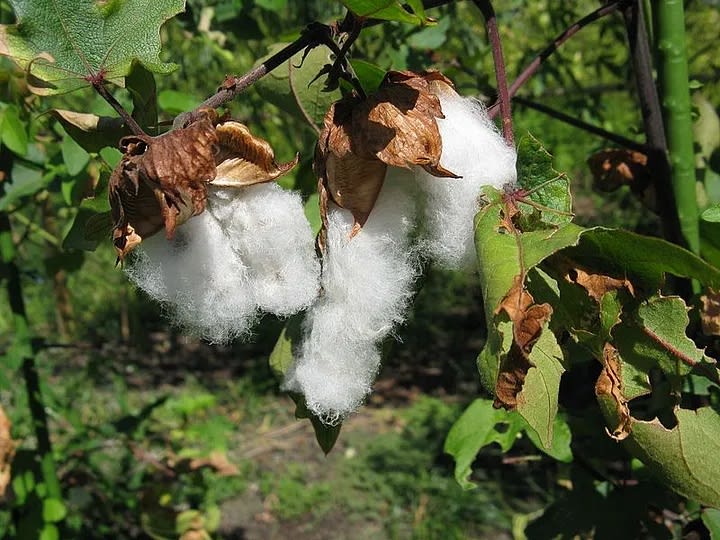
Cotton, now the most widely used textile fiber in the world, has an ancient history that can be traced back to Mehrgarh. The discovery of cotton fibers preserved within copper beads from a burial site dating back to 5500 BC provides compelling evidence that these early farmers were among the first to spin and use cotton threads.
But did they cultivate cotton, or did they gather it from wild plants?
Scientists have identified over fifty species of cotton, but only four are cultivated today. The species known as Gossypium arboreum, or tree cotton, is believed to have originated between East Africa and the Indian subcontinent. Since no wild variety of this species exists, experts suggest that the inhabitants of Mehrgarh either domesticated it themselves or had early knowledge of cotton cultivation.
Supporting this theory is the fact that cotton seeds were found stored alongside wheat and barley in Mehrgarh’s granaries. The presence of these seeds suggests that cotton was not merely gathered from the wild but was intentionally grown as part of the agricultural system.
Life in Mehrgarh: A Glimpse into the Past
Mehrgarh’s people were more than just farmers—they were skilled craftsmen, traders, and innovators.
Architecture and Burial Practices
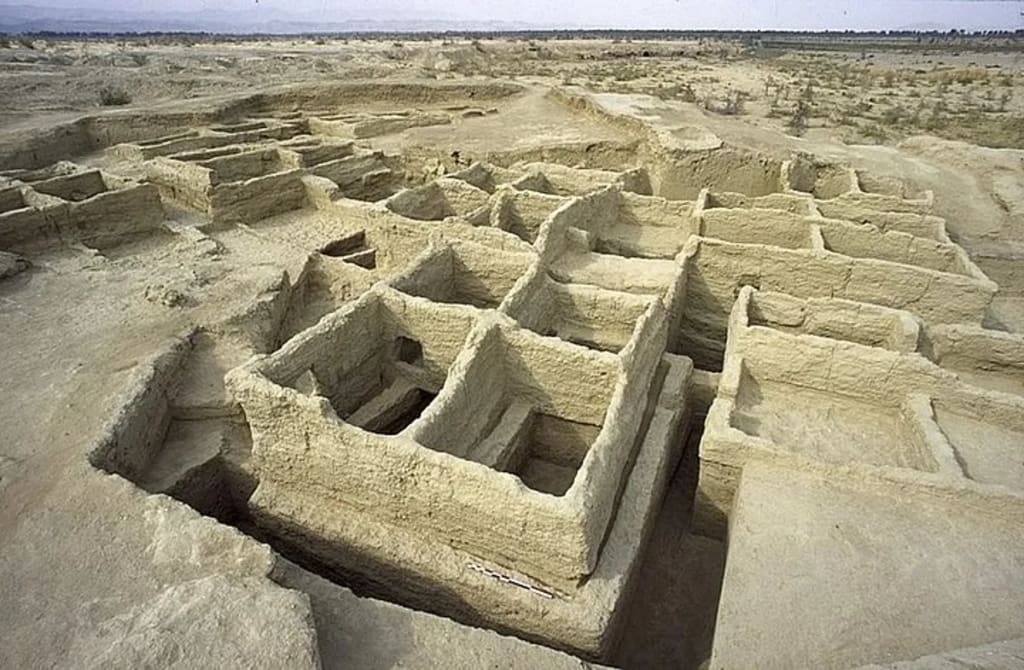
By 7000 BC, Mehrgarh’s residents had built rectangular mud-brick houses, each with a dedicated storage room. The settlement’s layout suggests an organized society with distinct spaces for living, farming, and communal activities.
Interestingly, burials played a significant role in their culture. In the early days, people were buried beneath their homes or in courtyards. As the community grew, a cemetery with over 150 burial chambers was established. These chambers were built with mud-brick walls, and family members were often buried together, emphasizing strong kinship ties.
Trade and Craftsmanship
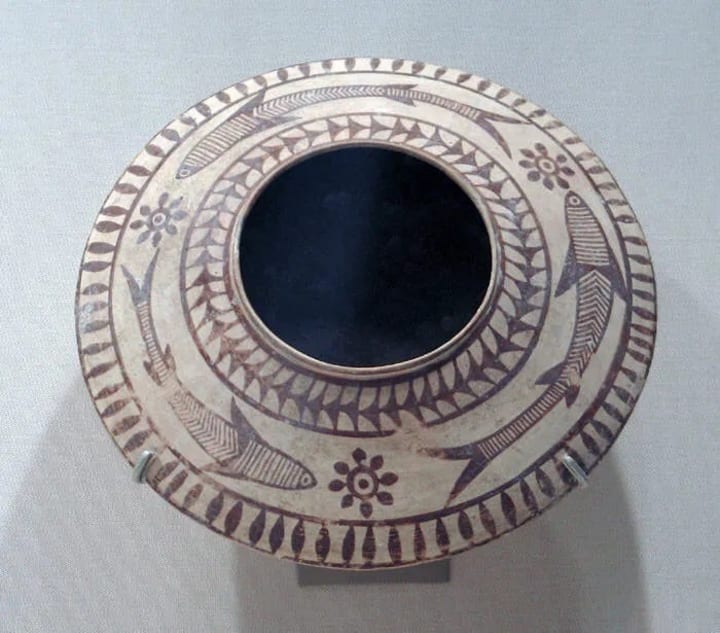
Mehrgarh’s artifacts reveal a sophisticated society engaged in long-distance trade. Lapis lazuli from Afghanistan and seashells from the Arabian coast suggest extensive trade networks. The craftsmanship of tools, beads, and pottery showcases their artistic and technological prowess. By 4000 BC, the potter’s wheel had been introduced, leading to intricate designs on ceramic vessels.
Diet and Livelihood
Mehrgarh’s people relied heavily on cattle, which they used for both plowing and meat. Sheep, goats, and even gazelles were also part of their diet, though reliance on wild game decreased over time as domestication became more advanced. Barley was their staple crop, followed by wheat, dates, and jujube. Cotton, though primarily valued for its fibers, also provided nutrient-rich seeds, which may have been used for oil or animal feed.
The Decline of Mehrgarh and the Rise of the Indus Valley Civilization
As centuries passed, the course of the Bolan River shifted, prompting Mehrgarh’s residents to relocate. By 2600 BC, the once-thriving settlement was abandoned, and its people migrated to Nausharo, a site five miles away. This transition marked the beginning of the Indus Valley Civilization, one of the most advanced urban societies of the ancient world.
While Mehrgarh itself faded into obscurity, its legacy endured. The agricultural techniques, craftsmanship, and early textile production pioneered by its people laid the foundation for the economic and cultural growth of South Asia.
A Legacy Woven in Cotton
The discovery of the world’s first cotton fibers at Mehrgarh redefines our understanding of early civilization. It challenges long-held assumptions about the spread of agriculture and textile production, revealing that South Asia was a hub of innovation long before the rise of the great river valley civilizations.
From a simple farming settlement to a center of early cotton cultivation, Mehrgarh’s story is a testament to human ingenuity. The next time you wear a cotton garment, remember that its roots trace back thousands of years—to the forgotten pioneers who first mastered the art of growing and using this remarkable plant.
About the Creator
sondos azhari
Passionate about health and beauty products, I delve into wellness practices and skincare routines. With a focus on holistic living.My aim is to empower others to prioritize self-care and make informed choices for their well-being.
Keep reading
More stories from sondos azhari and writers in Art and other communities.
How Trump's Ceasefire Just Blew Up in His Face
A Diplomatic Crisis Unfolds The news cycle is moving at breakneck speed, with major developments unfolding every few hours. This rapid pace of change has turned global diplomacy into an unpredictable and chaotic spectacle—one that appears increasingly reckless. Rather than orchestrating direct negotiations between Ukraine and Russia, the United States opted for separate discussions with each side. The result? Two distinct ceasefire proposals with no actual agreement in sight. Making matters worse, Washington attempted to sideline Europe, insisting that the EU did not need a seat at the negotiating table.
By sondos azhari10 months ago in Humans
The Uncopiable Human Wit to Write
We all have been in that spot at least once in our schooldays where we have been wringing our brains off to curate written articles of some sort until our soul-less friends were born. At just four years old, our beloved soul-less, metallic, digital assistant who is always by our side when we turn on our computers and smart phones, will be doing much more than curating written content for us all, if you know what I mean.
By Sound Savvy6 days ago in Art
Miss Persephone's Manual to a Seemingly Ordinary Life
Miss Persephone was found at the dining table, her blue eyes swollen, her tears arriving and retreating like the tides of the ocean. Earlier that day, her family had visited her in the retirement home where she had lived for eight years. It was her eightieth birthday.
By Imola Tóth4 days ago in Fiction


Comments
There are no comments for this story
Be the first to respond and start the conversation.