
The Evolution of Masks in Art from Ancient Origins to Victorian Peaks
The History Of Masks

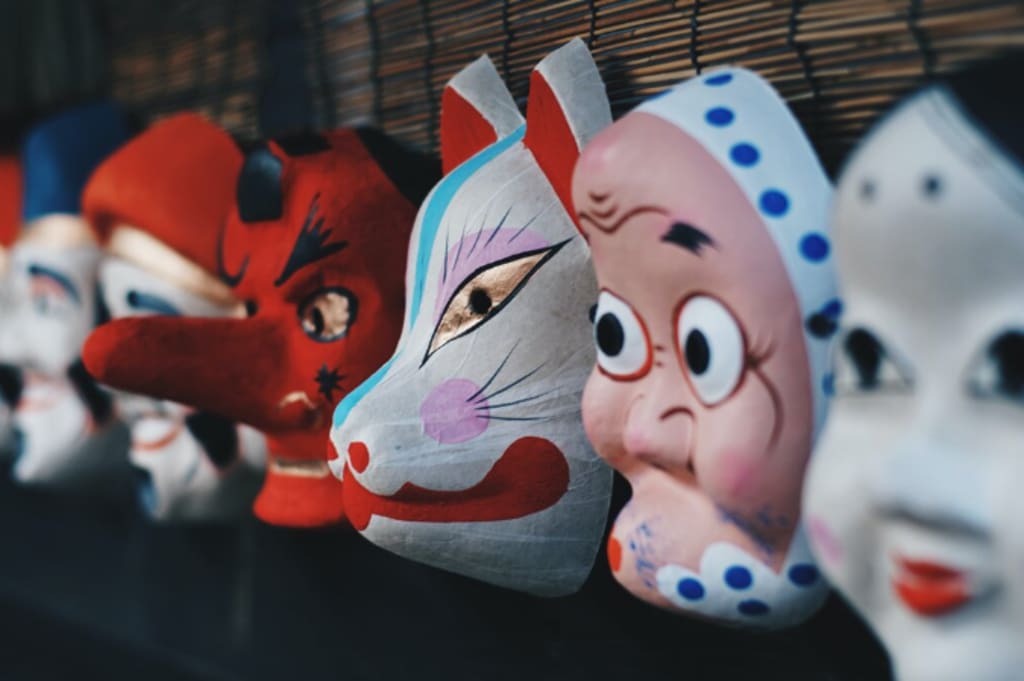
Masks, throughout history, have served as potent symbols of mystery, ritual, and transformation. From their ancient origins in ritualistic ceremonies to their peak popularity during the Victorian era, masks have played a significant role in artistic expression across cultures and continents. Among the myriad cultures that have utilized masks, the Japanese tradition stands out for its profound significance with demons, protection, and spiritualism.
The origin of masks in art can be traced back to ancient civilizations, where they were used in religious ceremonies, tribal rituals, and theatrical performances. In ancient Egypt, for example, masks were an integral part of funeral rites, believed to protect the deceased in the afterlife and facilitate their journey to the realm of the gods. These masks, crafted from gold and other precious materials, were adorned with intricate symbols and hieroglyphics, reflecting the spiritual beliefs of the time.
Similarly, in ancient Greece, masks played a central role in theatrical performances, where actors donned elaborate masks to embody various characters and emotions. These masks, carved from wood or stone and adorned with exaggerated features, allowed actors to transcend their identities and inhabit the personas of gods, heroes, and mythical creatures.
The significance of masks continued to evolve over the centuries, with their peak periods often coinciding with periods of cultural and artistic flourishing. One such period was the Victorian era in 19th-century Britain, where masks experienced a resurgence in popularity as symbols of mystery, intrigue, and social status.
During the Victorian era, masked balls and masquerade parties became fashionable among the aristocracy and elite, providing an opportunity for individuals to conceal their identities and indulge in forbidden pleasures. These lavish events, immortalized in literature and art, were characterized by elaborate costumes, intricate masks, and an atmosphere of decadence and hedonism.
In the art of the Victorian era, masks often appeared as motifs in paintings, sculptures, and decorative arts, symbolizing the hidden desires, repressed emotions, and societal constraints of the time. Artists such as Edgar Allan Poe and Edgar Degas explored themes of mystery and psychological complexity in their works, incorporating masks as symbols of deception, disguise, and psychological turmoil.
Amidst the fascination with masks in Western art, the Japanese tradition offers a unique perspective on their significance in relation to demons, protection, and spiritualism. In Japanese culture, masks, known as "Noh" masks, have been used for centuries in traditional theatrical performances and religious ceremonies.
Noh masks are intricately carved from wood and painted with elaborate designs, each representing a specific character or emotion. These masks, worn by actors during Noh performances, are believed to possess spiritual power and serve as a conduit between the human and divine realms.
One of the most significant aspects of the Japanese mask tradition is its association with demons and supernatural beings. In Japanese folklore, demons, or "Yokai," are believed to inhabit the natural world, possessing both malevolent and benevolent qualities. Masks depicting demons are often used in rituals and ceremonies to ward off evil spirits and to invoke protection and blessings.
Additionally, masks play a crucial role in Shinto rituals and ceremonies, where they are used to embody deities and ancestral spirits. These masks, crafted with meticulous attention to detail, are believed to channel the divine presence and facilitate communication between the human and spiritual realms.
In Japanese art, masks have been a recurring motif in paintings, prints, and decorative arts, reflecting their enduring significance in Japanese culture and society. Artists such as Katsushika Hokusai and Utagawa Kuniyoshi have depicted masks in their works, exploring themes of spirituality, mythology, and the supernatural.
In conclusion, the evolution of masks in art spans millennia and encompasses a rich tapestry of cultural, artistic, and spiritual significance. From their ancient origins in ritualistic ceremonies to their peak periods during the Victorian era, masks have captivated the imagination of artists and audiences alike, serving as potent symbols of mystery, transformation, and protection. In the Japanese tradition, masks hold a special significance in relation to demons, protection, and spiritualism, embodying the timeless wisdom and spiritual power of ancient traditions.
About the Creator
Janie
Passionate about unraveling the intricate tapestry of art history and contemporary artistic expressions. Beyond brushstrokes and colors, into the mental and physical struggles of artists.
21 Freelancing Tips to Build a Successful Career (From Someone Who Actually Did It)
TL;DR version (60 seconds read time) + Paypal receipt at the end of the blog. I’ve made thousands of dollars with freelancing. See screenshots at the end of the post. Everything I say to you, I’ve tested it first on myself.
By Dena Falken Esqabout 10 hours ago in Art
Impressive Artwork by Odilon Redon
French symbolist artist Odilon Redon was famous for his drawings in the 1880s. The artist’s artworks were mentioned in the popular 1884 novel “A Rebours,” or “Against the Grain,” by Joris-Karl Hysmans. His later artworks were created in oils and pastels. He developed an interest in Hinduism and Buddhism, and this interest in mysticism is reflected in his works of art.
By Rasma Raisters6 days ago in Art


Comments