
The Enigmatic Phoenix in "Shanhaijing"
Record of Strange Beasts in the Classic of Mountains and Seas

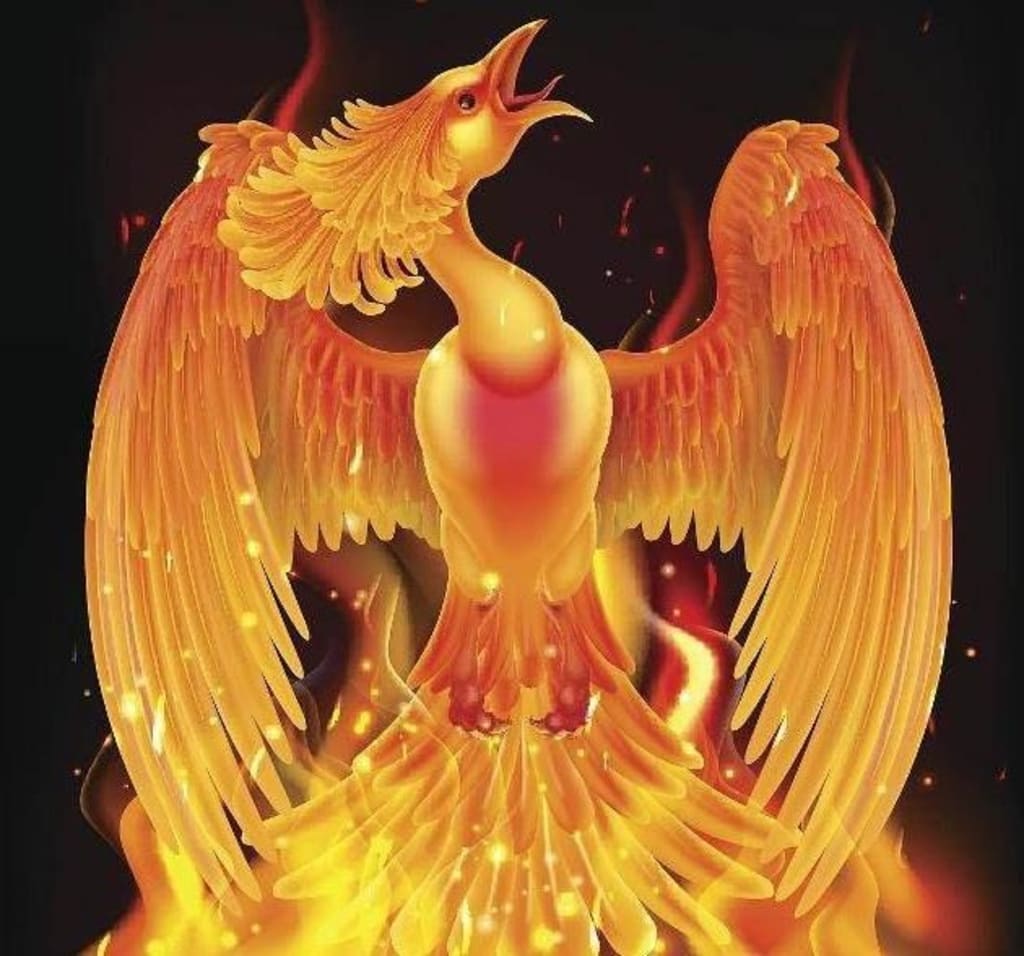
In the rich tapestry of Chinese mythology, the "Shanhaijing" unfolds a world brimming with extraordinary creatures. Among these, the Phoenix shines brightly as a symbol of beauty, rebirth, and good fortune. This mythical bird has captured the human imagination for centuries, and its roots in the "Shanhaijing" offer a fascinating glimpse into ancient beliefs and cultural values.
Appearance and Distinctive Features
The Phoenix, as described in the "Shanhaijing," is a resplendent creature. It is often depicted with vibrant plumage that shimmers in a spectrum of colors, from fiery reds and oranges to regal purples and golds. Its feathers are said to be so vivid that they seem to carry the essence of the sun itself. The bird has a long, graceful neck and a majestic tail, which trails behind it like a flowing ribbon.
One of the most iconic features of the Phoenix is its ability to emit a melodious and enchanting song. This song is not just a pleasant sound; it is believed to have magical properties. In some accounts, the Phoenix's song can soothe the troubled mind, bring about peace, and even herald the arrival of good times. Its call is a symbol of hope and renewal, cutting through the darkness of the world.
Behavioral Traits
The Phoenix is known for its noble and self - contained nature. It is a solitary bird, often choosing to dwell in secluded and peaceful places, such as the highest mountaintops or the heart of ancient forests. It is a creature that values tranquility and harmony, and it avoids the chaos and violence of the lower world.
This mythical bird is also closely associated with fire. It is said to be able to control and manipulate flames, and it often appears surrounded by a halo of fire. However, this fire is not destructive; instead, it is a purifying force. The Phoenix is believed to periodically immolate itself in a nest of flames, only to be reborn from the ashes, stronger and more beautiful than before. This cycle of death and rebirth is a central aspect of its mythology and symbolizes the power of transformation and renewal.
Symbolic Significance in Chinese Culture
In Chinese culture, the Phoenix holds a position of great honor and respect. It is often seen as a symbol of imperial power and the empress. Just as the dragon represents the emperor, the Phoenix represents the feminine aspect of power, grace, and beauty. The pairing of the dragon and the Phoenix is a common motif in Chinese art and culture, symbolizing harmony and balance.
The Phoenix also symbolizes good luck, prosperity, and the arrival of auspicious events. Its appearance is considered a highly favorable omen, indicating that a time of peace, happiness, and cultural flourishing is on the horizon. It is a symbol of hope, representing the ability to overcome adversity and emerge stronger.
Mythological Tales
There are numerous mythological stories associated with the Phoenix in Chinese folklore. One such story tells of how the Phoenix sacrificed itself to save the world from a great drought. In a time of extreme heat and scarcity, the Phoenix flew up to the sun, using its own body to absorb the excessive heat. As it burned, it shed tears that fell to the earth as rain, bringing relief to the suffering people and restoring life to the parched land. This act of self - sacrifice further cements the Phoenix's status as a heroic and benevolent creature.
Another story involves the Phoenix's role in the creation of the world. It is said that in the beginning, the Phoenix was one of the first creatures to emerge from the primordial chaos. Its song was the first sound to break the silence, and its flight across the sky set the stars in motion. The Phoenix's actions were instrumental in bringing order to the world and giving birth to life.
Impact on Art and Culture
The image of the Phoenix has had an indelible impact on Chinese art and culture. In traditional Chinese paintings, the Phoenix is a popular subject, often depicted in flight, surrounded by clouds and flames. These paintings capture the bird's elegance and grace, as well as its otherworldly aura. In porcelain and jade carvings, the Phoenix is also a common motif, adding a touch of luxury and beauty to these artworks.
In architecture, the Phoenix can be seen on the eaves and rooftops of palaces and temples. Its presence is believed to protect the building from evil and bring good luck to those who enter. In modern times, the Phoenix continues to be a popular symbol in Chinese culture. It is used in brand names, logos, and cultural events, representing the rich heritage and positive values of Chinese civilization. It has also gained international recognition, becoming a symbol of Chinese mythology that fascinates people around the world.
In conclusion, the Phoenix in the "Shanhaijing" is a creature of profound significance. Its stunning appearance, noble behavior, and rich symbolic meaning have made it an enduring and beloved part of Chinese mythology. Whether as a symbol of hope, rebirth, or imperial power, the Phoenix continues to inspire and captivate, reminding us of the power of transformation and the beauty that can emerge from even the most challenging circumstances.
About the Creator
hello-word
As a Chinese person, love for the culture of my own country. Nowadays, the global exchange of information is becoming increasingly rapid. I also hope that more people can gain a deeper and more detailed understanding of Chinese culture.
Keep reading
More stories from hello-word and writers in Art and other communities.
Historical Origin
The origin of lion dance is widely debated in the long history. One popular theory is related to the opening of the Silk Road in the Han Dynasty. At that time, envoys from the Western Regions brought lions as tribute, and meanwhile, the lion - taming dance from West Asia was introduced into China, which was the embryonic form of lion dance. As time went by, lion dance gradually integrated into Chinese local culture and continued to evolve and develop.
By hello-wordabout a year ago in Art
'Till Death We Do Art
There would be nothing divine in this world without art. Nature may surpass the divine to all intents and purposes, but like everything it absorbs and is absorbed by, it remains here, stuck on the surface of this world, ever-present, physically bound to the universe.
By Avocado Nunzella BSc (Psych) -- M.A.P 19 days ago in Art
Tatt~Master
— Assembly Line Tatt Machine ~ Impressions to Impress — As I begin to understand more about the Tattoo Phenomenon. I've written silly, yet verbatim, dating site anecdotes in 'Frazzled.' So let me ask you: Would you be More attracted to someone slathered with tattoos, or Less?
By Jay Kantor7 days ago in Humor




Comments
There are no comments for this story
Be the first to respond and start the conversation.