
The Eid Clothes That Were Never Worn"
A Brother’s Love, A Sister’s Goodbye, and a Silent Eid
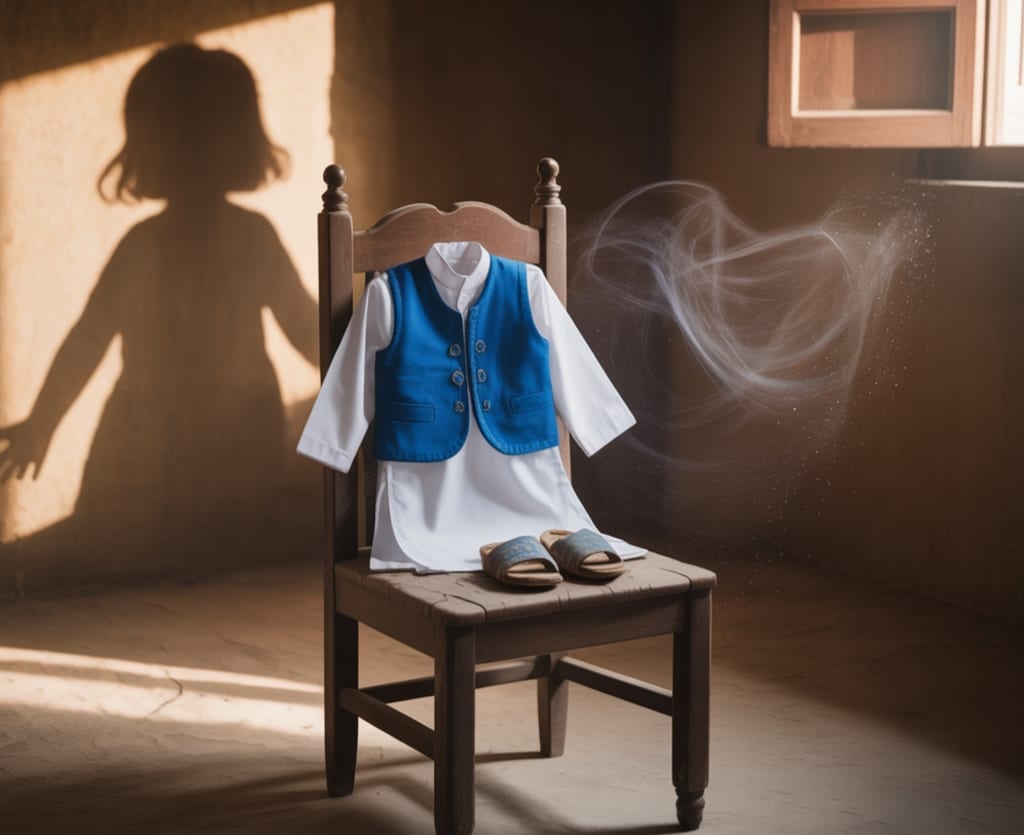
It was Eid morning. The sky was clear, the sun gentle, and the air carried the soft scent of celebration. Streets buzzed with laughter, kids raced in their new clothes, and families gathered in warmth and joy.
But in one small house, there was no laughter. No scent of sheer khurma. No sound of bangles. Just silence… and a pair of neatly folded Eid clothes resting in a little boy’s hands.
Seven-year-old Ahmad sat quietly in the courtyard, holding his new white kurta and blue waistcoat. His eyes weren’t shining with excitement like every other child. He just stared at the clothes. Waiting. Hoping.
“Ammi… when will Zara Api come?” he asked softly.
His mother turned her face away. Her eyes were misty.
“Beta… Zara Api has gone to Allah… She’s not coming back.”
Ahmad blinked. “So… will she celebrate Eid there?”
A tear slipped from his mother’s eye. She smiled through her pain.
“Yes, my love. She will have the most beautiful Eid… in Jannah. Where no one cries, and no one ever leaves.”
Ahmad fell silent.
Just a month ago, his 15-year-old sister Zara had passed away in a road accident. She wasn’t just his sister — she was his best friend, his storyteller, his second mother. Every Eid, Zara made it magical. She would hide coins in his pockets, tease him during breakfast, and teach him how to say "Eid Mubarak" in the cutest ways.
She always said, “Eid is not about clothes, Ahmad. It’s about hearts — smiling hearts.”
But this Eid… the heart was missing.
The house looked the same, yet everything had changed. Zara’s bangles still hung on her dresser. Her slippers near the door. Her laughter still echoed in Ahmad’s memories, like a sweet ghost refusing to leave.
“Beta,” Ammi said gently, “Zara would want you to wear these clothes. She picked the waistcoat herself, remember?”
Ahmad nodded slowly. He took the clothes and went inside. As he dressed, tears rolled down his cheeks. Every button, every sleeve reminded him of her — the sister who used to help him get ready, adjust his collar, and kiss his forehead.
He looked into the mirror.
Something was missing. Someone was missing.
When he stepped out, Ammi’s heart softened. She smiled for the first time in days. Ahmad looked handsome — just like his father once did at that age. But more than that, he looked brave. He was trying. And that meant everything.
After Eid prayers, Ahmad quietly asked if he could visit Zara’s grave. Ammi hesitated, then nodded.
At the cemetery, he walked with tiny, careful steps. In his hands were flowers — white roses, her favorite.
He knelt beside her grave and placed them gently on the fresh soil. His lips moved in prayer. Then he whispered:
“Allah, please tell Zara Api that I wore the clothes. And I didn’t cry much. And that I miss her… but I know she’s happy with You.”
He paused.
“And please… give her the best Eid in Jannah.”
A soft breeze touched his face.
Ahmad smiled.
On the way back home, he held Ammi’s hand a little tighter. He didn’t say much. But something had changed. The pain was still there — but so was peace.
That evening, Ahmad found one of Zara’s old notebooks. Inside was a page she had written just weeks before her death:
> “If I ever leave before Eid… tell Ahmad I’ll still be with him. Every time he smiles. Every time he shares. Every time he forgives someone. I’ll be right there — clapping in Jannah.”
Ahmad closed the notebook and held it to his chest.
That night, for the first time in a long while, he slept peacefully.
And outside his window, the stars twinkled a little brighter.
About the Creator
Keep reading
More stories from Khalid khan and writers in Art and other communities.
MUSIC
Why Music Is Way More Important Than Most People Think Honestly, music is one of those things we all use every single day, but we don’t really stop to think about how deep it actually goes. Like yeah, we play songs in the car, in the shower, while studying, or just when we’re bored. But music is doing way more than just filling up silence. It’s shaping how we feel, how we remember things, and even how we see the world, which is kinda crazy when you think about it.
By Beshoy Zayer2 days ago in Art



Comments
There are no comments for this story
Be the first to respond and start the conversation.