
The Dark Bars of Nazias Prison
A tale of poverty betrayal and the haunting price of forgotten values


The Dark Bars of Nazia’s Prison
BY:Khan
Inside the suffocating walls of the black prison cell, Nazia felt her soul strangling. The sorrow of separation from her loved ones was unbearable. Day and night she wept bitter tears of regret, but it was all in vain. Time that had once slipped away could never be retrieved. Memories ran before her eyes like moving pictures on a screen. Whenever a woman taunted her, it was always the same words: “What a shameless, dark-hearted woman you are, without an ounce of modesty.” She would cry, scream, and wail, but the iron bars of prison had now become both her painful life and her slow death.
Nazia had been her father’s only daughter. Her parents were extremely poor. Her father worked as a laborer, barely earning enough to feed the family dry bread twice a day. From a young age, her cousin Rashid had desired her, but she never gave him a glance. Instead, she dreamed of marrying a rich man’s son. Having starved for most of her childhood, her heart longed for luxuries, for beautiful clothes, and for feasts she had never tasted. As she grew into a stunningly beautiful young woman, her desires bloomed alongside her youth. Boys from her neighborhood were infatuated with her, and she carried her beauty with arrogance.
Soon she started talking to a few of them, just enough to receive gifts and meals. Though she knew her limits, she only wanted to escape the hunger and explore the outside world. When her father discovered her behavior, he forced her into marriage with Rashid, the cousin she disliked. Rashid sold snacks on a street cart. At first, after the wedding, he tried to treat her well and feed her properly. But soon, the old misery returned. Poverty and hunger became her daily companions once more.
She despised Rashid. Even when he gazed at her lovingly, she would scold him harshly and forbid him from even looking at her. He, however, remained captivated by her beauty and longed for children. But Nazia had no intention of becoming a mother. “The man who cannot feed me,” she thought, “how could he ever feed my children?” Determined, she refused him motherhood. Rashid grew more violent, beating her in fits of rage. Tired of daily abuse, she yearned to escape like a free bird. Yet she had nowhere to go. Her parents’ home was drowning in famine, and she could not return. Many times, she thought of ending her life, but she could never bring herself to do it.
Rashid’s younger brother, Bashir, worked in a factory in the city. Whenever he visited, he told tales of city life, of wealth and freedom. Nazia’s heart burned with desire. She knew Rashid had some savings, gold, and even a house. But she had no access to them. Slowly, she began to trap Bashir with her charm. It was not long before he became infatuated. Even Rashid’s worker, Afzal, who helped at the cart, was enslaved by her beauty.
Her life went on in this tangled mess of love, hunger, and abuse—until one night changed everything.
Masked men broke into the house at midnight. Shots were fired. A bullet pierced Rashid’s chest, and he collapsed lifelessly on the floor. Nazia screamed, sobbed, and tore her clothes in grief. The whole neighborhood gathered, shocked at the brutal death. Soon after, all of Rashid’s property, jewelry, and money came under her name. She pretended to mourn, but within weeks she left for the city, chasing her dreams of freedom.
In the city, she abandoned her lovers one after another, drowning herself in alcohol, music, and nights of sin. To society, she portrayed herself as a wronged widow whose cruel brother-in-law had ruined her life. In reality, she had thrown away all traditions, values, and morals. She became a rebel, embracing crime as if it were ordinary.
Sometimes she returned to her village, acting again like the innocent Nazia whose life had been destroyed in one tragic night. Meanwhile, the police relentlessly investigated Rashid’s murder. They tortured Bashir, suspecting him of the crime, but later proved him innocent. Their search continued—until finally, the truth emerged.
The real murderer was Nazia.
She was arrested from a nightclub, dressed in revealing clothes, dancing and singing without shame. Furious and humiliated, she was dragged into custody. At first, she denied everything. Beaten daily by the lady inspector, she stubbornly repeated: “I didn’t do anything.” But the wounds on her body, the weight of guilt, and her broken spirit eventually forced her to confess.
Through sobs, she revealed the truth:
“Rashid always oppressed me. Even with money, he never fed me properly. He beat me, demanded children, and I grew sick of him. Then his brother came from the city, and I trapped him with my beauty. At the same time, Afzal, his worker, also fell for me. Afzal had ties with criminals. Together, we planned Rashid’s murder.
That night, I drugged Bashir with sleeping pills, knowing he was drunk. Then Afzal and two men entered with masks. I screamed, pretending to be terrified. Rashid rushed out, and they shot him in the chest. I tore my clothes, cried loudly, and accused Bashir of attempting to violate me. I said Rashid died trying to protect my honor.
Afterward, I lived with Afzal in the city, but he betrayed me too. Broken, I turned to alcohol, to sin, to rebellion. I forgot what was right or wrong, forgot faith, forgot family. I became a vile woman.”
Collapsing into tears, Nazia wept as her statement ended.
The lady inspector, after recording everything, looked at her coldly and said:
“Now what is the use of regret? When God gave you an honorable life, you wasted it. You thought you could deceive the world. But you forgot the truth: real power belongs only to Allah. No matter how clever a criminal is, they can never hide their crime forever.”
About the Creator
Best Artwork by Gustave Moreau
French Symbolist artist Gustave Moreau was known for his brilliant depictions of mythological and religious themes. He studied at the Ecole des Beaux-Arts and took private art courses with artist Theodore Chasseriau. In 1857 Moreau went to Italy and studied the paintings of Leonardo da Vinci, Michelangelo, and Giovanni Bellini. He became the professor of the artists Henri Matisse and Georges Rouault at the Ecole des Beaux Arts. The Musée National Gustave Moreau is in Paris.
By Rasma Raisters7 days ago in Art
Catherine: The Unshakable Heart of the Monarchy
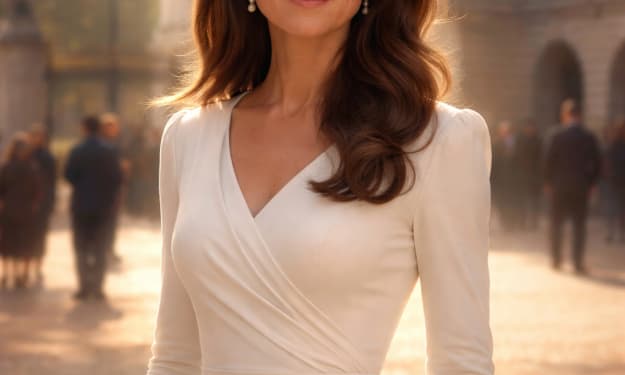
The House of Windsor is facing a subtle but undeniable shift. Tension runs high, and the once-clear lines of loyalty and influence are now blurred. At the center of it all stands Catherine, Princess of Wales—a figure who has long been admired for her grace, calm, and unwavering dignity. But recent events have brought a storm to the palace doors, one that threatens to test the very foundation of royal stability. For years, Catherine served as the quiet anchor of the monarchy. She carried her role with elegance, weathering constant scrutiny from the public and press alike. Then came a serious health challenge, a period of uncertainty and silence that left many wondering if she would step back permanently. But she did not. Instead, she returned stronger, her poise and presence commanding renewed attention and respect. Public admiration for her soared, culminating in headlines that celebrated her as more than a royal figure—they crowned her a symbol of strength. This rising public affection, however, has created ripples behind palace walls. Reports suggest that King Charles feels overshadowed, and Queen Camilla may be aligning with palace traditionalists in response to Catherine’s prominence. What was once a harmonious center of royal life now shows signs of friction. Influences are shifting, whispers and press narratives become tools of subtle power struggles, and Catherine, the stabilizing force, is suddenly cast as a threat. This isn’t about Catherine versus Meghan Markle, though the comparison is inevitable. Meghan, once seen as the disruptor, now observes the palace from outside. Her era of controversy shaped her influence, but today’s narrative highlights endurance over disruption. Catherine doesn’t need confrontation to command attention—her consistency, humility, and resilience naturally draw public support. This quiet power is precisely what unsettles those who rely on control and manipulation. Catherine’s return demonstrates a fundamental truth: legacy outlasts noise. She embodies a rare combination of grace under pressure, emotional intelligence, and unshakable composure. Her strength is evident not in headlines or controversy but in her ability to maintain dignity amid chaos. People don’t just admire her; they trust her. They feel her presence, and in her, they see continuity, reliability, and hope for the monarchy’s future. The palace may attempt to manage narratives, deploy commentators, or subtly influence the media, but they cannot manufacture the connection Catherine shares with the public. Her influence is organic. It is the result of years of consistent, visible dedication, and it resonates far beyond the confines of Buckingham Palace. While power struggles may unfold within, the world watches, and the audience has already chosen a champion. Meanwhile, Meghan’s story, once loud and all-encompassing, fades into the background. Her brand of influence—rooted in challenge and controversy—cannot compete with Catherine’s enduring presence. The public craves stability, someone who embodies calm, resilience, and authenticity. Catherine provides that in abundance, and the contrast is unmistakable. Enduring legacy outshines transient disruption. Ultimately, Catherine’s rise is not a threat to the monarchy—it is its lifeline. She is the bridge between tradition and relevance, connecting generations with quiet confidence. The very qualities that some may perceive as challenging palace control—her popularity, her grace, her resilience—are precisely what sustain public trust. This isn’t a story of rivalry; it’s a lesson in the power of character, the influence of consistency, and the enduring appeal of authenticity. History has a way of remembering who strengthens institutions and who allows petty conflicts to erode them. Catherine stands as a testament to steadfast leadership, quiet courage, and the enduring bond between a royal and her people. Those who underestimate her do so at their peril, for her strength is both visible and deeply felt. The narrative is clear: Catherine isn’t merely surviving; she is thriving. She faces pressure, criticism, and palace politics with unflinching dignity, reinforcing her role as an indispensable figure in the monarchy’s future. Her story reminds the world that true influence is built on resilience, authenticity, and the unwavering commitment to serve, rather than to command attention. As the palace navigates shifting alliances and personal insecurities, the public stands with Catherine. Her legacy, already forming, will outlast the temporary noise of gossip and speculation. She is the embodiment of stability, grace, and leadership—a woman whose presence strengthens the monarchy and whose endurance inspires the world. The House of Windsor may grapple with internal tension, but Catherine has already secured her place in the hearts of those she serves. In a world of fleeting attention and manufactured drama, Catherine proves that true influence is quiet, steady, and lasting. She faces life’s storms not with theatrics, but with poise and resilience, leaving a legacy that no palace intrigue can diminish. The world watches, admiration grows, and history quietly notes who stood firm, who served with dignity, and who became a true icon of endurance. Image Creation Format for This Story: Subject: Catherine, Princess of Wales, standing gracefully in a sunlit palace courtyard, with subtle shadows representing tension behind palace doors. Mood: Elegant, dignified, serene, yet powerful—contrast of calm versus tension. Style: Realistic digital painting, slightly cinematic, focus on light and expression.
By Behind the Curtain8 days ago in Art



Comments
There are no comments for this story
Be the first to respond and start the conversation.