
The Curious Case of Peter Bruce Gale’s 1562 Painting: A Prehistoric Mystery
Arts History

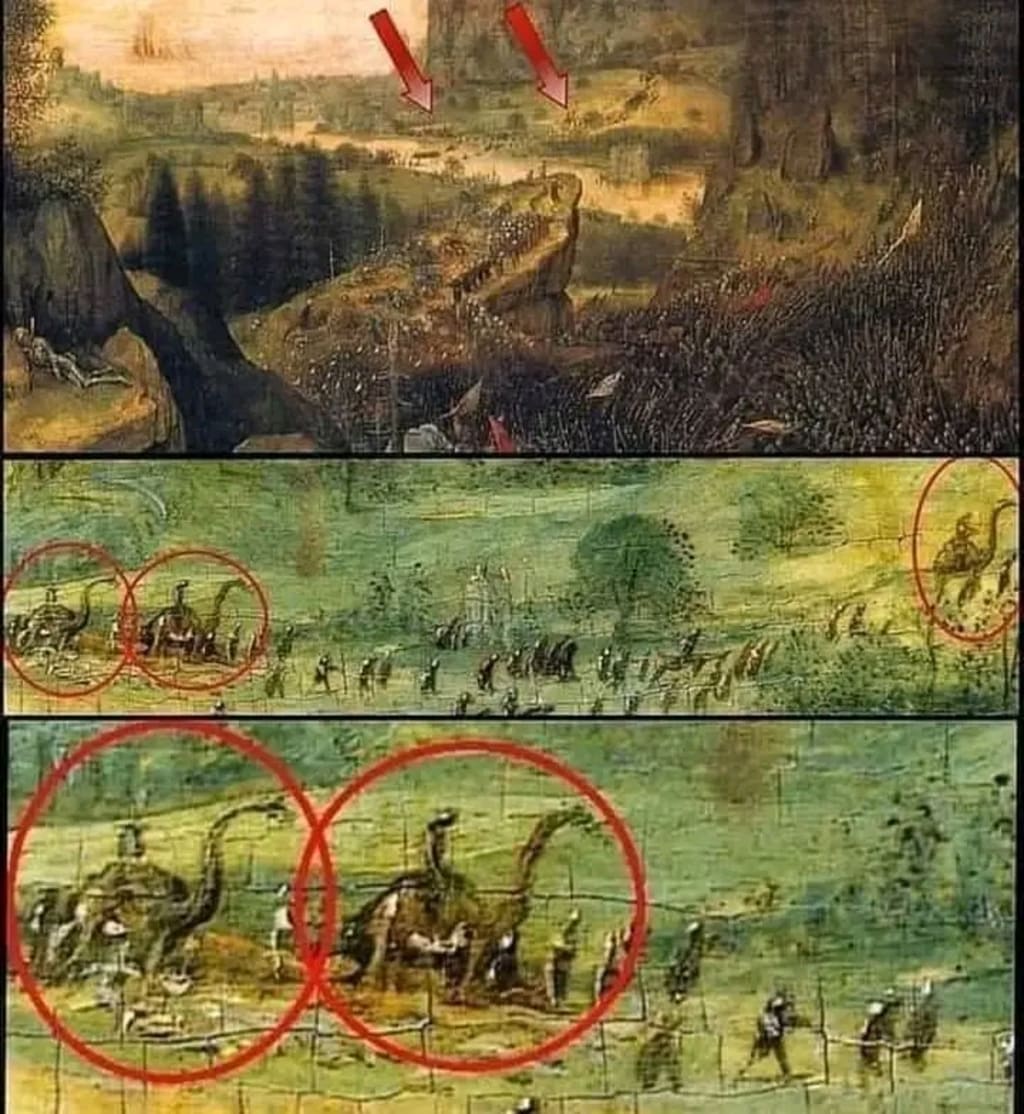
In the annals of art history, some works defy explanation, challenging what we think we know about the past. Among these is a mysterious painting created in 1562 by the little-known artist Peter Bruce Gale. While seemingly unremarkable at first glance, the painting features an extraordinary subject: what appears to be a dinosaur, centuries before the scientific discovery of these prehistoric creatures.
This enigmatic artwork raises fascinating questions about human knowledge, imagination, and the mysteries of history. Could Peter Bruce Gale have somehow known about dinosaurs? Or does his painting simply reflect a coincidence or a product of creative storytelling? Let’s delve into the details of this perplexing painting and its potential implications.
---
The Painting: A Window to the Past
Peter Bruce Gale’s 1562 painting, whose title has been lost to time, depicts a lush, pastoral landscape populated by various animals. Amid the deer, birds, and other creatures of the natural world, one figure stands out—a large, reptilian beast with striking similarities to what we now know as a dinosaur. Its long neck, massive body, and tail bear an uncanny resemblance to depictions of sauropods, a group of long-necked dinosaurs like the Brachiosaurus and Apatosaurus.
What makes this painting so intriguing is not just its artistic quality but its temporal context. In 1562, the concept of dinosaurs did not exist. The term “dinosaur” itself would not be coined until 1842 by paleontologist Richard Owen, and the first formal dinosaur fossil discoveries did not occur until the 19th century.
So how did a 16th-century artist paint a creature that looks so much like a dinosaur?
---
Possible Explanations
1. A Coincidence of Imagination
One of the most plausible explanations is that Peter Bruce Gale’s dinosaur-like creature was a product of artistic imagination. Artists of the Renaissance and earlier often drew fantastical animals inspired by myths, legends, and hearsay. Creatures such as dragons, griffins, and sea monsters frequently appeared in paintings and manuscripts of the time.
It’s possible that Gale’s creature was inspired by similar sources. Its resemblance to a dinosaur might be coincidental, reflecting a blend of reptilian and fantastical elements rather than any specific knowledge of prehistoric creatures.
2. Fossil Discoveries in Antiquity
While the formal study of fossils did not emerge until the 19th century, fossilized bones had been discovered and puzzled over for millennia. Ancient cultures often interpreted large fossilized bones as evidence of mythical giants or dragons.
In this context, it is conceivable that Peter Bruce Gale or his contemporaries might have encountered dinosaur fossils without understanding their true nature. These discoveries could have influenced his depiction of the mysterious creature, blending observation with artistic license.
3. Oral Histories and Legends
Another intriguing possibility is that the painting reflects oral traditions or legends passed down over generations. Many ancient cultures, including those in Europe, Asia, and the Americas, have myths and stories about large, reptilian creatures resembling dinosaurs. While these tales are often associated with dragons, it’s not impossible that they were inspired by fossil discoveries or encounters with prehistoric remains.
Could Peter Bruce Gale have been inspired by such stories? If so, his painting might represent an artistic interpretation of a cultural memory of long-extinct creatures.
4. Time-Traveling Knowledge?
For those with a taste for the extraordinary, there’s a more speculative explanation: that the painting reflects knowledge that was somehow acquired ahead of its time. While this idea ventures into the realm of science fiction, it underscores the allure of this mysterious work of art. Could there be unknown factors at play, such as lost knowledge from an advanced ancient civilization or even speculative theories about time travel?
---
Art, Mystery, and Interpretation
Regardless of the true origin of the dinosaur-like figure in Gale’s painting, it serves as a fascinating case study in the intersection of art, imagination, and historical context. Art has always been a medium through which humanity explores the unknown, blending reality with creativity to create works that inspire curiosity and wonder.
Peter Bruce Gale’s work reminds us that artists of the past were not just chroniclers of their time but also visionaries capable of imagining worlds beyond their own. Whether the creature in the painting was inspired by fossils, folklore, or pure invention, it demonstrates the power of art to spark questions and expand our understanding of history.
---
Why It Matters
The mystery of Gale’s painting is about more than just a single work of art; it speaks to the broader human desire to understand our world and its history. The questions raised by this painting echo those posed by paleontologists, archaeologists, and historians in their quest to uncover the secrets of the past.
Moreover, the painting challenges us to consider the limits of our knowledge. What other connections between the ancient world and the present might we be overlooking? Could there be other forgotten works of art or literature that hint at advanced or unusual understanding of the natural world?
---
Conclusion
Peter Bruce Gale’s 1562 painting stands as a captivating enigma, a puzzle that blurs the line between historical knowledge and artistic imagination. While we may never know exactly what inspired the dinosaur-like creature it depicts, the painting invites us to ponder the mysteries of the past and the role of creativity in shaping our understanding of history.
Whether interpreted as a coincidence, a reflection of fossil discoveries, or a nod to ancient legends, Gale’s work reminds us of the enduring power of art to transcend time and connect us to the unknown. It is a testament to the curiosity and ingenuity of the human spirit, encouraging us to look more closely at the world around us—and to imagine the worlds that came before.
In the end, the significance of this painting lies not in solving its mystery but in embracing its capacity to inspire wonder. It is a reminder that history, like art, is an ever-unfolding story, full of surprises waiting to be discovered.
About the Creator
Keep reading
More stories from Deji Akomolafe and writers in Art and other communities.
Monet in New York City: Exploring His Masterpieces Across Iconic Museums
Claude Monet, one of the most celebrated painters of the Impressionist movement, continues to captivate audiences worldwide with his luminous works that bridge the gap between realism and abstraction. While his lush gardens in Giverny were the cradle of inspiration for many of his masterpieces, it is in New York City where art lovers can encounter a remarkable collection of his paintings. The Metropolitan Museum of Art (The Met) and the Museum of Modern Art (MoMA) house some of Monet's most iconic works, offering visitors an unparalleled opportunity to delve into the world of this legendary artist.
By Deji Akomolafeabout a year ago in Art
'Till Death We Do Art
There would be nothing divine in this world without art. Nature may surpass the divine to all intents and purposes, but like everything it absorbs and is absorbed by, it remains here, stuck on the surface of this world, ever-present, physically bound to the universe.
By Avocado Nunzella BSc (Psych) -- M.A.P 28 days ago in Art




Comments
There are no comments for this story
Be the first to respond and start the conversation.