
The Birth of Venus: Botticelli's Epic Splash of Myth and Beauty
An Enchanting Journey Through Renaissance Florence and the Timeless Allure of Art
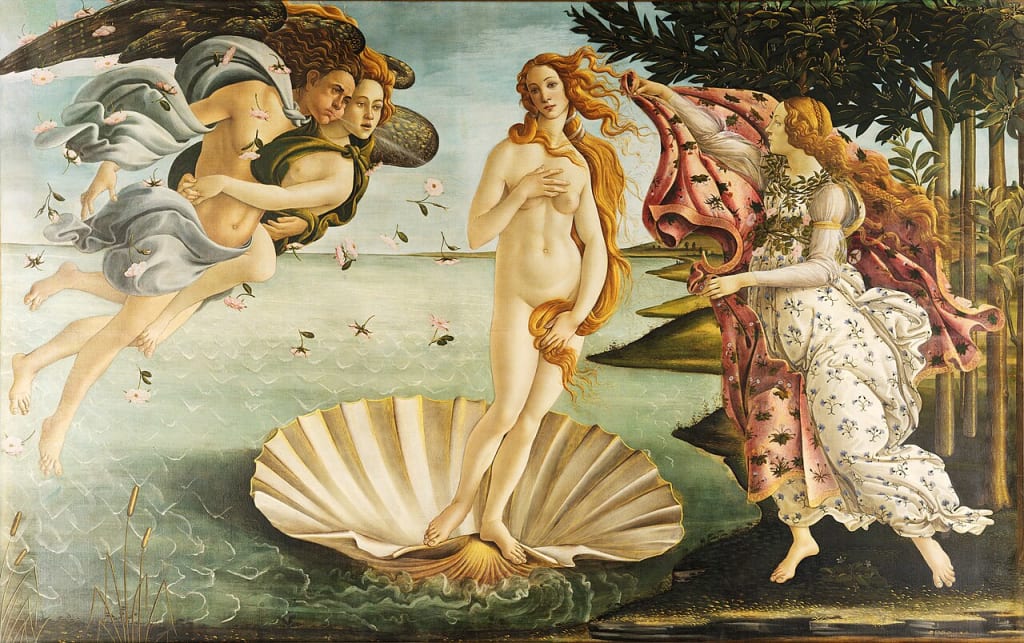
This is your golden ticket to an art adventure that's part historical, part hysterical! Get ready, art aficionados and curious minds, because we're about to dive headfirst into the enchanting world of Alessandro Botticelli's "The Birth of Venus." This masterpiece is no ordinary painting; it's a journey through time and myth, filled with drama, divine beauty, and a cheeky splash of humor.
Setting the Stage in Renaissance Florence
Picture this: Florence, Italy, in the late 15th century—a place that was the ultimate Renaissance version of Coachella, but with more art and fewer flower crowns. It was like a bustling art and culture festival, and Botticelli was the headliner. In this dynamic environment, he fully embraced the revival of classical ideals from ancient Greece and Rome, and it shows in "The Birth of Venus."
Mythical Marvel Unleashed: The Birth of Venus
Now, let's talk about the real star of the show—Venus, the goddess of love and beauty. She's about to make a grand entrance into the world, but her origin story? Hold onto your togas, folks, because it's a real knee-slapper.
In the annals of Roman mythology, there's a tale that's stranger than a Netflix plot twist. It involves Uranus, the god of the sky, and his rebellious offspring. Picture this: Uranus's genitals getting the snip-snip treatment by his own son, Saturn (or Cronus, if you're into Greek mythology). But wait, there's more! Those severed body parts were thrown into the sea.
Now, here's where it gets wild. From this improbable concoction of sea foam and divine influence, Venus emerges, fully grown and radiantly beautiful. Yes, you read that right—Venus, the goddess of love and beauty, basically did a superhero landing into existence from Uranus's floating bits. Talk about a dramatic entrance!
This unique genesis narrative is like the ultimate reality show plot twist. It's all about the captivating and unpredictable nature of love and beauty. Venus's birth from sea foam is a metaphorical mic drop, symbolizing the transformative power of love, which can pop up when you least expect it and become something truly extraordinary.
As we ponder this mythological origin, we're diving headfirst into an enigmatic world that Botticelli's painting brings to life. Picture Venus gracefully emerging from the sea, her long flowing hair and delicate features untouched by the chaos of her unconventional birth. It's like a red-carpet moment where the paparazzi are the sea foam and the diva is Venus herself. Botticelli's artistry captures this divine drama with a wink and a nod.
A Cast of Mythical Characters
But wait, there's more drama to unpack! Venus isn't on this adventure alone. To her left, Zephyr, the god of the west wind, is like her personal fan club president, blowing a gentle breeze to guide her. It's like he's saying, "You go, goddess!" On the right, a nymph named Chloris rushes to provide Venus with a fashionable floral garment, as if they're in the middle of an underwater fashion emergency. Forget Project Runway; this is Project Sea Runway!
Beneath this cosmic spectacle, the goddesses of the seasons, known as Horae, eagerly await Venus with a fabulous robe that would put any red-carpet event to shame. It's the ultimate makeover moment, symbolizing the arrival of beauty and love with the changing seasons. Think of it as Venus's version of a celebrity makeover montage.
The Language of Flowers
But what's a grand entrance without some flair? Botticelli had a secret language in this painting, and it's all about the flowers—roses, to be precise. In Roman mythology, roses were like the love emojis of their time, symbolizing passion and desire. And boy, do they make an entrance here!
As we gaze upon this masterpiece, we see roses subtly but abundantly scattered throughout the scene. They rain down like confetti at a surprise party, adding a dash of romance to the divine drama. Each rose, with its velvety petals and vibrant colors, is like a cupid's arrow, reminding us that Venus is the queen of love and beauty.
But the fun doesn't stop there. These roses aren't just pretty decorations; they're a visual link between the divine and the earthly. They're like Mother Nature's way of saying, "Hey, love is in the air, folks!" Botticelli's meticulous inclusion of these blossoms enriches the painting, turning it into a multisensory experience that tickles our funny bones and awakens our inner romantics.
A Timeless Treasure
So, there you have it! "The Birth of Venus" isn't just any painting; it's an everlasting enchantment that's as hilarious as it is beautiful. It's not just about the artistry; it's about the story it tells—a tale that combines divine drama, unexpected humor, and a touch of Renaissance flair.
Botticelli's attention to detail, from Venus's fabulous hair to Chloris's underwater fashion sense, is a testament to his masterful craftsmanship. And the magic of this painting? It's like a time machine that whisks us away to a world of myths, beauty, and laughter.
So, next time you encounter this iconic masterpiece, don't just look—immerse yourself in its humor, let your imagination take flight, and remember that art isn't just something you hang on a wall; it's a passport to a world of mythological hilarity and timeless beauty.
About the Creator
Keep reading
More stories from writers in Art and other communities.
Dog Shoes for Small Dogs and Puppy Shoes A Practical, Paw-Friendly Guide
Small dogs and puppies may look tough, but their paws often need more protection than people realize. Their bodies are lighter, their paws are smaller, and many of them spend a lot of time on surfaces that were never designed for delicate paw pads. Add cold sidewalks, hot pavement, rough gravel, wet grass, or even slippery indoor floors, and you start to see why dog footwear has become more than just a cute trend.
By aliyashahzadi3 days ago in Art




Comments
There are no comments for this story
Be the first to respond and start the conversation.