
Telling the Story of a Melting World Through Photography
Exploring how photographers capture the fragile beauty of melting glaciers, revealing powerful stories of climate change, loss, and environmental awakening.

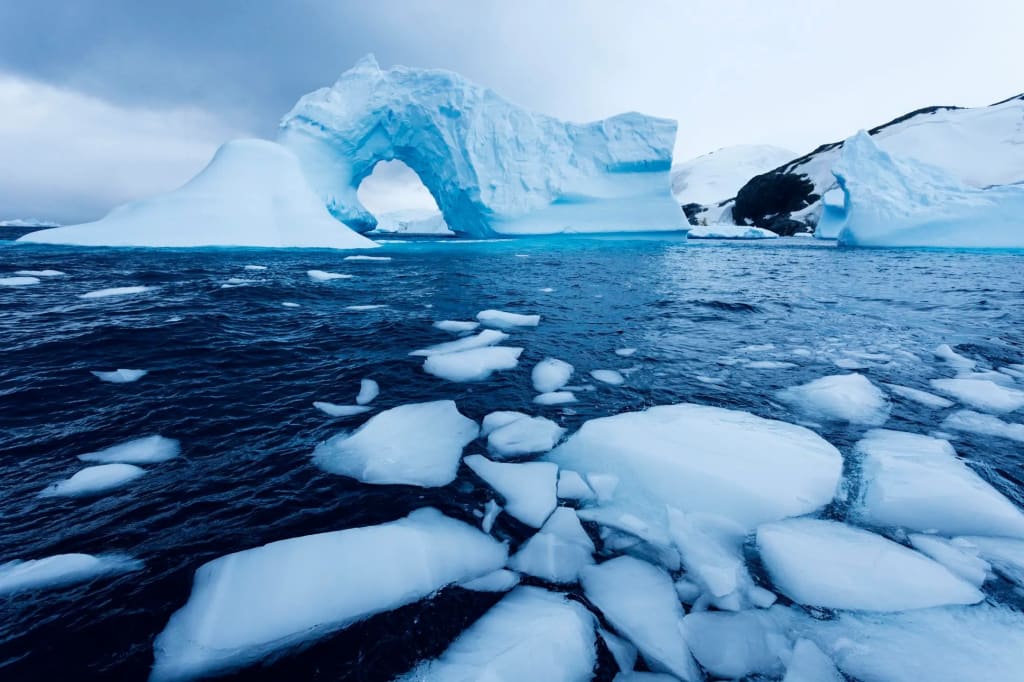
Imagine you are standing in front of a huge wall of ice, which has stood for thousands of years. It shines in the gently dawning light, peaceful and everlasting. But underneath the silence, it is moving - shrinking, cracking and slipping into the sea.
Glaciers sometimes are referred to as the memory of the planet. Each ice's layer tells a story of time - of temperature, wind and atmosphere. However, as the world temperatures increase, those memories are melting away faster than ever before.
This is where art meetsurgence. Melting glacier photography Not only does it capture the beauty of these frozen lands, but the slow disappearance of them too. The lens of a camera is capturing the very loss of humanity - melt by melt, piece by piece.
When Photography Becomes a Witness
Photography has been used for a long time to tell a story, but in the Arctic and Antarctic, it becomes something more - a witness. Each image of a receding glacier or calving iceberg is a document of change.
Those photographers who go to these icy regions not only take beautiful photos. They provide testimony of change - the disappearing ice shelves, the expanding melt channels and the rivers of ice that were once solid now reduced to gushing torrents.
These images allow scientists to monitor trends, but they also get to the public in a fashion that data by itself cannot. One photograph can help people feel what a graph cannot reveal: the loss of an artifact of ancient and irreplaceable value.
The Art of Patience and Presence
Photographing glaciers is not an easy task. It requires patience, preparation, and in most cases, physical endurance. Photographers sit for hours at a time (sometimes days) waiting for the right moment in the cold.
The process is long and meditative. There is the crackling of ice moving in the night, the sound of water dripping as the glacier is moving and melting. The photographer becomes the observer and participant in a landscape that is alive but dying.
Many report the experience as being spiritual in nature. The moral of impermanence is to stand before a melting glacier. It is humbling to see how even the greatest and oldest parts of our planet are changing in a single lifetime.
Light, Time, and Transformation
Glaciers are light reflectors like nothing else in nature. At sunrise or sunset, the ice forms into shades of blue, pink and silver. Light is the medium and metaphor of photography - a symbol of transformation and vulnerability.
In the long-exposure photography, the ice appears to flow like water or mist while showing us the delicacy in the change. The slow shutter contains not simply an instant, but a process of time - erosion, melting and disappearance.
Each photograph is a kind of harmony between beauty and grief. The viewer is captivated by the calm of the image yet beneath it there is the understanding that what they see could soon be gone.
The Human Connection to Melting Ice
The melting of glaciers is not a remote event taking place at the top of the world - it affects us all. Glaciers feed rivers, store fresh water and control global temperatures. As they melt, the level of the sea goes up, the weather changes and ecosystems collapse.
For a large portion of Indigenous communities who have lived in the ice for generations now, this is a deeply personal change. Their land, culture, economy, and spirituality are connected with the land and the ice. Photographers visiting these areas often collaborate with the local communities to tell the whole story - of environmental as well as cultural loss.
Art as a Bridge Between Science and Emotion
Climate change is one of the most challenging issues that people have ever encountered. Scientists make data, charts, and predictions - all of which are necessary to understand the crisis. But figures do not always reach into the heart.
This is where art gets in. Photography is the link between information and emotion. It brings climate change out of the invisible. It makes us realize that what is melting is not only ice - but history, memory, and life itself.
Environmental artists and photographers are often said to be working both as a warning and a prayer - a plea to show the truth and still a prayer that it might be renewed.
Hatch Photo Artistry and the Spirit of Environmental Storytelling
Many contemporary photographers and artists are reacting to this global situation by examining the relationship between man and the changing planet. One such creative studio, Hatch Photo Artistry, is known for thought about visual storytelling.
Their works typically demonstrate great reverence for the natural world and the emotional tension of our relationship with it. Rather than only looking at destruction, they instead expose the balance between fragility and resilience - that there is even in loss still beauty, still meaning.
In many ways, this view underscores for viewers that photography can be both art and activism. Every image will be a call to awareness, reflection and care concerning the earth we share.
The Emotional Power of the Image
When the public sees a photograph of a melting glacier, they usually experience two emotions at the same time - wonder and sorrow. Wounder about the majesty of the ice, and lament its certain disappearance.
That emotional tension is what makes melting glacier photography so powerful. It makes us look, not further, but closer. It helps us to consider what sort of world we would like to leave behind us.
Each image becomes a mute question: What are we willing to do to save what is left?
Preserving the Unpreservable
A camera cannot prevent a glacier from melting but it can save the memory of what was. These photographs will be historical records and emotional testimonies of a time when, in a century, many of the glaciers of today may no longer exist.
Through the lens we can see the greatness and fragility of the planet. And perhaps, looking at these images, we will remember that we cannot have beauty without responsibility.
At its best art is not merely a reflection of the world - it is a call to save it.
About the Creator
Hatch Photo artistry
Professional fine-art photography by Eric Hatch, revealing truth and beauty through powerful storytelling, portraits, landscapes, and architecture. Visit Now: https://hatchphotoartistry.com/
Keep reading
More stories from writers in Art and other communities.
Impressive Artwork by Odilon Redon
French symbolist artist Odilon Redon was famous for his drawings in the 1880s. The artist’s artworks were mentioned in the popular 1884 novel “A Rebours,” or “Against the Grain,” by Joris-Karl Hysmans. His later artworks were created in oils and pastels. He developed an interest in Hinduism and Buddhism, and this interest in mysticism is reflected in his works of art.
By Rasma Raisters5 days ago in Art
What Is A5 Service on Mercedes and When Do You Need It?
If you’re a Mercedes‑Benz owner, you’ve likely seen a maintenance message pop up on your dashboard — perhaps showing something like “Service A5 due”. But what exactly is a5 service on Mercedes, why it matters, what it includes, and how much it costs? This complete, easy‑to‑understand guide answers all those questions so you can keep your luxury vehicle running smoothly and avoid costly repairs down the road.
By Vincent Otiri6 days ago in Art
Wild Card Weekend Recap: What Happens Now?
I think I figured out why I love Wild Card Weekend so much. It's because it's the first playoff anything of the calendar year. The NFL season starts in the fall, and once upon a time, the champion was crowned either on or slightly before New Year's. The evolution of the NFL schedule has resulted in the playoffs starting just into the New Year, and currently, the final week of the season falls on the first weekend of the New Year, with Wild Card Weekend coming a week after that. So yes, chronologically, the NFL's Wild Card Weekend serves as the first playoff anything of the calendar year.
By Clyde E. Dawkins6 days ago in Unbalanced



Comments
There are no comments for this story
Be the first to respond and start the conversation.