

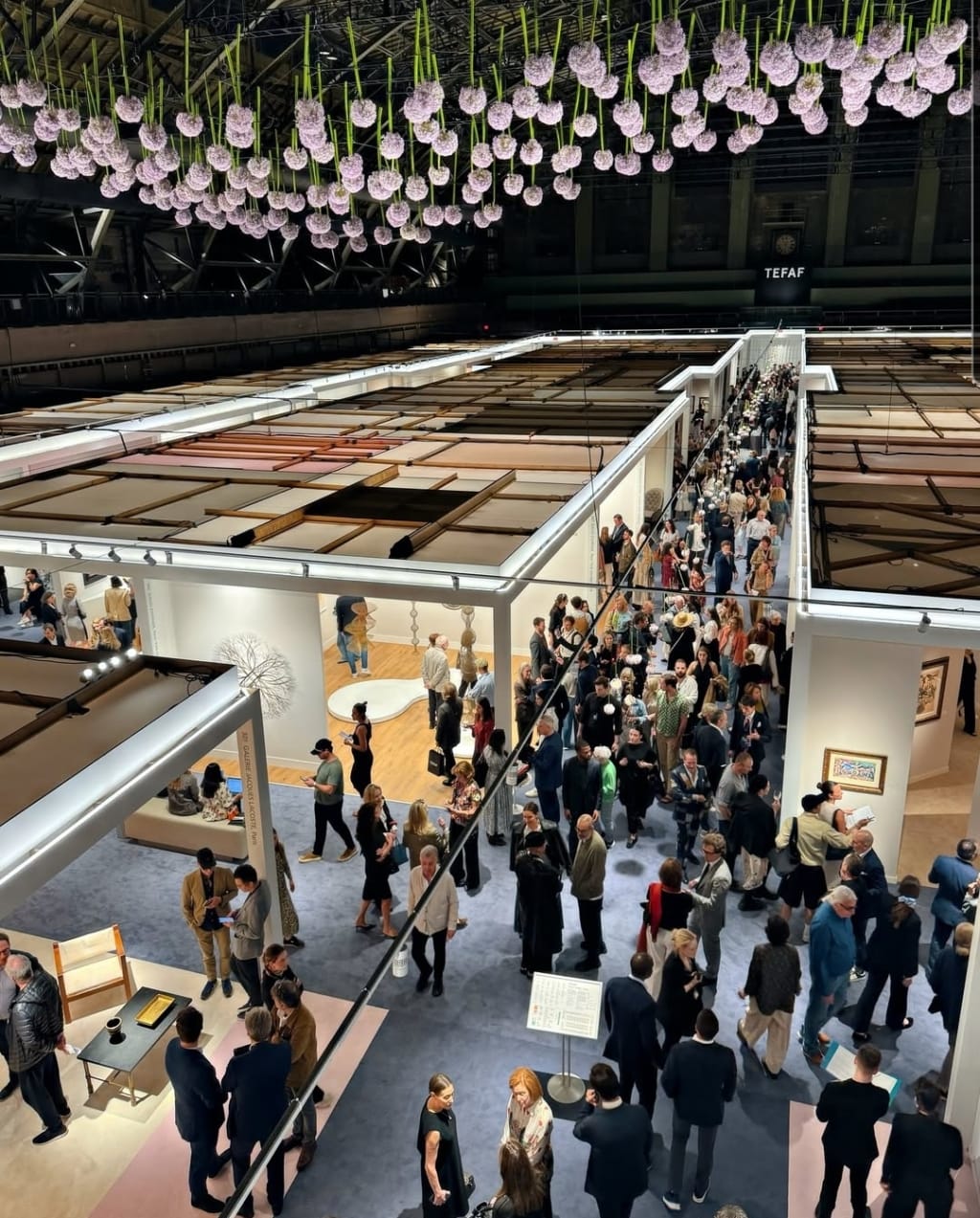
The gilded lobbies and stone staircases of the Park Avenue Armory felt especially humming this spring. TEFAF New York, the art fair that draws collectors and curators with the same discretion as it does heiresses and advisors, unfolded like it always does...expensively, and at a certain remove from the chaos of the city outside.
In one room, I paused beside a mirror framed in carved Venetian wood—its surface dulled only slightly by time, its label as carefully worded as a museum caption. Across the aisle, a young man in velvet loafers whispered something to a woman in diamonds, both leaning toward a case of 17th-century silver as if eavesdropping on the past.
A few steps away, two oils by lesser-known masters were displayed with restrained confidence. They weren’t begging for attention; they didn't have to - crowds of the curious had infiltrated every bit of the space. That’s part of the rhythm. The objects seem to mirror the guests—deliberate, self-contained, and softly luminous in the right light.
Held twice annually, TEFAF New York is the stateside sibling of the original Maastricht fair, long considered one of the most prestigious gatherings in the global art market. The spring edition focuses on modern and contemporary art and design, though Old Masters, rare books, and decorative arts still find their way into the mix. Dozens of top-tier galleries—from Europe, the U.S., and beyond—install their wares throughout the armory’s rooms, creating a disorienting but elegant hybrid of museum, showroom, and salon.
Suspended above the fair like an otherworldly canopy were hundreds of violet allium blooms—globe-shaped, architectural, and just strange enough to spark quiet commentary. A member of the onion family, allium is an unusual choice for floral spectacle, but it worked: suspended in clusters, their spherical forms offered a sense of levity and rhythm, equal parts celestial and botanical. Whether the designers intended a wink or not, it felt like a moment of soft surrealism—nature’s geometry echoing the precision of the fair below.
There is a bit of paradox at TEFAF: while it trades in some of the most priceless works of art in the world, its social rhythm is one of restraint. People arrive knowing where to look, or others pleasantly bumbling. The chatter is low, the selfie backgrounds are luxe. Only the sound of shoes on old wood, and the occasional low voice asking, “Do you think this would work in the Connecticut house?”
I saw a familiar curator from The Frick pass by—no entourage, just perusing. Two trustees from a major museum stood near some portraits, murmuring about their strength and place in time. Somewhere behind a tapestry, a deal was being closed, though no one rushed. Time moves differently surrounded by things like this.
And yet, beneath the hush, there is theater: subtle glances, calculated silences, the practiced ease of those who are never in a hurry but always in motion. The fair is as much about presence as it is about purchase.
By late afternoon, the crowd thins. Light pools in the corners. I sat for a moment near a display of small devotional panels, their gold leaf catching what little remained of the day’s sun. A quiet collector, notebook in hand, studied them one by one. Across the aisle, a vase glimmered in the fading light—so still, it was almost monastic.
There is undeniably a feeling that not everyone belongs here, a step away from being unsettling. Or rather—everyone is welcome to attend, but only a very few seem truly at ease. TEFAF is exquisitely polite, but also exquisitely coded. The ease of its regulars is a kind of choreography that one either already knows or does not. Beauty is everywhere, but so is a sense that the show might not meant for you (unless it is.)
After all that, there’s something a bit comforting about an event that doesn’t try too hard. TEFAF has nothing to prove. Neither, it seems, do most of its guests.
About the Creator
Oliver Grant
I write from within the art world and its private circles—where culture meets psychology, discretion, and influence. I live in New York. My stories come from the spaces in between. Professional interests in health, wellness, arts.
Keep reading
More stories from writers in Art and other communities.
The Uncopiable Human Wit to Write
We all have been in that spot at least once in our schooldays where we have been wringing our brains off to curate written articles of some sort until our soul-less friends were born. At just four years old, our beloved soul-less, metallic, digital assistant who is always by our side when we turn on our computers and smart phones, will be doing much more than curating written content for us all, if you know what I mean.
By Sound Savvy7 days ago in Art


Comments
There are no comments for this story
Be the first to respond and start the conversation.