
Tamara de Lempicka, the rebel artist
A remarkable artist who represented the female form


Let us peek into the fascinating world of Tamara de Lempicka. A remarkable artist whose life and work continue to intrigue audiences. Maybe what we will re-discover, is a portrait of Elegance and Modernity
Tamara de Lempicka, born on May 16, 1898 (though some sources suggest it might have been 1894 or 1895), left an indelible mark on 20th-century art. Her unique painting style, often described as “stylized cubism", blended influences from various artistic movements.
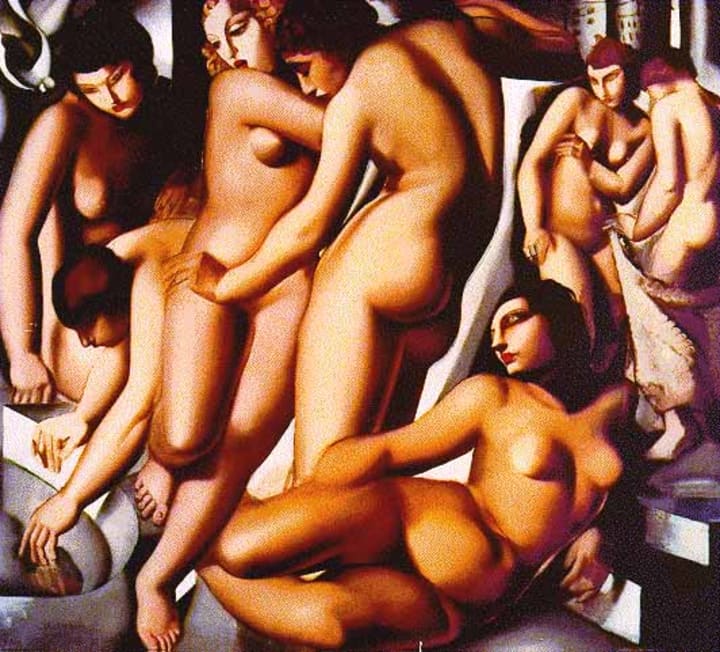
Lempicka's early Life was somewhat mysterious. The details of her early life remain somewhat enigmatic. She claimed to have been born in Warsaw, Poland, but some scholars believe she might have been born in Moscow. Her given name was equally elusive...Tamara, Maria, or Rozalia...all possibilities. This made her even more endearing and a rare curiosity.
Her father, Borys Gurwik-Górski, was a Russian Jewish attorney or merchant, while her mother, Malwina Gurwik-Górska, hailed from an affluent Polish family. Tragically, her father disappeared from her life, and she was primarily raised by her mother and maternal grandparents in Warsaw.
Tamara's life was one of Travel and Transformation...her upbringing was cosmopolitan. She attended finishing school in Lausanne, Switzerland, and traveled extensively, visiting Russia, France, and Italy. As a teenager, she lived with wealthy relatives in St. Petersburg, where fate intervened. At a costume ball, she met Tadeusz Łempicki, a young lawyer and socialite. They married in 1916, and she adopted the name Łempicka.
Paris, Revolution, and Artistic Awakening were doors opening for her. The 1917 Russian Revolution forced the Łempickis to flee to Paris. It was here that Tamara’s artistic journey truly began. Inspired by the vibrant cultural scene, she immersed herself in the world of art. Her style evolved, drawing from diverse influences: the monumentality of 16th-century Mannerism, the mechanical aesthetics of Italian Futurism, and the exaggerated glamour of contemporary fashion magazines.

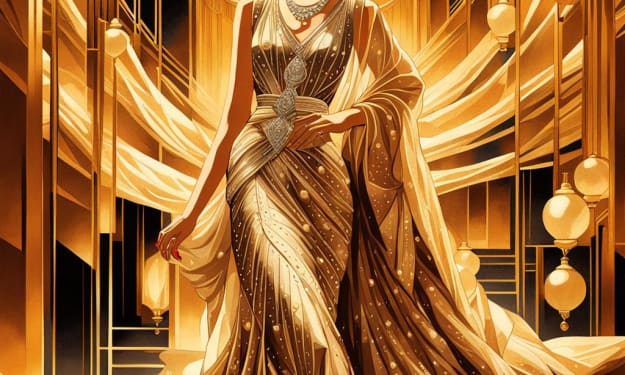
Portraits of Elegance and Sensuality was her trademark. Tamara de Lempicka became renowned for her polished Art Deco portraits. She captured the aristocracy and the wealthy with a distinct flair. Her subjects...often strong, independent women...wore glamorous gowns that clung to their bodies. These women drove speeding cars, lounged sensually against skyscrapers, and exuded modernity. Her paintings celebrated sensuality, independence, and sophistication.

De Lempicka developed her painting skills among the avant-garde art and literature movements of Neo-Cubism, Futurism, and Art Deco of the "Lost Generation". She studied at the Académie Ranson under Maurice Denis, although she only credited him for her draftsmanship skills. One of her main influences was the Neo-cubist André Lhote (professor to De Lempicka at the Académie de la Grande Chaumière).[
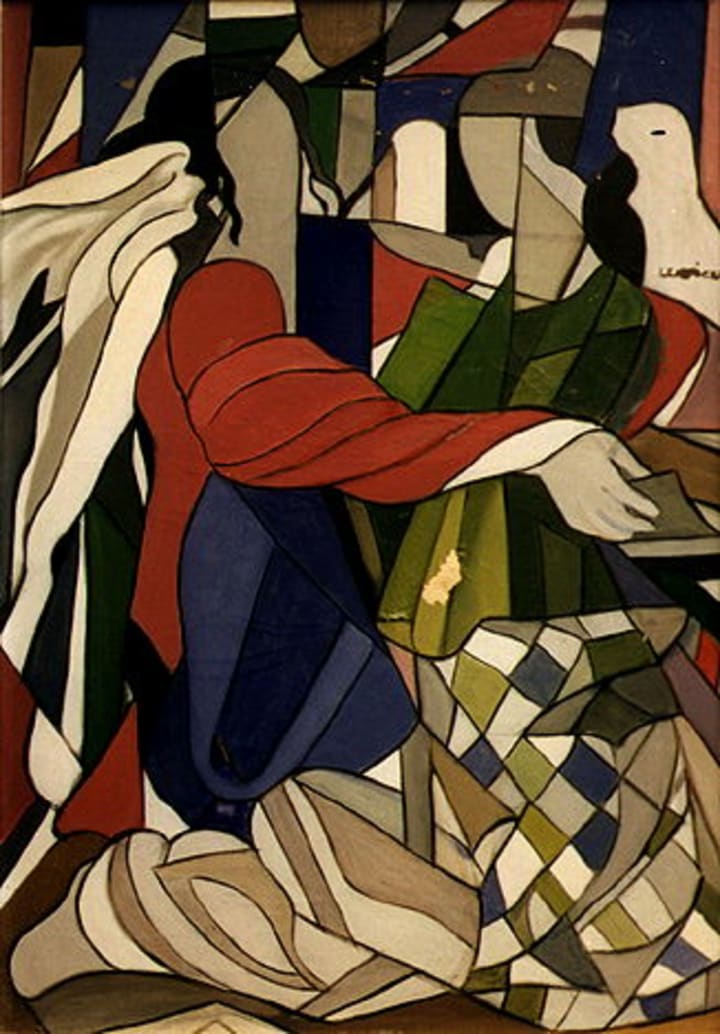
Tamara continued to paint throughout her life, even as she faced personal challenges. She divorced Tadeusz Łempicki and remarried, eventually settling in the United States. Her work fell out of favor during the mid-20th century but experienced a revival in the 1970s. She passed away on March 18, 1980, in Cuernavaca, Mexico.
In the end, Tamara de Lempicka’s legacy lies in her ability to capture the spirit of her time...the Roaring Twenties...through her art. Her paintings remain timeless, evoking both elegance and rebellion. So, imagine her at her easel, brush in hand, creating those iconic portraits that still resonate with us today.
Some of her most famous works:

Adam and Eve (1932):
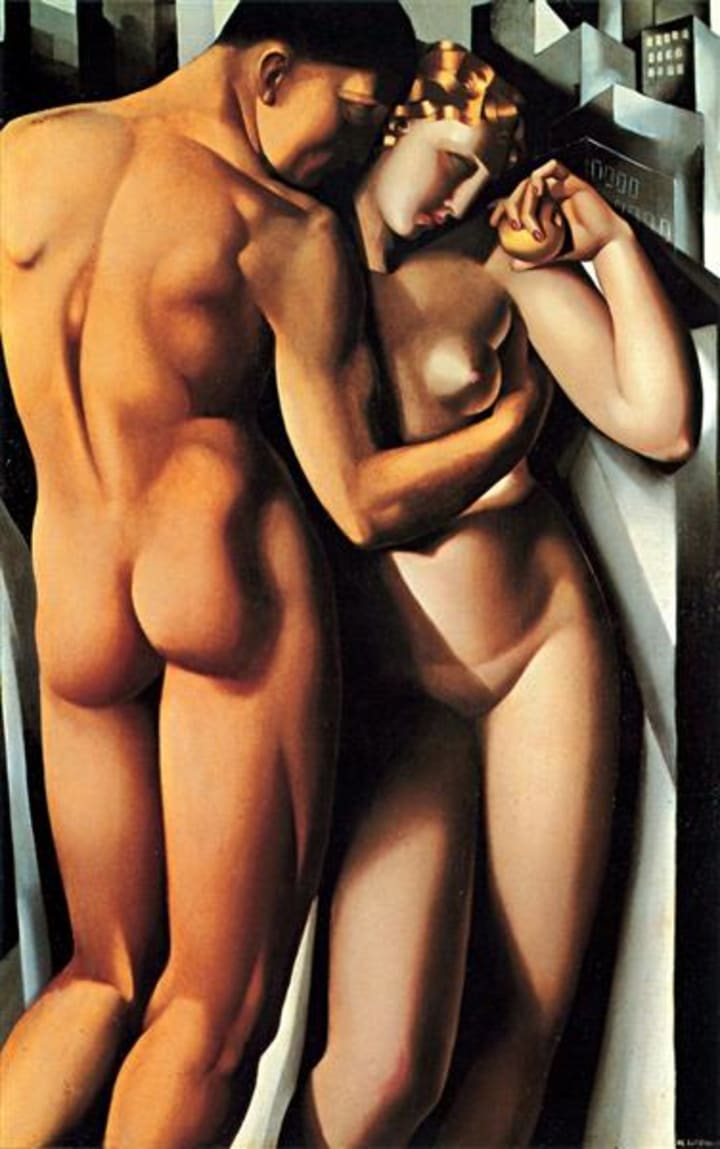
In “Adam and Eve,” Lempicka reimagines the biblical couple in her signature style. The painting features a sensuous Adam and a seductive Eve, their bodies intertwined against a lush background. It’s a provocative take on the classic theme, blending eroticism with Art Deco aesthetics.
La Belle Rafaëla (1927):

This portrait of Rafaëla Fano, a close friend of Lempicka, epitomizes the Roaring Twenties. Rafaëla reclines on a luxurious divan, her gaze both alluring and mysterious. The bold colors, angular lines, and exquisite details showcase Lempicka’s mastery of the Art Deco form.
Portrait of a Man or Mr Tadeusz de Lempicki, 1928

Still Life with Grapes

Andromeda (1927):
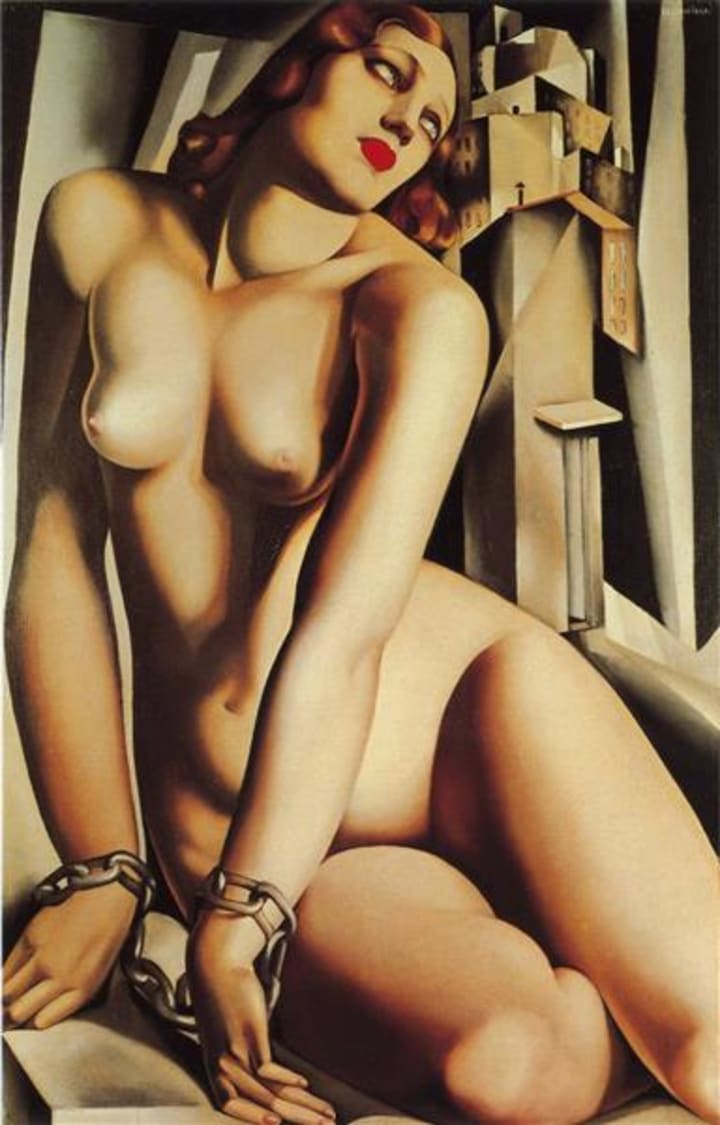
While not as well-known as some of her other works, “Andromeda” deserves mention. It depicts the Greek princess Andromeda, who was famously chained to a rock as a sacrifice to a sea monster. Lempicka’s portrayal is both powerful and vulnerable, emphasizing Andromeda’s beauty and strength.
Remember, Lempicka’s paintings often celebrated liberated female sexuality and the cosmopolitan elite of her time. Her art remains a tribute to the spirit of the interwar period...a blend of opulence, rebellion, and artistic innovation.
If you’d like to see more of her works, you can explore the WikiArt gallery or visit the NMWA blog for insights into her fascinating life and art.
About the Creator
Antoni De'Leon
Everything has its wonders, even darkness and silence, and I learn, whatever state I may be in, therein to be content. (Helen Keller).
Tiffany, Dhar, JBaz, Rommie, Grz, Paul, Mike, Sid, NA, Michelle L, Caitlin, Sarah P. List unfinished.
Keep reading
More stories from Antoni De'Leon and writers in Art and other communities.
Impressive Artwork by Odilon Redon
French symbolist artist Odilon Redon was famous for his drawings in the 1880s. The artist’s artworks were mentioned in the popular 1884 novel “A Rebours,” or “Against the Grain,” by Joris-Karl Hysmans. His later artworks were created in oils and pastels. He developed an interest in Hinduism and Buddhism, and this interest in mysticism is reflected in his works of art.
By Rasma Raisters2 days ago in Art
What Is A5 Service on Mercedes and When Do You Need It?
If you’re a Mercedes‑Benz owner, you’ve likely seen a maintenance message pop up on your dashboard — perhaps showing something like “Service A5 due”. But what exactly is a5 service on Mercedes, why it matters, what it includes, and how much it costs? This complete, easy‑to‑understand guide answers all those questions so you can keep your luxury vehicle running smoothly and avoid costly repairs down the road.
By Vincent Otiri3 days ago in Art
Wild Card Weekend Recap: What Happens Now?
I think I figured out why I love Wild Card Weekend so much. It's because it's the first playoff anything of the calendar year. The NFL season starts in the fall, and once upon a time, the champion was crowned either on or slightly before New Year's. The evolution of the NFL schedule has resulted in the playoffs starting just into the New Year, and currently, the final week of the season falls on the first weekend of the New Year, with Wild Card Weekend coming a week after that. So yes, chronologically, the NFL's Wild Card Weekend serves as the first playoff anything of the calendar year.
By Clyde E. Dawkins3 days ago in Unbalanced



Comments (1)
Oh my. I would have loved her, so bold and sassy. Though it oft gets one in trouble. Love this.