
Tahoma Font: A Timeless Sans-Serif Typeface
Tahoma

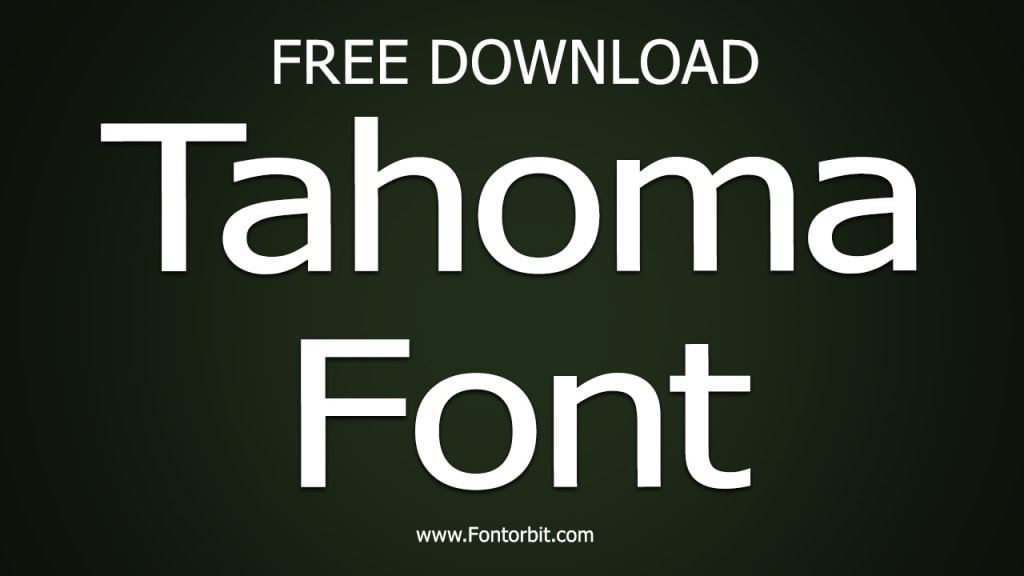
Tahoma is one of the most widely recognized sans-serif typefaces, celebrated for its clean lines and excellent legibility. Designed by Matthew Carter and released by Microsoft in 1994, Tahoma has become a staple font in both digital and print design. Its simplicity and versatility have made it a favorite among designers, developers, and everyday users alike.
History and Origin of Tahoma
Tahoma was originally developed as part of Microsoft’s core fonts for the web initiative. The font was designed to complement Verdana, another popular sans-serif typeface by Matthew Carter.
While Verdana was optimized for on-screen readability at small sizes, Tahoma was intended to be more compact yet equally legible. It derives its name from Mount Tahoma, a Native American name for Mount Rainier in Washington State.
Since its debut, Tahoma has been bundled with several Microsoft operating systems, starting with Windows 95, and continues to be included in newer versions, making it one of the most widely distributed typefaces in the world.
Characteristics of Tahoma
Tahoma is renowned for its straightforward and functional design. Key features include:
Clear Letterforms: Tahoma's characters are well-defined and lack ornamental elements, ensuring clarity.
Uniform Spacing: The even spacing between characters enhances its readability.
Compact Appearance: Compared to Verdana, Tahoma has a tighter design, which makes it suitable for situations where space is limited.
Support for Multiple Languages: Tahoma includes a wide range of characters, supporting various languages and scripts, including Latin, Cyrillic, and Greek.
Usage of Tahoma
Thanks to its versatility, Tahoma is widely used across different domains:
User Interfaces: Its clean design makes it a popular choice for UI text in applications and websites.
Corporate Communication: Many businesses use Tahoma for presentations, reports, and official documents.
Digital Media: Designers appreciate its legibility in web content and digital advertisements.
Educational Material: Its clarity ensures that learning materials are accessible and easy to read.
Tahoma in Modern Design
Although newer fonts have emerged since Tahoma's release, it remains relevant in today’s design landscape. Its timeless simplicity ensures compatibility with both traditional and modern aesthetics. Designers often pair Tahoma with other fonts to create a balanced and harmonious typography system.
Conclusion
Tahoma’s enduring popularity can be attributed to its clarity, versatility, and timeless design. Whether used for digital interfaces, corporate documents, or web content, Tahoma continues to prove its value as a reliable sans-serif typeface. Its legacy as a go-to font for millions worldwide underscores its significance in the history of typography.
FAQs About Tahoma Font
1. Who designed the Tahoma font?
Tahoma was designed by Matthew Carter, a renowned typographer, and released by Microsoft in 1994.
2. What makes Tahoma different from Verdana?
While both are sans-serif typefaces designed by Matthew Carter, Tahoma has a more compact design compared to Verdana, which is optimized for readability at small sizes.
3. Is Tahoma free to use?
Tahoma is included in Microsoft operating systems and software, making it free for users of these platforms. For other uses, a proper license may be required.
4. Can Tahoma be used for web design?
Yes, Tahoma is widely used in web design due to its readability and availability across platforms.
5. What are some alternatives to Tahoma?
Popular alternatives include Arial, Helvetica, and Calibri, which share similar sans-serif characteristics.
6. Does Tahoma support multiple languages?
Yes, Tahoma supports a wide range of languages, including Latin, Cyrillic, and Greek scripts.
7. Is Tahoma still relevant today?
Absolutely! Tahoma remains a versatile and widely used typeface in various design and communication applications.
About the Creator
Jillur Rahaman
Jillur Rahman is the creative mind behind FontOrbit. This website is a vibrant hub for typography enthusiasts. With a CSE degree and over a decade of experience in web design & development, Jillur got passion for sharing knowledge.
Keep reading
More stories from Jillur Rahaman and writers in Art and other communities.
KaiTi Font: A Timeless Classic in Chinese Typography
Typography is an integral part of design and communication, shaping how information is perceived and understood. Among the myriad of fonts available for Chinese script, KaiTi (楷体) stands out as a timeless and elegant typeface.
By Jillur Rahamanabout a year ago in Art




Comments
There are no comments for this story
Be the first to respond and start the conversation.