
Ronaldo Performs Umrah with His Wife: AI-Generated Photos Go Viral
Ronaldo may not have performed Umrah, but the viral AI-generated photos have certainly left a mark

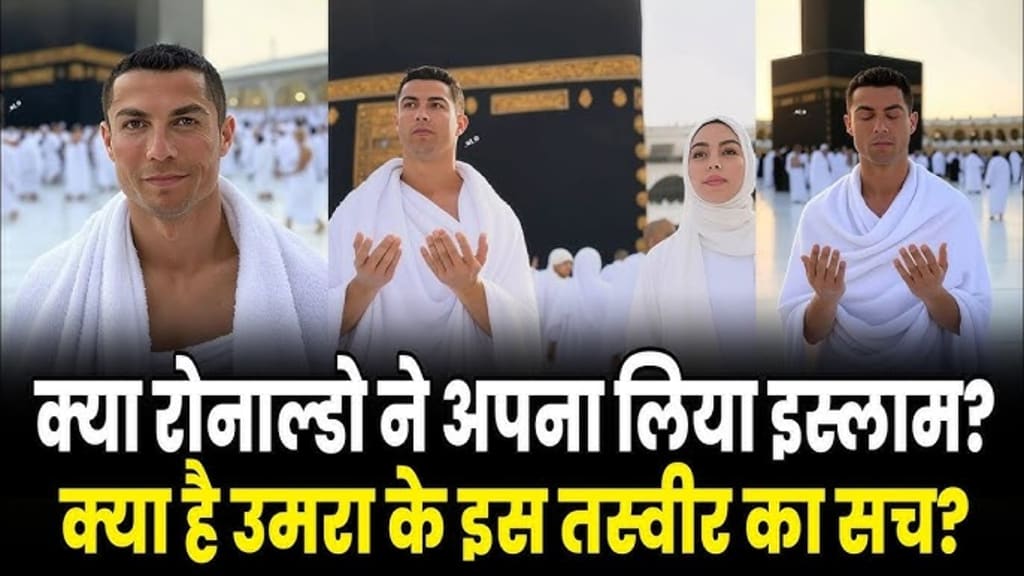
The legendary footballer Cristiano Ronaldo has always been in the spotlight for his phenomenal skills on the field, his philanthropy, and his family life. Recently, the internet was set abuzz with rumors and visuals of Ronaldo performing Umrah, the Islamic pilgrimage, alongside his wife. However, it was soon clarified that these widely shared photos were not real but rather generated by Artificial Intelligence (AI). Despite their fabricated origins, the images sparked a global discussion and captivated millions across social media platforms.
The Viral AI-Generated Photos
The AI-generated photos depict Ronaldo dressed in the traditional Ihram, the white garments worn by men during the sacred pilgrimage. Standing beside him is a woman, portrayed as his wife, dressed modestly in an abaya and hijab—attire that adheres to Islamic cultural norms. Both are seen with serene expressions, seemingly engrossed in the spiritual act of performing Umrah in the holy city of Mecca.
The authenticity of the photos was questioned almost immediately, as Ronaldo is not known to have converted to Islam. Yet, their lifelike quality and emotional resonance made them go viral. Fans across different cultures and religions appreciated the idea of such a global icon engaging in a sacred Islamic ritual.
AI’s Role in Generating Viral Content
Artificial Intelligence has revolutionized digital content creation. From generating realistic visuals to crafting stories, AI tools are capable of producing highly convincing images that can blur the line between reality and fiction. The Ronaldo-Umrah photos are a perfect example of this phenomenon.
Created with sophisticated AI algorithms, these images were designed to look incredibly real, with intricate details like the folds of the garments, the lighting of the holy mosque, and the pious ambiance of the scene. This incident highlights both the creative possibilities of AI and the ethical challenges it presents in distinguishing truth from fabrication.
The Public's Reaction
The images sparked a wave of curiosity and mixed emotions. For many Muslims around the world, the concept of Ronaldo embracing Islamic traditions was heartwarming. His widespread admiration transcends cultural and religious boundaries, and seeing such an influential figure symbolically participate in a revered Islamic ritual struck a chord.
However, others criticized the dissemination of such photos, citing the potential for misinformation. Several fans expressed disappointment, arguing that sharing fake visuals undermines the sanctity of both Ronaldo’s personal life and the religious act of Umrah.
Ronaldo himself has not commented on the images, which is consistent with his usual stance of keeping personal and speculative topics at arm’s length.
Ronaldo’s Relationship with Cultural Diversity
As one of the world’s most recognized athletes, Ronaldo has shown respect for various cultures and religions throughout his career. Known for his humility and generosity, he has donated to numerous charitable causes, including initiatives in predominantly Muslim countries.
In recent years, Ronaldo’s gestures during Ramadan, such as celebrating Eid with Muslim teammates or showing solidarity during Islamic holidays, have endeared him to the global Muslim community. These instances of mutual respect add weight to the fascination surrounding the AI-generated photos.
Ethical Implications of AI-Generated Content
The viral spread of these images also raises important ethical questions about the use of AI in creating content that mimics real-life events. While such creations can be artistic and thought-provoking, they also have the potential to mislead audiences.
In this case, the photos of Ronaldo performing Umrah sparked a positive conversation, but similar fabrications in other contexts could cause harm, spread misinformation, or even tarnish reputations. It underscores the need for stricter guidelines and transparency when sharing AI-generated visuals.
A Lesson in Unity
Despite the controversy surrounding their authenticity, the Ronaldo-Umrah images highlighted a beautiful aspect of global unity. People from diverse backgrounds shared admiration for the thought of a global icon partaking in a tradition they hold sacred.
While Ronaldo did not actually perform Umrah, the incident serves as a reminder of the unifying power of shared respect and understanding among different cultures and religions. It also shows how technology, when used responsibly, can create moments that inspire dialogue and connection.
In the age of AI and digital storytelling, such incidents will likely become more frequent. Whether real or imagined, they carry the potential to bridge divides and foster a greater appreciation for the beauty of human diversity.
In conclusion, Ronaldo may not have performed Umrah, but the viral AI-generated photos have certainly left a mark, demonstrating the profound influence of technology in shaping narratives and inspiring conversations across the globe.
About the Creator
Abdul Malik
As a content writer, you likely excel at crafting compelling narratives, delivering valuable information, and engaging audiences with your words. Currently i am writing article for invideo ai tool for making faceless videos for youtube
Keep reading
More stories from Abdul Malik and writers in Art and other communities.
Best Tools for Making Faceless Videos in Seconds with AI – Completely Free!
In the era of content creation, video is the most powerful way to capture attention. But what if you're camera-shy, want to maintain anonymity, or just don’t want to spend hours filming and editing? That’s where AI-powered faceless video creation tools come in. These tools allow you to create engaging videos without ever showing your face — and the best part? Many of them are completely free.
By Abdul Malik11 months ago in Art
'Till Death We Do Art
There would be nothing divine in this world without art. Nature may surpass the divine to all intents and purposes, but like everything it absorbs and is absorbed by, it remains here, stuck on the surface of this world, ever-present, physically bound to the universe.
By Avocado Nunzella BSc (Psych) -- M.A.P 27 days ago in Art
The Rising Demand for Custom Physical Therapy Apps
Healthcare delivery is evolving faster than ever, and rehabilitation is no exception. Physical therapy — once limited to in-clinic sessions and paper-based exercise plans — is now being transformed by mobile technology. With increasing smartphone adoption and a growing demand for remote care, healthcare providers are exploring digital solutions to improve patient engagement and treatment outcomes.
By Steve Waugh3 days ago in Art




Comments
There are no comments for this story
Be the first to respond and start the conversation.