
Rodin’s Gates of Hell: The Sculpture That Made Suffering Beautiful
When Dante, Desire, and Despair Collided in Bronze

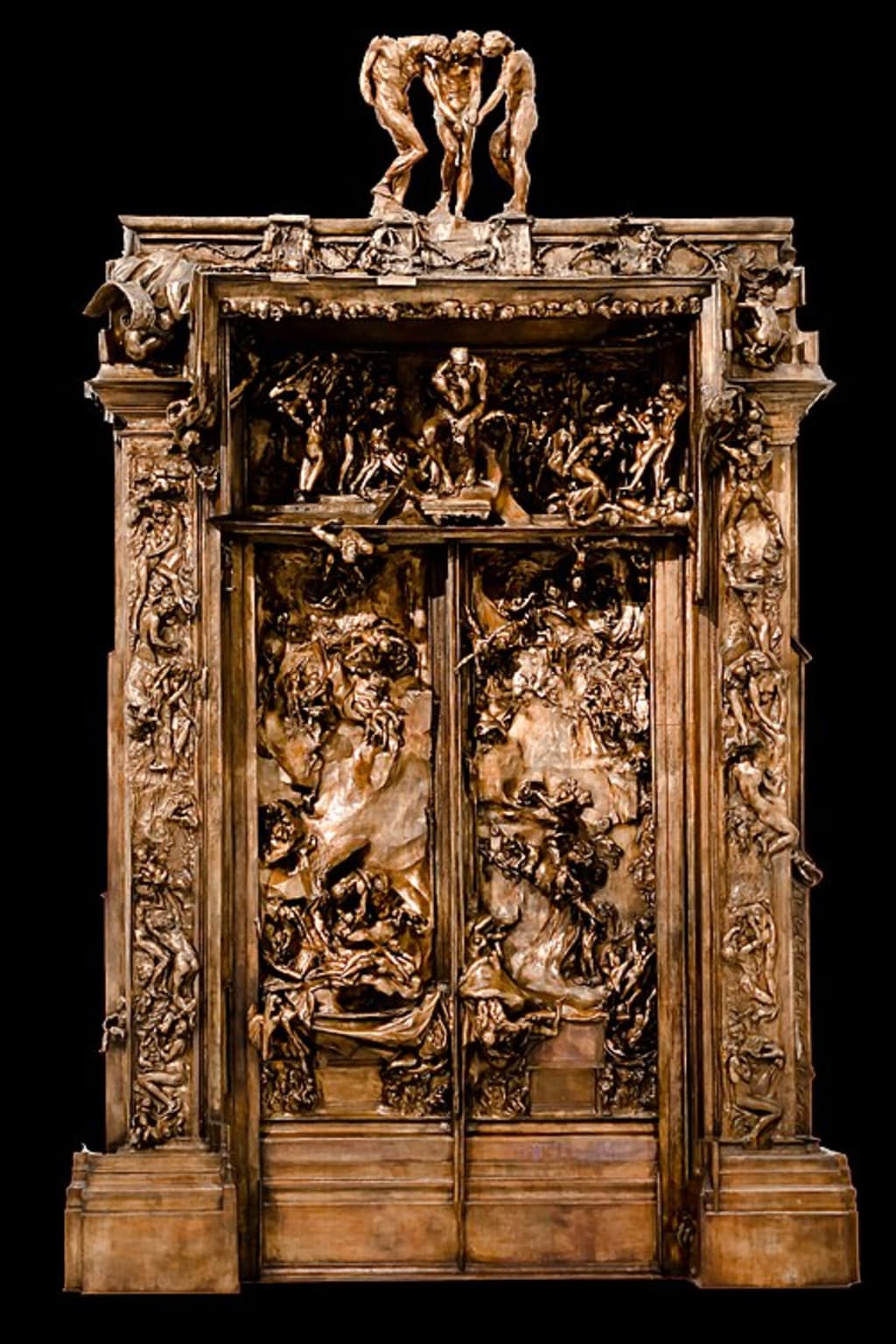
At first glance, The Gates of Hell appears like a swirling mass of bodies and chaos, a fevered nightmare frozen in bronze. But stand before it long enough, and something profound begins to unfold: a tragic opera of humanity’s darkest desires, intellectual torment, and spiritual longing. Auguste Rodin’s masterwork is more than a sculpture—it’s a philosophical abyss.
This is not merely Hell. This is the human condition, cast in metal.
The Genesis of a Portal to Darkness
In 1880, Auguste Rodin was commissioned to create a decorative doorway for a new decorative arts museum in Paris. Inspired by Dante Alighieri’s Inferno, the first part of The Divine Comedy, Rodin saw the opportunity not just to decorate a door, but to create a vortex of thought and emotion.
The museum was never built. But Rodin kept sculpting. For 37 years, he returned to this project, reshaping and rethinking its figures until it became one of the most complex and haunting works in Western art.
The final piece contains over 200 figures—some only inches high, others nearly life-sized—all writhing, reaching, falling, or entwined. Some would later become independent sculptures, like The Thinker and The Kiss. But within The Gates, they exist as fragments of a larger, burning vision.
Reading the Bronze: Not Just Hell, But Us
Dante wrote Inferno in the 14th century as an allegorical journey through sin and redemption. But Rodin’s hell isn’t medieval. It’s psychological.
There are no devils with pitchforks, no fiery pits. Instead, we find raw human bodies, tormented by love, lust, guilt, obsession, and despair. Flesh twists and contorts not from fire, but from feeling. In this, Rodin was modern before modernism: he sculpted interior states—anxiety, desire, dread.
“What makes my Gates of Hell truly terrible,” Rodin once said, “is that they are real.”
In other words, this hell is ours. We’ve lived it, or we’re about to.
The Thinker: A Philosopher Trapped in Fire
Atop the gates sits The Thinker, one of the most famous sculptures in the world. But in this context, he is not the triumphant figure of enlightenment we often see in textbooks. Here, he is Dante himself—watching the world below, tormented by the weight of what he sees.
His muscles are tense. His pose is curled inward. He is a man grappling with the unbearable knowledge of human suffering. This Thinker doesn’t just reflect—he burns.
Rodin has taken a Renaissance symbol of rational intellect and wrapped it in existential dread. It’s a bold statement: even the most enlightened minds are not safe from despair.
The Kiss: Love or Punishment?
Nestled within the chaos is another familiar form: The Kiss. In isolation, it’s often romanticized—a vision of sensuality and unity. But in the context of The Gates, the story changes.
The lovers are Paolo and Francesca, characters from Inferno. They fell in love while reading a romance together, but their affair was adulterous. For their sin, they were condemned to Hell, eternally swept together in a storm of longing they can never satisfy.
Rodin renders them in marble and bronze with heartbreaking tenderness. Yet, their love becomes their punishment. It’s beautiful. And tragic. This is the duality Rodin mastered: making the viewer ache for something, even as they recognize its danger.
Flesh in Freefall: The Sculptural Language of Collapse
Look closely at the figures crawling and falling across the doors. Their anatomy is exaggerated—muscles pulled taut, limbs stretched unnaturally. Some are embracing. Others are fighting. Many are alone.
There is no solid ground in Rodin’s hell. Figures emerge from the bronze as if half-birthed or half-buried. It’s a world where nothing is finished, where form never settles. Motion is constant, as if the entire sculpture is convulsing.
Art historians call this “unfinished form.” But Rodin wasn’t lazy—he was deliberate. This visual instability mirrors emotional instability. Nothing is whole because no soul in hell is whole.
Why This Work Still Haunts Us
Rodin’s Gates of Hell is often compared to Michelangelo’s Last Judgment or Ghiberti’s Gates of Paradise. But unlike those works, Rodin’s vision offers no redemption, no divine salvation, no moral order.
Instead, it mirrors modern anxieties. The fear that there is no grand meaning. That our punishments are internal. That we are our own hell.
And yet, in the midst of all this anguish, there is an undeniable beauty. The bronze shimmers. The figures are sensual. The emotions are universal.
This paradox is the genius of Rodin: he makes us fall in love with agony. And in doing so, he reveals something true—that even our suffering is deeply, deeply human.
The Legacy: From Literature to Existentialism
Rodin began with Dante. But he ends somewhere closer to Freud or Sartre.
After Rodin, sculpture was no longer about gods or heroes. It was about man. Flawed, complicated, desiring man. His Gates paved the way for modern expressionism, for artists who wanted to capture thought, mood, and neurosis in form.
Even today, walking past The Gates of Hell (now displayed in casts in Paris, Philadelphia, Zurich, and elsewhere), one doesn’t just observe art. One confronts it. The viewer becomes a pilgrim, staring into an emotional abyss that is at once ancient and entirely personal.
Final Thought: The Door That Never Opened, But Changed Everything
Ironically, The Gates of Hell never became an actual doorway. No building ever housed them. But they opened something far greater: a new way of seeing ourselves.
In these twisted, muscular forms, Rodin showed us not the hell of theology, but the hell we carry inside us—our regrets, obsessions, passions, and dreams. It is a portal to the subconscious, built not of fire, but of flesh and thought.
And that makes The Gates of Hell not just a sculpture.
It is a mirror.
About the Creator
Zohre Hoseini
Freelance writer specializing in art analysis & design. Decoding the stories behind masterpieces & trends. Available for commissions.
Keep reading
More stories from Zohre Hoseini and writers in Art and other communities.
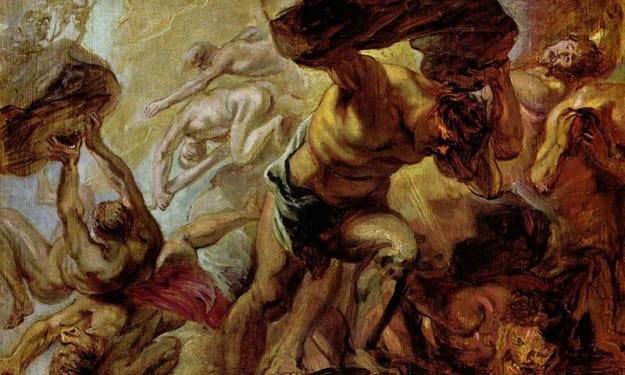
When Gods Fell From the Sky Rubens and the Violent Beauty of the Fall of the Titans
It isn’t just a painting. It’s a cosmic catastrophe rendered in muscle, marble, and movement. Peter Paul Rubens’ The Fall of the Titans is not simply a mythological scene. It’s an explosion of ambition, a swirling tempest of rebellion, punishment, and divine chaos. Stretching across massive canvases, Rubens didn’t just paint a moment — he painted a myth colliding with mortality, order strangling anarchy, and beauty erupting through terror.
By Zohre Hoseini8 months ago in Art
The River and the Drops
High in the mountains, where no one watched and no one applauded, tiny drops of water slipped from melting snow. Each drop was small, almost invisible, and carried a quiet fear within itself. They began their journey without knowing where they were going, only knowing that they were moving away from where they began.
By Sudais Zakwan6 days ago in Art



Comments
There are no comments for this story
Be the first to respond and start the conversation.