
Remote Patient Monitoring Powered by Ambient Listening in Healthcare
How Ambient Intelligence Is Redefining Remote Patient Monitoring and Continuous Care


Remote patient monitoring (RPM) is transforming how healthcare providers track, manage, and respond to patients’ health conditions outside traditional clinical settings. One of the most innovative advancements driving this transformation is ambient listening in healthcare, which leverages advanced audio sensors and AI technologies to provide continuous, unobtrusive monitoring of patients’ vital signs and behavioral patterns. By integrating ambient listening technology into RPM systems, healthcare providers can enhance patient safety, improve care outcomes, and reduce hospital readmissions.
Understanding Ambient Listening in Healthcare
Ambient listening in healthcare refers to the use of devices and sensors that detect and interpret environmental and patient-generated sounds in clinical or home settings. These systems use artificial intelligence to analyze patterns, recognize anomalies, and trigger alerts when immediate attention is needed. Unlike traditional monitoring devices that require direct interaction, ambient listening works passively, allowing patients to maintain privacy and comfort while still being monitored effectively.
Healthcare providers can utilize this technology to detect respiratory issues, irregular heart rates, sleep disturbances, and even early signs of mental health deterioration. By capturing subtle cues such as coughing patterns, changes in breathing, or unusual movement sounds, clinicians can gain insights that might otherwise go unnoticed during routine checkups.
The Role of Remote Patient Monitoring
Remote patient monitoring has gained tremendous attention due to its ability to reduce hospital visits, manage chronic conditions, and support post-discharge care. RPM systems traditionally rely on wearable devices, mobile applications, and connected medical instruments to collect health data. The integration of ambient listening technology enhances RPM by adding a layer of continuous, real-time environmental monitoring that complements wearable devices and other sensors.
With ambient listening, healthcare teams no longer have to depend solely on self-reported symptoms or periodic measurements. Instead, they gain access to a constant stream of contextual health information that helps predict adverse events before they occur. This proactive approach not only improves patient outcomes but also reduces healthcare costs by preventing complications and unnecessary hospitalizations.
Benefits of Ambient Listening in Healthcare
1. Early Detection of Health Issues
Ambient listening systems can detect subtle changes in a patient’s condition that may signal early health problems. For instance, changes in breathing patterns, sleep disruptions, or vocal cues can indicate respiratory illnesses or sleep apnea. By alerting caregivers to these early warning signs, healthcare providers can intervene promptly, preventing more serious complications.
2. Enhancing Chronic Disease Management
Patients with chronic illnesses such as COPD, heart disease, or diabetes require ongoing monitoring to prevent flare-ups or emergencies. Ambient listening in healthcare offers a seamless way to track these patients continuously. For example, the system can recognize signs of respiratory distress in COPD patients or detect agitation or discomfort in individuals with dementia, enabling timely interventions.
3. Improved Patient Compliance and Engagement
One of the challenges in RPM is ensuring patients consistently use monitoring devices. Ambient listening technology reduces dependency on patient compliance because it works passively in the background. Patients are less burdened by manual data collection, making them more likely to adhere to treatment plans and remain engaged with their healthcare providers.
4. Reducing Healthcare Costs
By preventing hospital readmissions and enabling timely interventions, ambient listening systems can significantly lower healthcare expenditures. Early detection of potential health issues allows providers to address problems before they escalate, reducing the need for emergency visits, inpatient care, or costly treatments.
Key Applications in Remote Patient Monitoring
1. Respiratory Monitoring
Respiratory conditions are particularly well-suited for ambient listening in healthcare. Sensors can pick up coughs, wheezing, and irregular breathing patterns, providing clinicians with actionable insights. This is especially valuable for patients with asthma or chronic obstructive pulmonary disease (COPD), as it allows timely adjustments to treatment plans.
2. Elderly Care and Fall Detection
Falls are a major concern for elderly patients living independently. Ambient listening technology can detect sounds associated with falls or sudden changes in movement, immediately alerting caregivers or emergency services. Combined with RPM devices, this technology ensures comprehensive protection for seniors while maintaining their independence.
3. Sleep Quality Monitoring
Sleep disturbances often go unreported, yet they can have significant impacts on overall health. Ambient listening in healthcare can monitor sleep quality by detecting snoring, breathing irregularities, and nighttime restlessness. The collected data enables clinicians to recommend interventions, such as lifestyle modifications or medical therapies, to improve sleep and overall well-being.
4. Mental Health Insights
Behavioral changes and vocal cues can indicate mental health issues such as depression or anxiety. Ambient listening systems can analyze speech patterns, tone, and frequency to identify signs of distress. When integrated with RPM, these insights allow mental health professionals to intervene earlier, offer support, and tailor treatment plans effectively.
Implementing Ambient Listening Technology
Successful implementation of ambient listening in healthcare requires careful planning, data security measures, and integration with existing RPM systems. Providers must ensure that devices are non-intrusive, maintain patient privacy, and comply with regulatory standards such as HIPAA.
Integration with electronic health records (EHRs) is critical for creating a comprehensive view of patient health. By combining data from ambient listening systems with wearable devices, lab results, and clinical observations, healthcare teams can make informed decisions quickly and accurately.
Challenges and Considerations
While ambient listening technology offers tremendous potential, there are several challenges to consider:
Privacy Concerns: Continuous audio monitoring raises questions about patient privacy. Clear policies, consent protocols, and data encryption are essential to address these concerns.
Data Overload: The continuous stream of data can overwhelm healthcare providers if not properly filtered and analyzed using AI and machine learning algorithms.
Technical Limitations: Background noise, device malfunctions, or poor sensor placement may affect the accuracy of ambient listening systems.
Despite these challenges, advancements in AI, edge computing, and secure cloud storage are making it increasingly feasible to implement reliable ambient listening systems in healthcare settings.
The Future of Remote Patient Monitoring
The future of RPM powered by ambient listening in healthcare is highly promising. As AI algorithms become more sophisticated, these systems will be able to detect even subtler changes in patient behavior and physiology. Integration with smart home devices and telehealth platforms will further expand their capabilities, making remote monitoring more accurate and accessible.
Moreover, the combination of ambient listening with predictive analytics can shift healthcare from reactive to proactive care. By anticipating health issues before they manifest, providers can reduce emergency interventions and improve patient quality of life.
Conclusion
Ambient listening in healthcare is a game-changing innovation that elevates remote patient monitoring to a new level. By providing continuous, non-intrusive, and intelligent monitoring, it enhances patient safety, supports chronic disease management, and reduces healthcare costs. While privacy, data management, and technical challenges remain, ongoing advancements in AI and IoT technologies are paving the way for wider adoption.
Healthcare providers who integrate ambient listening technology into their RPM programs are better positioned to deliver proactive, patient-centered care, ensuring better outcomes and improving the overall patient experience. As the healthcare industry continues to embrace digital transformation, ambient listening will undoubtedly play a pivotal role in shaping the future of remote patient care.
About the Creator
Keep reading
More stories from Steve Waugh and writers in Art and other communities.
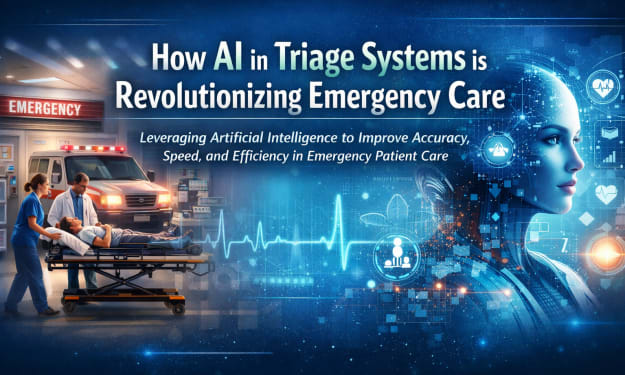
How AI in Triage Systems is Revolutionizing Emergency Care
Emergency care is often a race against time. Patients arriving at hospitals or urgent care centers present with varying degrees of severity, and rapid, accurate assessment can mean the difference between life and death. Traditionally, triage decisions have relied on human expertise, experience, and intuition. While effective, this approach is sometimes prone to delays, human error, and inconsistency. Enter AI in triage systems, which is transforming emergency care by streamlining patient assessment and prioritization in ways previously unimaginable.
By Steve Waugh2 months ago in Chapters
'Till Death We Do Art
There would be nothing divine in this world without art. Nature may surpass the divine to all intents and purposes, but like everything it absorbs and is absorbed by, it remains here, stuck on the surface of this world, ever-present, physically bound to the universe.
By Avocado Nunzella BSc (Psych) -- M.A.P 11 days ago in Art
Ken Wolverton
By Brian D’Ambrosio Along a dusty roadside of Cerrillos, connected weathered shacks lean into the landscape like a creature molded from the earth itself. Its walls are alive with color: horses rearing across mesas, dreamlike murals, and abstract forms that seem to vibrate with movement. Inside, brushes slant in jars, canvases are stacked against walls, and unfinished murals climb wooden planks. This is the world of Ken Wolverton, an 80-year-old artist whose life has been as itinerant and unconventional as the art he creates.
By Brian D'Ambrosio about 15 hours ago in Art



Comments
There are no comments for this story
Be the first to respond and start the conversation.