
Nuclear Weapons Specialist Analyzes 8 Nuclear Explosions in Films and Television
Assessing The Realism Of Film and Tv Explosions
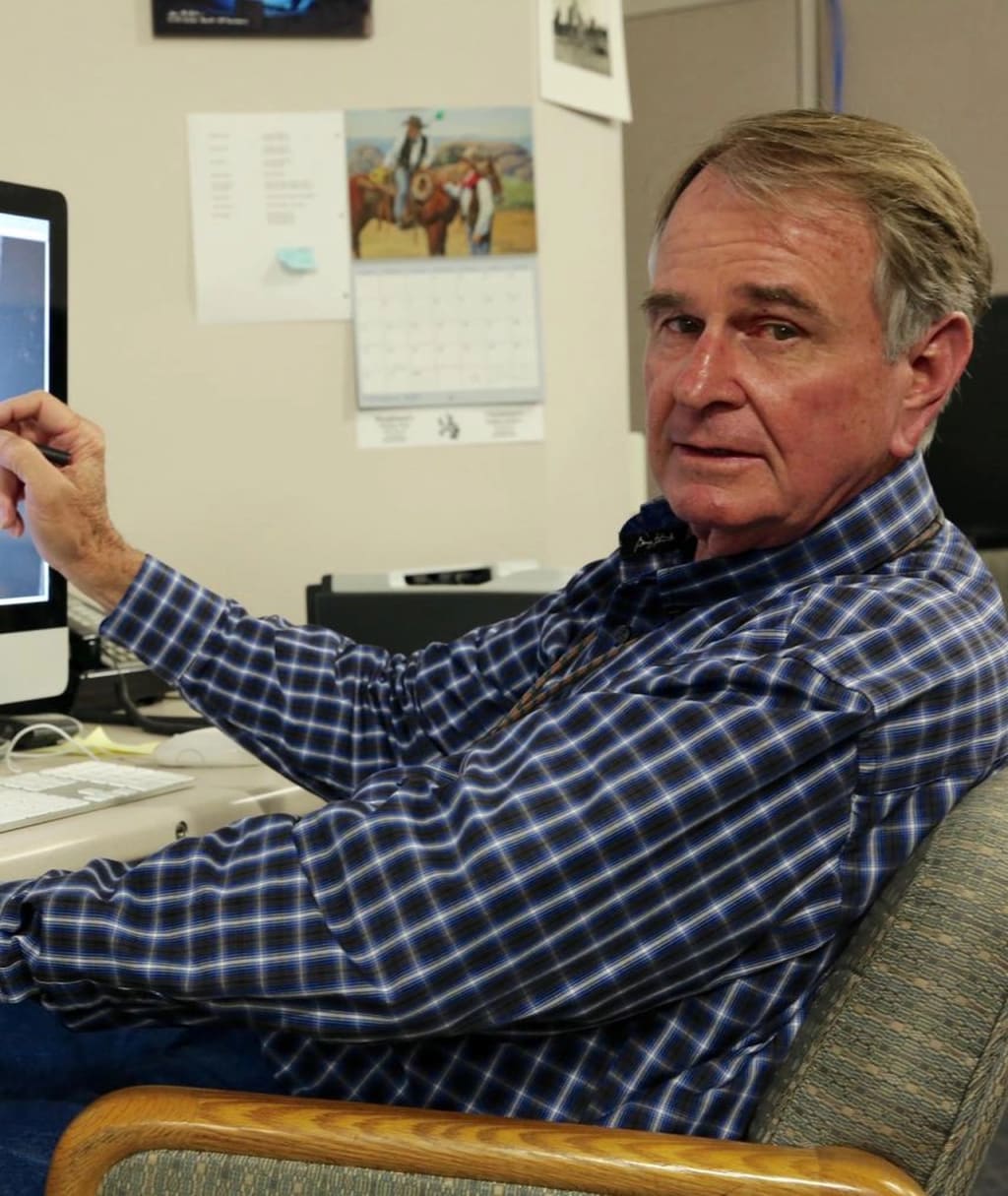
The shock wave hit the refrigerator, causing it to lift off the ground and move faster than the shock wave itself. This is impossible. My name is Greg Spriggs and I work at the Lawrence Livermore National Laboratory. Before that, I worked at the Los Alamos National Laboratory in the critical mass lab. Today, we’ll be examining nuclear explosions and assessing their realism.
Batman: I can get it out over the bay.
Actually, that was one of the better depictions. The shape was accurate and the glow time was correct. The fireball cools rapidly through radiative heat transfer, and the duration of its glow is known as the glow time. It’s out over the bay, clear of the city. These mushroom clouds can reach heights of up to 40,000 feet, so they would be visible from far away. There would be no danger of nuclear fallout unless the wind was blowing directly towards them.
There’s a general rule of thumb: if the mushroom cap is white, there will be little to no fallout. If it looks dirty, it means that dirt has entered the fireball and is now carrying nuclear debris down to create local fallout. If detonated over water, there would be very little fallout. The people standing on the bridge felt a breeze, but this happened too soon. It would have taken some time for the shock wave to reach them. I would give it a seven for realism; the flash and shape of the detonation were good.
The explosion occurred and plasma squirted out through a fissure. If this were possible, it could break up an asteroid if it were small enough. However, it would be difficult to create a weapon with a large enough yield to completely break up a large asteroid.
In outer space, there is no shock wave and if there were, it would not be disk-shaped but spherical. There would be a bright flash that would cool within 20 microseconds, so you wouldn’t see a long glow time like in movies where people on Earth look up and see a white flash. You would see the flash, but it would only last for 10 to 20 microseconds.
If the asteroid is small enough and can be broken up, it could potentially dissipate in the atmosphere or burn itself out. However, the two halves would be very unpredictable. For realism, I’d give it a one. If you drilled into an asteroid and tried to break it up, how do you know what it will break into and where will the pieces go? This is a matter of life and death.
They were trying to hold all the cables in place during this test because they weren’t certain that this design would work. This was a prototype and they didn’t go to great lengths to make everything robust; they were winging it with duct tape to hold things in place. The actual weapon was probably more structured and engineered.
The bomb was suspended from a tower to measure the shock wave above ground level. There was a lot of uncertainty since this was the first test; they didn’t know if it would work or how much energy would be released. They needed to film this without interference from surface interactions with the shock wave. They thought that suspending it high enough would suppress nuclear fallout by preventing dirt from being lofted.
The detonator is charged. Several shelters were built for scientists; I think the closest one was about 5 miles away. Everyone was wearing goggles to protect their eyes from the bright flash of the detonation. The glasses are very dark; right now, I can’t see anything because it’s pitch black in here. But if a nuclear detonation occurred, I could see it.
Three, two, one.
They were all lying down, thinking that the shock wave might reach them and if they were lying down, it wouldn’t hit them directly. You don’t want to have a large surface area when the shock wave is coming over; you want to be lying flat. There have been tests where the yield was higher than expected or the wind blew the bomb closer to observers, causing some people to get sunburned. Sunscreen wouldn’t have helped much; it’s a heat flux that hits you.
For accuracy in terms of what the weapon looked like and how it was hung from the tower, I’d give it a seven. Oh, that can’t be good at all.
Back in the '50s, they were very conscious of showing nuclear weapons. The weapon hanging off that tower had what were called tower cabs built at the top. The cab itself had plywood walls or curtains because they were paranoid that another nation would fly over and take a photograph of what the bomb looked like. The bomb was just hanging there on a cable; not quite true to history.
Loudspeaker: Seven, six, four, three.
The lead-lined refrigerator struck me as odd. Everyone knows about lead poisoning; why would you have a refrigerator with lead in it? You would need several feet of lead thickness to reduce radiation enough for him to survive. If the house had a basement, I would have gone there; that’s probably the only thing that could have saved him from the thermal blast and shock wave.
Several aspects of the physics were accurately depicted. After a nuclear detonation, there is a large burst of prompt radiation, including neutrons and prompt gammas from the fissioning process. This is not necessarily visible, but an observer close enough might feel it, which would be dangerous. Next, there is an intense thermal pulse from the nuclear detonation that is not present with conventional explosives. Anything close to the detonation point, such as the mannequins in front yards, would be incinerated.
The timescale was slightly off; incineration occurs very quickly and the mannequins would have disappeared into a puff of smoke within a fraction of a second. As for the glass, the thermal pulse would have passed through it without shattering it. It is not until the shock wave arrives that things are smashed.
In this scene, a car and refrigerator are shown moving faster than the shock wave. This is impossible. As the shock wave moves outward, it eventually degenerates into an acoustic wave traveling at the speed of sound. Imagine a refrigerator hitting the ground at 760 miles per hour; it would not have the structural strength to withstand such an impact, even with lead inside.
When the shock wave first moves outward, it leaves behind a low-density bubble where the detonation occurred, creating a huge buoyant force. As this bubble rises, it sucks everything back in during what is called the negative phase. In this case, Indy would not have been thrown out but rather thrown out and then sucked back in again. I would give this scene a three for realism; the thermal pulse and positive phase of the shock wave were accurately depicted, but the rest fell apart.
A subsidence crater is produced by an underground cavity created when a detonation vaporizes material into a plasma state. Dirt and rock contain air spaces that are compressed by high temperature and pressure in the cavity, squishing surrounding dirt and rock into a denser layer and leaving behind a cavity.
This is one of the problems with nuclear detonations in movies; they try to incorporate everything into one shot. Where did that bright flash of light come from? If it was underground, you wouldn’t see it.
There is certainly a shock wave in the Earth’s crust that moves very fast. However, in this film clip, it appears as a slow-moving tidal wave of dirt bulging up. This has been filmed during approximately 800 tests at the Nevada Test Site. After atmospheric testing was stopped, all testing was done underground. There is no tidal wave of dirt bunching up as shown in this scene and there would be no shock wave coming out of the ground to damage a helicopter flying overhead.
The shock wave took down the helicopter, but this is attributed to an EMP (electromagnetic pulse). However, an EMP only occurs with a high-altitude detonation that can interfere with communication and electronic equipment on Earth by generating high currents in the atmosphere. An underground detonation would not produce an EMP. The filmmakers tried to incorporate all known nuclear weapon effects into one underground detonation, but this was not realistic. I would give it a one for realism.
If a nuclear weapon were detonated in true outer space, not just the upper atmosphere, the bomb would vaporize due to the energy deposited in it. There is no shock wave in outer space because a shock wave requires a disturbance moving through another medium. The ball of gas shown in the movie would not be associated with the nuclear detonation itself; it has too much mass and would cool almost immediately through radiative cooling. You would see a bright flash lasting for 10 to 20 microseconds before everything went completely black. If the explosion was inside some sort of structure, it might have been fuel exploding rather than the nuclear detonation. If the explosion propagated down the length of the spaceship, it would last longer, but if it were instantaneous, it would cool almost immediately. This was my least favorite depiction; I’d give it a one for realism.
I have never seen anything like that hole before and I don’t know what could have caused it. If the detonation had been deeper underground, there may not have been a cloud at all. It’s like an underground shot; if you go deep enough, you don’t see any surface effects. When the detonation occurs, it creates a low-density region that forms a large bubble under the water with a buoyant effect. As it rises, it creates a waterspout. The shock wave moves outward and the waterspout forms; these shots do produce waves, but they are not large enough to destroy an aircraft carrier.
The shock wave would travel through the water and hit the hull of the ship. If hit on the side with a strong shock wave, antennas on deck could break. However, there wouldn’t be a shock wave above the surface causing the ship to tip over. During Operation Crossroads, the first detonation after World War II, they tested the effect of an underwater detonation on a Navy fleet by placing destroyers and aircraft carriers in the middle of Bikini Atoll and detonating a shot under them. Other ships were damaged by nuclear fallout; they were close enough to the surface that the shock wave probably hit them and could have caused damage, but most of the damage was from radioactive material settling on decks.
A shock wave emerging from under water and propagating through air to knock out a helicopter is probably not realistic. However, if it were close enough and became part of the waterspout, it could certainly take out the helicopter. Again, I would give this scene a low mark for realism; maybe a two.
No sir, this is not something a sane man would do. The doomsday machine is designed to trigger itself automatically. I have no knowledge of any doomsday device in existence; this is a Hollywood fabrication.
Woohoo!
When dropping a nuclear weapon from a plane, the weapon must be attached to a parachute to give the plane time to get out of the way. After the bomb is dropped, it free-falls for a while before the parachute opens and slows its descent. Meanwhile, the plane makes a hard right turn at 90 degrees to maximize the distance between itself and the detonation point when the bomb goes off. The plane must be far enough away from the detonation point to avoid being destroyed by the shock wave.
Woohoo!
The film clip of the detonation was real and was included in the movie. I would give the detonation a 10 for realism, but the rest of the scene only a two. 😊
About the Creator
Keep reading
More stories from writers in Art and other communities.
'Till Death We Do Art
There would be nothing divine in this world without art. Nature may surpass the divine to all intents and purposes, but like everything it absorbs and is absorbed by, it remains here, stuck on the surface of this world, ever-present, physically bound to the universe.
By Avocado Nunzella BSc (Psych) -- M.A.P 25 days ago in Art
Worth the Wait: Puerto Viejo, Costa Rica
Beach bumming in a small Caribbean beach town sounded like a perfect way to end our 6-month trip through Mexico and Central America. Or so we thought. The foul, fishy stench of rotten seaweed hit our nostrils as we stepped from the cramped bus and looked out at a rather depressing, empty, and underwhelming black sand beach. It was pouring with rain, and we had to quickly fish out our ponchos. We thought, this couldn’t be it, could it?
By Sh*t Happens - Lost Girl Travel7 days ago in Wander




Comments
There are no comments for this story
Be the first to respond and start the conversation.