
Mithila Painting
Regional Art, Culture, and History

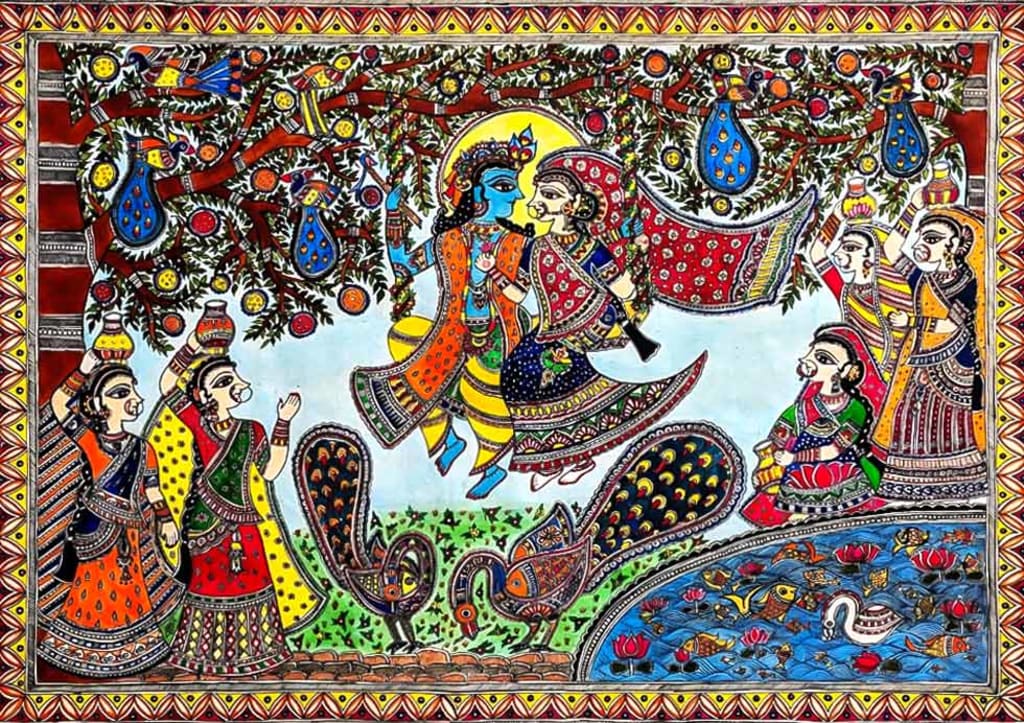
Mithila painting, also known as Madhubani art, is a significant traditional Indian art form from the Mithila region of Bihar and Nepal, historically practiced by women. It has evolved over centuries, adapting to new mediums while retaining its artistic and cultural essence. This report explores its definition, origins, history, characteristics, significance, artists, styles, current status, and socio-economic impact.
Unveiling Mithila Painting: Definition and Geographical Roots: Mithila painting is a traditional art form from the ancient Mithila region, primarily in Bihar, India, extending into Nepal. Also known as Madhubani art (from the Madhubani district), it is deeply rooted in the cultural landscape of the Maithil people and their language. The dual nomenclature reflects its widespread practice and the commercial prominence of the Madhubani area.
A Historical Odyssey: Tracing the Evolution of Mithila Painting: Originating in legend during the Ramayana, Mithila painting was a domestic tradition practiced by women on mud walls. Its global recognition began with its discovery by William G. Archer in 1934 and further developed through commercialization efforts in the late 1960s, led by Pupul Jayakar, who encouraged painting on paper. This transition brought economic opportunities and international acclaim, leading to its GI status.
Deconstructing the Art: Key Characteristics and Techniques: Mithila painting is recognized for its geometric patterns and depictions of people, nature, epics, and social events, traditionally using natural dyes and pigments on mud walls. Techniques involve fingers, twigs, and simple brushes, with no empty spaces left. Commercialization led to painting on paper and canvas and the incorporation of synthetic pigments. The art is typically two-dimensional without perspective.
The Cultural and Religious Heart of Mithila Painting: Deeply embedded in Maithili culture and religion, Mithila paintings hold significance in rituals, especially weddings, where they adorn the bridal chamber. Rich symbolism includes fish (fertility), peacocks (love), lotus (purity), and depictions of Hindu deities and epic narratives. Some scholars note potential tantric connections.
The Visionaries: Highlighting Prominent Artists and Their Contributions: Numerous artists have shaped Mithila painting's history. Key figures include Sita Devi, known for popularizing the bharni style and bringing the art to global attention; Ganga Devi, known for her narrative style and international representation; and other significant artists like Jagdamba Devi, Mahasundari Devi, and contemporary artists like Dulari Devi, Rani Jha, and Pushpa Kumari, who are also addressing modern themes. The field is no longer exclusively female.
A Kaleidoscope of Styles: Exploring the Variations within Mithila Painting: Mithila painting has five distinct styles: Bharni (vibrant colors, bold outlines, religious themes), Kachni (intricate lines, limited colors, mythological themes), Godna (geometric, tattoo-inspired, monochromatic), Tantrik (religious deities and symbols), and Kohbar (wedding-specific, fertility motifs). Contemporary artists increasingly blend these styles.
Mithila Painting in the 21st Century: Current Status and Global Relevance: Mithila painting has gained global recognition, exhibited worldwide and housed in prestigious institutions. Contemporary artists use it to address social and political issues, and its motifs are adapted to various new mediums, demonstrating its continued relevance.
Empowerment Through Art: The Social and Economic Impact of Mithila Painting: Commercialization has significantly empowered women in the Mithila region, providing financial independence and social respect. NGOs and government bodies support artists, but challenges remain regarding fair compensation and maintaining authenticity. The art also plays a vital role in preserving and promoting the region's cultural heritage.
Conclusion: Reflecting on the Legacy and Future of Mithila Painting: Mithila painting is an enduring art form that has successfully transitioned to the global stage while preserving its cultural roots. It has empowered communities and serves as a vital form of cultural expression. Continued support for artists and the preservation of its authenticity are crucial for its future.
About the Creator
Saahil Sinha
My Self Saahil Sinha a blogger and content writer specializing in Finance, Stock Market and History, Culture, Art, Design,Fashion.
Keep reading
More stories from Saahil Sinha and writers in Art and other communities.
Ghibli Art
The Timeless Art of Studio Ghibli: A History of Traditional Animation For decades, Studio Ghibli has captivated audiences with its breathtaking animation, emotionally resonant storytelling, and profound appreciation for nature. From the sweeping landscapes of My Neighbor Totoro to the intricate cityscapes of Spirited Away, Ghibli’s hand-drawn artistry is synonymous with warmth, nostalgia, and wonder. Rooted in traditional animation techniques, the studio’s art continues to inspire generations of artists and animators.
By Saahil Sinha9 months ago in Art
2026 Commercial Space Design:How Fbierglass Sculpture Drives Traffic
Today, offline commercial spaces are facing continuous pressure. With e-commerce offering convenient and fast services, physical stores must showcase unique features to attract customers. In this context, fiberglass sculptures are no longer merely decorative items; they have become visual focal points in shopping malls, brand stores, pop-up shops, and mixed-use commercial projects, playing a crucial role in increasing foot traffic.
By Shenzhen Ruiheng Crafts7 days ago in Art
Why Strategic Branding Is Essential for Long-Term Business Growth
In today’s fast-paced digital environment, businesses face constant pressure to stand out. Consumers are exposed to endless choices every day, making attention harder to earn and trust harder to keep. While quality products and services are important, they are no longer the only factors that determine success. Strategic branding plays a key role in helping businesses grow steadily and remain relevant over time.
By Ayush Bagwari7 days ago in Art




Comments
There are no comments for this story
Be the first to respond and start the conversation.