
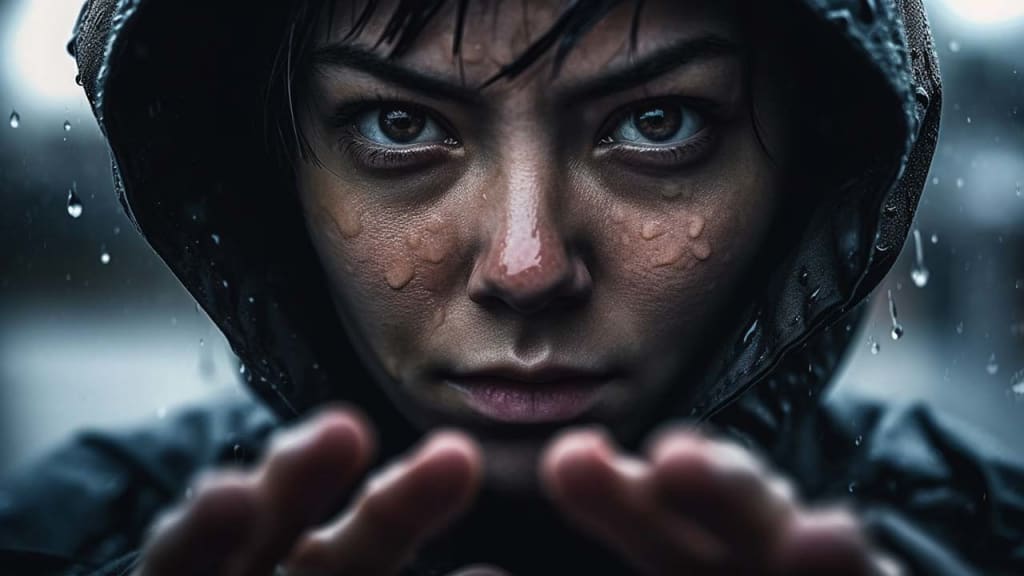
Art-generating AI like Midjourney is changing the art world. With the advent of artificial intelligence tools, the role of the artist is being redefined to create music, paintings, and even to some extent animation. For centuries, the arts have been recognized as a uniquely human enterprise requiring creativity, imagination and emotional intelligence. However, recent advances in machine learning and generative algorithms have led to a new generation of artificial intelligence that can mimic many human traits.
As we saw in our article on DALLE, AI-generated art is nothing new, but the maturity and popularity of these tools has grown exponentially in recent years. From portrait-generating algorithms to computer-generated music, machine-created compositions are increasingly indistinguishable from those created by humans. Some experts predict that AI-generated art will soon become indistinguishable from human art, and we will soon see this shift
But what does this technological shift mean for the millions of people who depend on the creative industries for their livelihoods? Artists, writers, musicians and other professionals are at risk of automation as machines take over tasks previously performed by humans. The fear of unemployment is not limited to the creative industries. As AI continues to improve, it also has the potential to displace jobs in marketing, law, finance, programming, and other fields.
Additionally, the rise of AI-generated art raises new questions about creativity and authorship. If a work of art is created by AI, who owns the rights to it? Should machines themselves be considered artists? What does this mean for the future of art?
In this article, we examine the impact of AI-generated art on jobs, artists, and competitions that incorporate both. Plus, we'll explain how to use one of the most famous and my personal favorite AI-generated artwork. Finally, we answer the question: who owns these photos?
Can artificial intelligence win art and photography competitions?
Artist Jason Allen won first prize in the Digital Art and Photography category at the Colorado State Fair for his work Theater D'Opera Spatial. Below I'll show you the proof of it:
So far so good, no worries. But what if I told you that the image we're looking at was generated by AI? If Allen hadn't posted on the Midjourney Discord server immediately after learning of his win, he might have gone unnoticed.
In the email, he explained how he used artificial intelligence to create the images he submitted to the competition: "I created the images with Midjourney, corrected them with Photoshop, and then enlarged them using gigapixels." He later refuted the criticism he received argument because he believes there is a human element involved in the process.
What is art and what does it mean to be an artist? What future holds for artists with the rise of AI? Answering these questions is complicated because we don't know how far these tools will go or how much they will cost in the future.
What is halfway?
As we've seen in previous articles about the DALL-E, there is something revolutionary about the tool for creating art, by simply describing it. This powerful technology is having a major impact on our society, and this is the case with Midjourney, which doesn't want to get any more powerful. Midjourney, an independent AI research lab, has developed a system that it plans to name after its own company. Like DALL-E, Midjourney is used to create images from text descriptions (cues).
Indeed, how Midjourney works is a bit unclear from behind, speculating that its underlying technology is based on Stable Diffusion, another AI we'll discuss in the next article.
The flavors of these AIs vary. For example, the quality of Midjourney is amazing. Art canvas-like works of art emerged that were more artistic, with random, human-like details. In comparison, the DALL-E 2 usually provides more realistic results.
Another difference is that Midjourney can enhance AI-created images up to a maximum resolution of 2048x2048, while the DALL-E 2 is stuck at 1024x1024. Midjourney has a free but limited option that lets you create about 25 images, and then it has various plans ranging from $10 to $60 that charge you for GPU usage. Each image generation consumes a portion of this GPU time. Currently, Midjourney is still a beta release to the public in July 2022, so we can only use it as a Discord bot.
How to use Midjourney The first thing we need to do is create an account on Discord. It has no secrets, it asks us for email address, user and some personal information. Then we just need to confirm our email address, we already have a Discord account. Now let's go to the midjourney website and find this home page. Strangely, if we click on the eye in the bottom center, we see a different image developed with Midjourney. To continue, we click the "Join Beta" button, which takes us to a screen on the Discord website that says we've received an invitation to join the Midjourney server. We accept the invitation and we are in the following screen
As we can see, we have a lot of options, so let's go step by step. On the left we find the Midjourney server and all its text channels, from chats between the different users of the platform to requests that the Midjourney team will answer. On the right, we spoil a little bit the potential of this AI, which, as we say, is brutal. I don't know how to distinguish this art from the art of man. We are interested in NEWCOMMER ROOMS 3 parts (amount may vary by account and time of access). In this section there are some text channels called Newcomers. Here we can test. We'll find many users generating their images, but don't worry, bots will flag us in our results so we'll be notified when we receive it. If we go to the text field and type "/", we will see many commands. What we are interested in is called imagination. We enter "/imagine". Then press Enter to get:
imagine/prompt
This has been the result. Midjourney also generates four images, but it also gives you several options. The buttons with the letter U and a number, are to tell the bot to return the image scaled to the maximum resolution (upscale). The button with the blue circle icon is for the bot to generate an image again with the same prompt if we are not satisfied with the result. Finally, the buttons consisting of a V and a number are used to generate different versions based on one of the four results. I personally liked the first image, so we will ask it to return to us in high resolution by pressing the first button of all.
This way we will get the image in a good resolution. Now, for example, let’s try to make some versions of the selected image by clicking on the Make Variations button.
As you can see, he has followed the style and composition of the main image and has created four different versions of it. We could do this process to refine the result and get what we are looking for but to be honest, the first result he has given us is already very good for this simple example we are doing. What name would you give to our villain?
This is a very poor example compared to the full potential of Midjourney and all the possibilities it offers. The last thing they have presented is their new generative model called Midjourney V5, which provides us with very high consistency, excels in the interpretation of natural language prompts, has a higher resolution, and supports advanced features such as repetitive patterns capable of creating borders. Another functionality is another model called Niji, which focuses on producing anime and illustrative styles.
This model is much more knowledgeable about anime styles and aesthetics and is excellent at dynamic action shots and character-centric compositions in general. Finally, something fascinating is the command called Blend, which allows us to load 2 to 5 images, and then Midjourney analyzes the concepts and aesthetics of each image and merges them into a new novel image.
If you want to learn more about the possibilities of this AI and really test Midjourney, it has very well-structured and explained documentation that can be found here.
About the Creator
Keep reading
More stories from writers in Art and other communities.
'Till Death We Do Art
There would be nothing divine in this world without art. Nature may surpass the divine to all intents and purposes, but like everything it absorbs and is absorbed by, it remains here, stuck on the surface of this world, ever-present, physically bound to the universe.
By Avocado Nunzella BSc (Psych) -- M.A.P 16 days ago in Art
The Dress That Broke the Internet Was Gold and Nobody Could Agree on Why
She walked into the room and everything stopped. Not because of her confidence or music that was playing, though there was plenty of that. Everything stopped because of the dress. Floor-length, liquid, blazing gold, it caught every light in the room and threw it straight back.
By CurlsAndCommasabout 5 hours ago in Art



Comments
There are no comments for this story
Be the first to respond and start the conversation.