
Midjourney and a Silhouette Inspiration Board
Exploring Creativity through AI-Generated Art and the Power of Silhouette Imagery


Midjourney and a Silhouette Mood Board
Every photographer likes silhouettes. I am no exception, and I spend a major amount of my photographic career improving silhouette photography talents.
Of course, I attempted to produce silhouette photographs using Midjourney too, spending just as much time coaxing Midjourney into generating anything intriguing as I did with actual photography.
It is easy to write a “silhouette of a beautiful woman” or anything like it in Midjourney’s prompt box, but it seldom yields something truly excellent.
To ease the process, I made an intentional effort to build a silhouette moodboard. It took me five days, with quite a bit of frustration in between, but I received what I wanted.
But before we move to that, it probably will be wise to talk a little about what this hubbub is all about.

Silhouette and rim light photography are among the most fascinating approaches in visual storytelling. They capture attention because of their unique capacity to simplify a scene while amplifying its emotional and narrative effect.
A silhouette depicts the outline of a subject against a brighter backdrop, leaving the internal features in shadow.
Rim lighting, on the other hand, illuminates the margins of a subject, providing a luminous outline that differentiates it from the black backdrop. These tactics leave much to the imagination and enable viewers to participate with the tale on a deeper level.

Silhouettes are naturally mysterious. They suppress details and allow the observer to concentrate on forms, encouraging the spectator to interpret the picture rather than passively witness it. This promotes curiosity and develops inventiveness.
This notion of activating the viewer’s imagination is not new. In fact, it’s one of the reasons shadow puppetry—a centuries-old art form—is so effective. Shadow puppets depend on silhouettes to create complete tales, enthralling audiences with minimum information. Silhouette photography pulls into this same primordial interest, illustrating that sometimes less is more.
Rim lighting, although different in method, provides a similar effect. By highlighting a subject with light, it creates drama and attention. It also has an almost three-dimensional look, making the subject seem to spring out of the frame.
This technique is widely employed in portrait and wildlife photography to focus attention on the subject while leaving the surroundings in darkness. In doing so, rim lighting might indicate solitude, significance, or even a feeling of the holy.
One of the amazing things about rim lighting is how it resembles natural events. The “golden hour,” shortly after dawn or before sunset, naturally forms rim light around things.
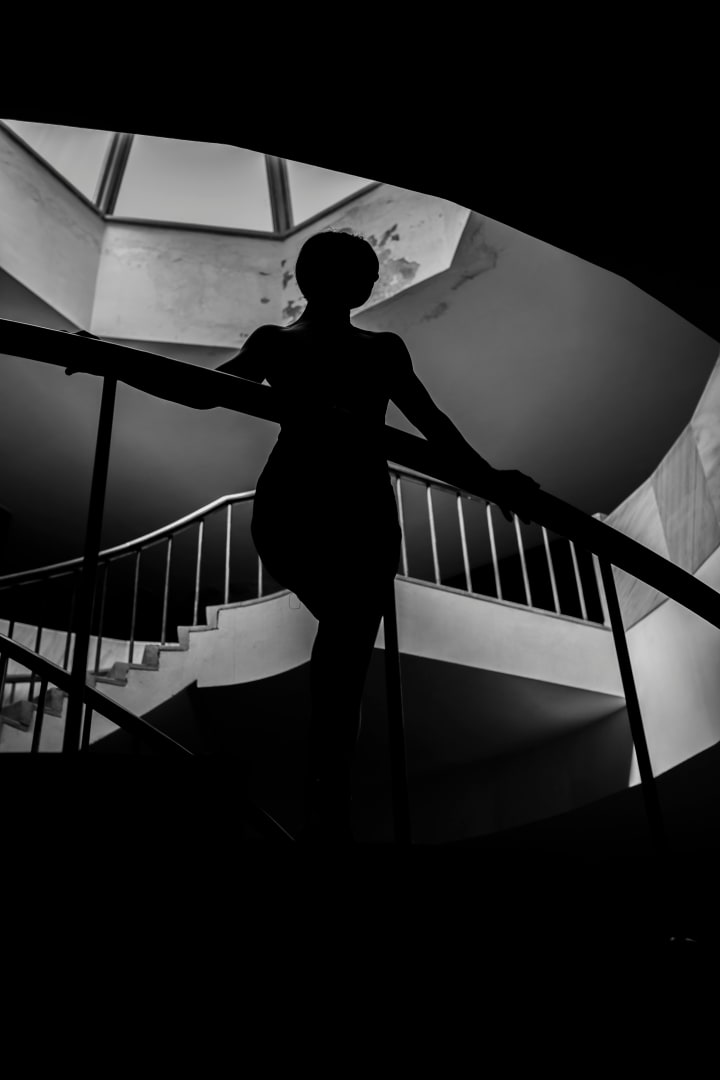
This is why many photographers prefer shooting at these times—it’s as if nature itself becomes a lighting assistant. The approach may also provoke feelings connected to those ephemeral times when the sun is low, generally associated with beginnings or ends, nostalgia, or silent introspection.
Both silhouettes and rim lighting depend significantly on contrast, which is one of the most powerful strategies in photography. The human eye is naturally attracted to places of extreme contrast. In a world where consumers swipe past pictures in a fraction of a second, these tactics have the capacity to make someone stop. That pause is crucial. It signifies the visual has caught attention long enough to spark an idea or arouse an emotion.
Interestingly, silhouettes have a psychological edge. Studies reveal that when viewers are given partial information, such as the shape of a person without facial features, their brains work harder to fill in the spaces. This involvement makes the picture unforgettable.
Rim lighting works on a similar level, drawing attention to what’s exposed while allowing the darkness to hint at what’s concealed.
In light of all that, generating nice silhouette photographs using Midjourney would be a terrific thing. to because we have new Midjourney mood boards, it does make sense to attempt to build one particularly for high-contrast, silhouette, and rim illumination pictures.
It turned out to be not an easy process. Midjourney was always a prude, but when it comes to picture references or posting photographs to a mood board, Midjourney gets extremely suspicious and sees sex in every curved line. Even photographs made using Midjourney itself do not satisfy “community standards.”
I do think that there is a need for the standards and some restrictions. But, in the case of silhouettes, even a lighted edge of the face reminded Midjourney of a naked body, and it blocked that picture away.
I began with my own photographs, images I generated with various personalizations and style influences to construct a first collection of 50 images for my silhouettes mood board.
To my regret, that initial mood board did not create outcomes as I hoped and had a very restricted stylistic scope. To enhance it, I required additional photographs and a better selection of them.
I generated about a thousand graphics utilizing a combination of that precise mood board and numerous personalizations and image and style influences. Since we are restricted to a hundred photographs in a moodboard, I constructed a few moodboards with varied choices of silhouette images to evaluate what works.
Particularly strong photographs went back into a mood board to underline the style and approach.
I must admit it was a tiresome and time-consuming job, but it was also a learning curve for me. I learned the abilities required to design new, specific mood boards along with creating one for the silhouettes.
Most of the time, my new mood board delivers wonderful results even with the smallest cues, like “sad puppy” or a ”lady with a hat.” Still, more often than not, adding a reminder of “rim light” lighting enhances the effect.
I have discovered that moodboards are quite sensitive to stylization values. They function best at the default 100; occasionally the outcome might be enhanced by decreasing it to 50 or raising it to 150. Beyond that, the mood board will have less power with an increasing likelihood of unwelcome additional fingers and legs.
Mood boards blend nicely with your personalizations, if you have them, but will not take anybody else’s personalizations. And mood boards, alas, cannot be combined, but I hope it is only a matter of time.
It was only a few weeks after the introduction of Midjourney mood boards and different customization profiles, and I am still loving all of it. These are incredibly wonderful creation tools that can help you design your own style or develop a certain style and approach that Midjourney is not very good at by default. The options are infinite.
About the Creator
Muhannad Al-Zanati
I am Muhannad Al-Zanati, a passionate writer dedicated to sharing stories and experiences with the world. With extensive experience in writing, I can transform ordinary moments into inspiring stories that add value to readers' lives.
Reader insights
Nice work
Very well written. Keep up the good work!
Top insights
Compelling and original writing
Creative use of language & vocab
Easy to read and follow
Well-structured & engaging content
Excellent storytelling
Original narrative & well developed characters
Expert insights and opinions
Arguments were carefully researched and presented
Eye opening
Niche topic & fresh perspectives
Heartfelt and relatable
The story invoked strong personal emotions
Masterful proofreading
Zero grammar & spelling mistakes
On-point and relevant
Writing reflected the title & theme
Keep reading
More stories from Muhannad Al-Zanati and writers in Art and other communities.
'Till Death We Do Art
There would be nothing divine in this world without art. Nature may surpass the divine to all intents and purposes, but like everything it absorbs and is absorbed by, it remains here, stuck on the surface of this world, ever-present, physically bound to the universe.
By Avocado Nunzella BSc (Psych) -- M.A.P 20 days ago in Art
The Politics of Playing Dress-Up
Well, to start off I'd like to say a happy world book day to all who celebrate. I know I haven't really posted anything on my socials about it but I'm not a jubilant kind of person. I lay low most of the time. Let's start off with a popular anecdote from the vaults...
By Annie Kapur4 days ago in Geeks




Comments (3)
❤️👍
:)
:)