
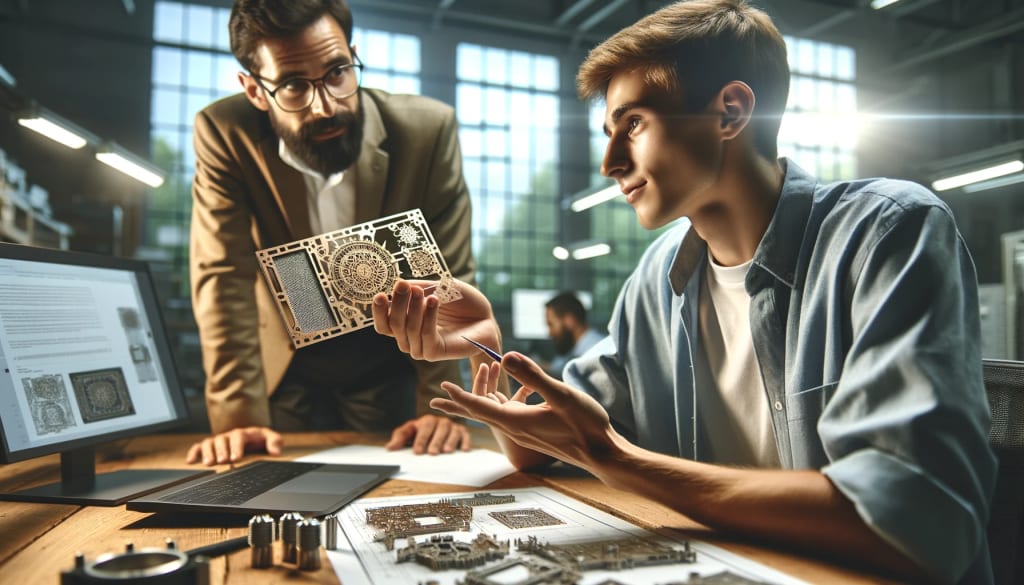
Unlocking the Precision of Photo Etching Metal: A Comprehensive Guide
In the intricate dance of metal fabrication, photo etching, also known as photochemical machining, plays a pivotal role in achieving high precision and finespun detail. It's a process beloved by engineers and designers alike for its ability to create complex parts with meticulous accuracy. This blog post dives into the nuanced steps of photo etching metal, offering insights into this refined manufacturing ballet.
The Essence of Photo Etching
Photo etching metal is akin to developing a photograph, where the image only reveals itself after a series of deliberate and precise actions. It is the art of removing metal through controlled chemical reactions, a process that enables the creation of parts with complex geometries that traditional machining cannot replicate. The essence of photo etching lies in its ability to produce fine features with a level of precision that is truly remarkable.
Step-by-Step: The Photo Etching Process
Design Translation: Every etching begins with a design, meticulously translated into a photo tool. This tool is the blueprint, carrying the DNA of the final product.
Metal Preparation: The chosen metal sheet is cleansed, a preparatory step to ensure no contaminants hinder the process. Metals commonly etched include stainless steel, copper, brass, and aluminum.
Photoresist Application: A photoresist, sensitive to light, is either laminated or coated onto the metal. Think of it as a shield, protecting areas that will remain intact.
Ultraviolet Exposure: The metal is then exposed to ultraviolet light. Where light hits, the resist hardens, defining areas that will resist the etching solution.
Developing the Metal: The unhardened photoresist is washed away, unveiling the metal ready to be etched.
Etching: The exposed metal meets the etchant, a chemical solution that dissolves metal, carving out the design. This step is the heart of the process, where precision meets reality.
Stripping the Resist: The remaining photoresist is stripped away, revealing the etched design in all its glory.
Inspection and Finishing: Each piece undergoes a rigorous inspection. Any final touches, such as forming or plating, are applied to perfect the part.
Advantages of Photo Etching
Photo etching stands out for its numerous advantages:
Incredible Precision: It delivers components with razor-sharp accuracy.
Complexity Made Simple: Even the most intricate designs are achievable.
Material Integrity: The metal’s properties remain unchanged, unlike in processes that introduce stress or heat.
Cost-Effectiveness: It's economical for both small and large production runs.
Quick Turnaround: Photo etching can swiftly transition from prototype to production.
Design Flexibility: Modifications are easily made, encouraging iterative design.
Environmental Friendliness: Modern etching is more sustainable, with reduced waste and recyclable materials.
Photo Etching in Practice
Applications of photo etching are vast and varied. In electronics, it’s used for circuit boards and shields. In aerospace, it produces parts that are light yet strong. In the medical field, it contributes to life-saving devices. This versatility is what makes photo etching a mainstay in manufacturing sectors.
Painting and Finishing Photo Etched Parts
Painting photo-etched parts requires a steady hand and keen attention to detail. The parts must be cleaned and primed, if necessary, before applying paint. It’s a delicate balance to enhance the part without obscuring the precision of the etching.
Thickness and Materials
Photo etching is most effective with thin materials, which can be processed with exceptional detail. However, advancements in the field are constantly pushing these boundaries, allowing for thicker materials to be etched with the same finesse.
A Symphony of Metal and Chemicals
In conclusion, photo etching metal is a symphony of materials, light, and chemicals, played out in the manufacturing world. It's a process that harmonizes precision with flexibility, bringing designs to life in a metal form. As technology progresses, so too does the scope of photo etching, promising even greater feats of manufacturing prowess in the years to come
About the Creator
Keep reading
More stories from writers in Art and other communities.
The Best AI Music Generator for Commercial Creators in 2026
By January 2026, the conversation around AI in music has shifted from "Will it replace us?" to "How do I use it to finish tracks faster?" As a senior audio editor who has reviewed everything from Suno’s latest updates to complex DAW plugins, I have seen the market flood with tools. However, for creators who need a balance between ease of use and professional control, Create Music AI has established itself as a formidable ecosystem.
By techfusionabout 11 hours ago in Art
How, Too
Many people wonder how, too. You are not alone, and I am an expert. I will teach you how, too! First, you need to remit a small application fee and fill out an application describing the nature of your financial situation and how often payments will be made, as this will have great bearing on how well I teach you how, too.
By Harper Lewis4 days ago in Fiction



Comments
There are no comments for this story
Be the first to respond and start the conversation.