
Light sculpture art - The person who recreates history."
Art

Today, I want to introduce you to a special artist in the field of light sculpture from Gia Lam, Hanoi, Vietnam. At the age of 32, he has developed a unique artistic style that combines traditional craftsmanship with modern creativity. Each of his pieces is the result of a meticulous process that spans about a month, reflecting a blend of intellect, soul, and physicality. Not only does he create visually stunning artworks, but he also tells profound stories about culture, history, and life through every line and curve. With dedication and passion, he has become one of the prominent figures in the Vietnamese traditional craft community.
Light sculpture is a completely new art form that has emerged in Vietnam. It is based on the foundation of traditional handcrafted sculpture and can be expressed using various materials. What makes it unique is that it requires a light source, such as a lamp, to shine on the traditional artwork. When the light is cast, the shadows of the piece create a different artwork, giving light sculpture two attributes: shape and shadow. It is similar to the language we use, with both literal and metaphorical meanings. Therefore, it is very well-suited for storytelling, especially about culture, history, and life, making it easier for viewers to visualize and connect with the narrative.
You will be amazed and impressed when the light shines on the object, creating very striking shadows. The first piece we can see is a depiction of the bronze drum motif, and the star image on the country’s flag. The wings of the dove represent the aspiration for peace and independence. When completed, this piece appears as a traditional handcrafted wooden sculpture, but when light is cast from behind, the shadow reveals the image of Hung Kings, the first hero in the list of 14 exemplary heroes of the nation, presented in the exhibition space "Lighting Up the Annals of History."
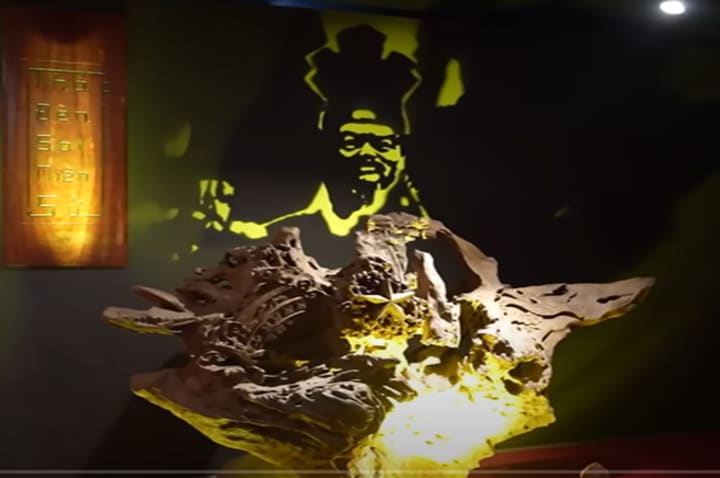
As you may know, in art, impressive appearances often only scratch the surface, but here, he has elevated this concept to a new level, making the object itself an independent work of art. His light art possesses a unique distinctiveness. Although recently some young Japanese artists and individuals in Vietnam have been pursuing this style, his light sculptures stand out with distinctive features, clearly differing from existing light art methods.
When enjoying a piece of art, should we focus on the object first or the shadow? For Light Sculpture, three elements need to converge: first, traditional handcrafted sculpture; second, the combination of lighting to create objects and shadows; and third, the stories, which he humorously refers to as "sculptural language." Therefore, the most important element is the story. What story does he want to convey through a piece? Where does the emotional impulse come from? Listen to his reflections to gain a deeper understanding of the art of "Light Sculpture.” :
When I start creating a Light Sculpture, it is crucial to clearly envision the character's image in my mind. This process is like a contract between my imagination and my hands with the sculpted object, such as wood. I believe the most challenging part is maintaining the emotional flow, keeping the meaningful connection between the object and its shadow. The piece not only has aesthetic value but also tells a story. When designing, I often start with the shadow first, as that is where the visual and narrative aspects are truly expressed.
To create unique light sculptures, I usually spend about a month working diligently. I use driftwood—trees that died decades ago, often buried in mud. Driftwood is not only durable but also carries the essence of overcoming the test of time, much like the nature of humanity. Each of my light sculptures is not just art but also a historical story. For example, one piece simulates the image of King Ngo Quyen standing proudly on the battlefield, illuminated to create vivid and profound visuals.
I currently have four main collections: "Lighting Up the Annals of History" and "The Diary of Land Turning to Gold" in Bat Trang, "The Diary of Time Travel" in Ninh Binh, and a collection on Japanese Kendo. These collections explore Vietnamese history and Japanese culture. I use driftwood for carving, combining art with construction techniques to recreate historical portraits.”
At his gallery, visitors will have the opportunity to admire a light sculpture depicting the Declaration of Independence of Vietnam, "Nam Quốc Sơn Hà," written by Thai Uy Ly Thuong Kiet. By using light, intricate details such as the character’s fingertips and the top of the hat are highlighted, creating a vivid and striking image. Although many visitors often mistakenly believe that a projector is used, the piece actually combines light and wood to create unique and impressive visuals.
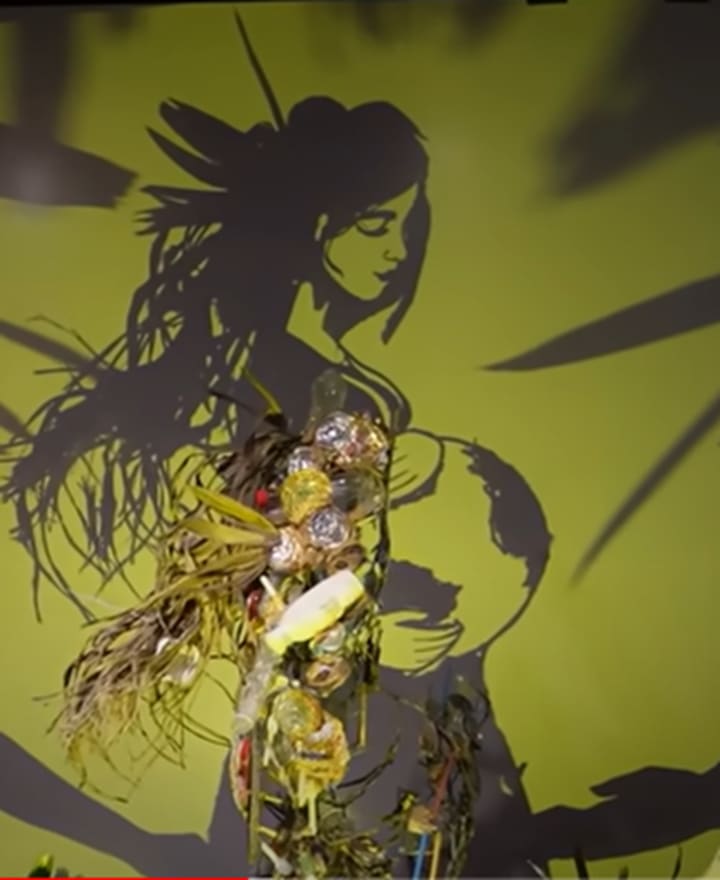
Next, let me introduce you to a unique artwork crafted from recycled materials like plastic, aluminum, copper, metal, and organic waste. This piece depicts Mother Nature pregnant, with the belly symbolizing our planet, conveying a profound message about protecting the environment. This is not only a work of art but also a powerful statement on sustainability and the importance of protecting the Earth.
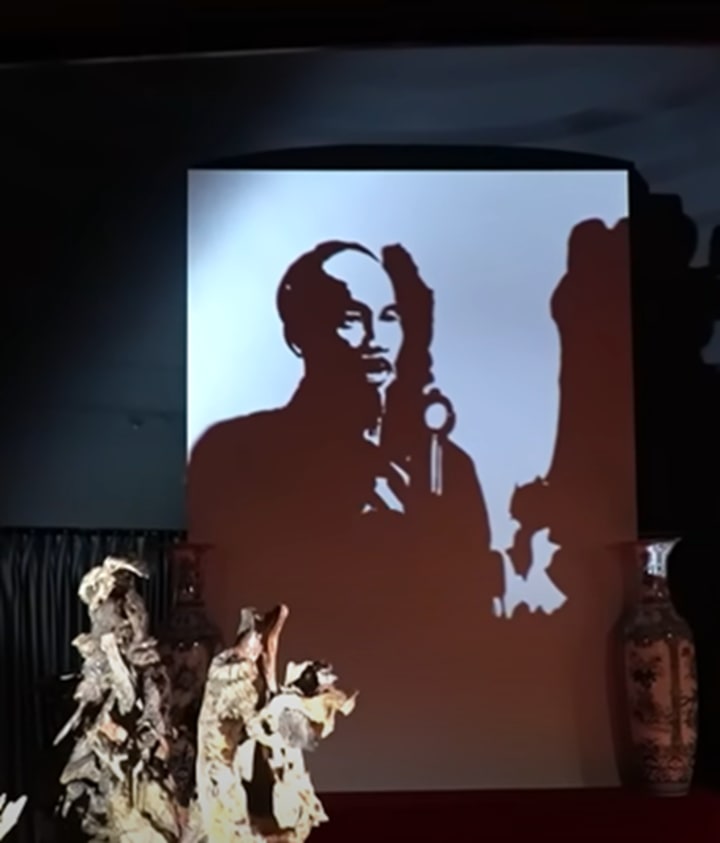
The standout piece is "Pride of Vietnam"—an impressive example of light art and sculptural technique. Using the technique of "transforming images," this piece turns a block of wood into a unique visual performance. As the block of wood is moved, the first image that appears is the S-shaped map of Vietnam, accompanied by images of the Paracel and Spratly Islands. With a change in lighting, the image of a golden hammer and sickle also emerges, offering a creative and surprising view of sculptural and light art. As the wood blocks are further moved, the image of a five-pointed star—the heart of the Vietnamese people—appears. Finally, with continued movement, an image of Uncle Ho reading the Declaration of Independence at Ba Dinh Square emerges. Each image not only reflects the beauty of the country but also honors Uncle Ho’s significant contributions to the revolution and the Vietnamese people.
Another special piece features a combination of sculpture and light to create mystical images. When the light is properly directed, the carved wood appears as shimmering golden fragments, reflecting the blend of intellect, soul, and physicality. From the carved wood depicting the four precious apricot flowers of Yen Tu and bamboo, the light creates the image of King Tran Nhan Tong, like a magical occurrence. The piece is not only visually appealing but also carries a message of spiritual and material harmony.
Light sculpture opens up a unique artistic world where light and shadow merge to create vivid and emotional images. From transforming rough wooden blocks into exquisite artworks to using light to tell stories of history and culture, light sculpture is not just creativity but also a bridge between the past and present. Each piece is a journey of exploration, demonstrating the perfect blend of intellect, soul, and emotion. With the ability to turn ordinary materials into meaningful artworks, light sculpture continuously inspires and expands the boundaries of contemporary art.
About the Creator
Vibom
I am a writer focusing on life, culture, travel, and cuisine in Vietnam.I always seek to explore and share the beauty of my homeland,offering fresh and vivid perspectives on the people,landscapes, and culture of Vietnam through my writing.
r
Creativity in the Dark
Creativity does not always arrive in bright rooms with clean desks and clear intentions. More often, it slips in quietly—late at night, when the world has dimmed its expectations and the mind is no longer on display. This is creativity in the dark: private, unpolished, and deeply human.
By LUNA EDITH5 days ago in Art
The Theft of Three Hundred Thousand Rupees
The Theft of Three Hundred Thousand Rupees (Article No. 1427) Bano and Shehla, the sisters of Mansoor and Munir Shami, studied at Tower House Grammar School, a private institution run by Begum Nayab, who was both its owner and principal. She was known as a kind, intelligent, and principled woman. Her school, which offered education from playground to matriculation, had an excellent reputation. Parents from far-off areas sent their children there because of its strong discipline and high academic standards.
By Sudais Zakwan5 days ago in Art


Comments
There are no comments for this story
Be the first to respond and start the conversation.