
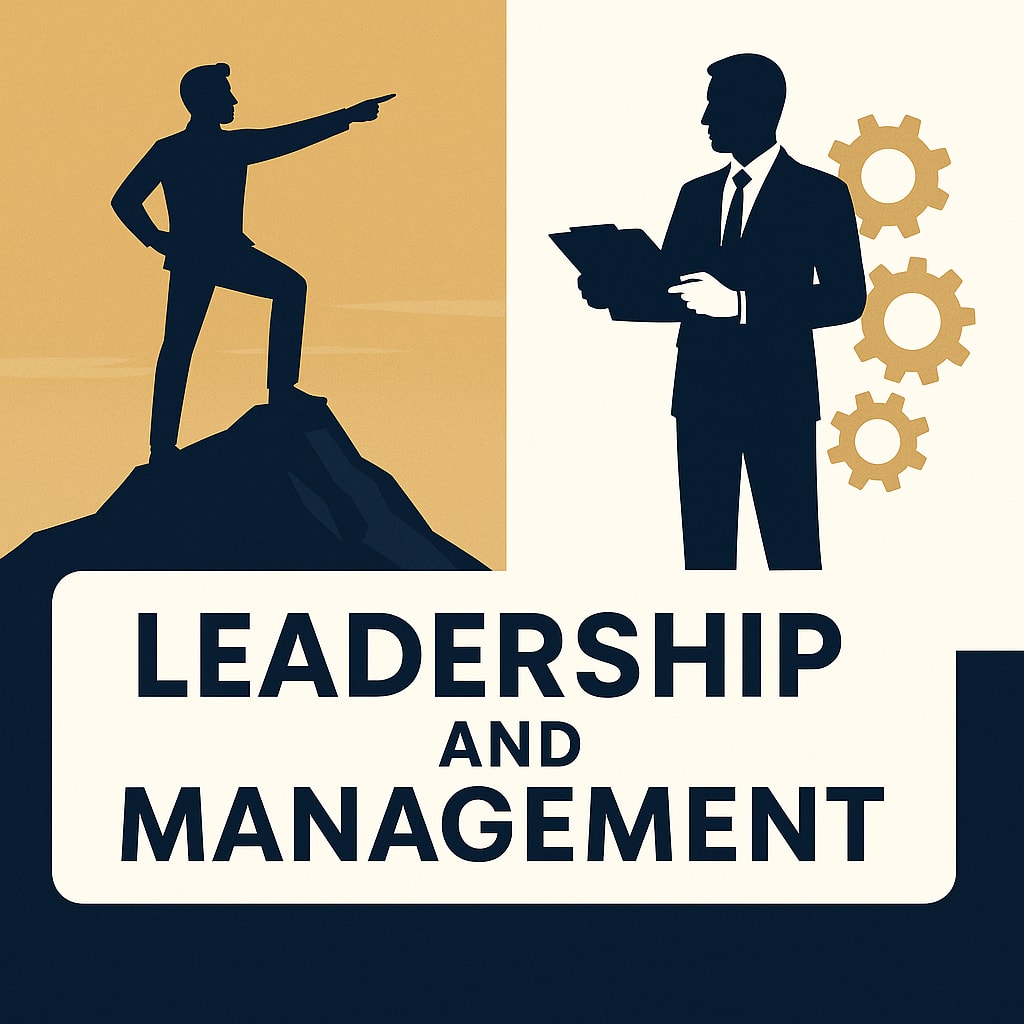
In the world of business and organizational development, the terms "leadership" and "management" are often used interchangeably. However, while they are closely related and often overlap in practice, they represent fundamentally different concepts. Understanding the distinction between leadership and management is crucial for fostering a productive and innovative workplace.
Defining Leadership
Leadership is the art of inspiring, influencing, and guiding individuals or groups toward achieving a common goal. It involves setting a vision, motivating people, and cultivating a sense of purpose. Leaders are often seen as visionaries who challenge the status quo and push boundaries to achieve progress.
Effective leadership is not defined by a position or title. Instead, it is rooted in the ability to connect with others, build trust, and inspire action. A strong leader is someone who communicates clearly, listens actively, and empowers others to perform at their best. Leadership also requires emotional intelligence, resilience, and adaptability, especially in times of uncertainty.
Key characteristics of effective leaders include:
Vision: The ability to see the big picture and guide others toward it.
Empathy: Understanding and relating to the feelings and perspectives of others.
Integrity: Earning trust through honesty, transparency, and ethical behavior.
Inspiration: Motivating and energizing teams to reach higher goals.
Defining Management
Management is the process of planning, organizing, and coordinating resources to achieve specific objectives. It focuses on ensuring that day-to-day operations run smoothly and that tasks are executed efficiently. Managers are responsible for setting goals, developing strategies, allocating resources, and monitoring performance.
Unlike leadership, which is often associated with change and innovation, management is about stability, structure, and consistency. It requires a keen eye for detail, strong analytical skills, and the ability to make decisions based on data and established procedures.
Key functions of effective managers include:
Planning: Setting objectives and determining the best course of action.
Organizing: Allocating resources and assigning responsibilities.
Leading: Directing and motivating team members.
Controlling: Monitoring progress and making adjustments as needed.
Leadership vs. Management: What’s the Difference?
While leadership and management are distinct, they are not mutually exclusive. In fact, the most effective individuals in organizations often possess qualities of both. The key differences lie in their focus and approach.
Focus: Leadership is people-oriented, focusing on vision, motivation, and transformation. Management is task-oriented, focusing on structure, control, and execution.
Approach to Change: Leaders embrace change and encourage innovation. Managers maintain order and strive for stability.
Decision-Making: Leaders often rely on intuition and persuasion. Managers depend on analysis, procedures, and rules.
Why Both Are Essential
Organizations thrive when there is a healthy balance between leadership and management. Leadership is needed to set direction and inspire people, especially during periods of transformation. Management ensures that there is a practical framework to implement that vision effectively and sustainably.
For example, during a major organizational change, leaders play a critical role in communicating the vision and rallying support. Meanwhile, managers are vital in executing the change, aligning resources, and managing risks.
A leader without management skills may struggle to implement their ideas, while a manager without leadership qualities may fail to inspire their team. Therefore, cultivating both skill sets is crucial for personal and organizational success.
Conclusion
Leadership and management are both essential pillars of organizational effectiveness. While leadership is about vision and inspiration, management is about structure and execution. Organizations that recognize and nurture both qualities are better equipped to adapt to change, drive performance, and achieve long-term success. Whether you are a leader, a manager, or both, developing these complementary skills can help you create a more dynamic, resilient, and successful team.
About the Creator
'Till Death We Do Art
There would be nothing divine in this world without art. Nature may surpass the divine to all intents and purposes, but like everything it absorbs and is absorbed by, it remains here, stuck on the surface of this world, ever-present, physically bound to the universe.
By Avocado Nunzella BSc (Psych) -- M.A.P 25 days ago in Art
Keto and Kote
This story has been sitting in my drafts for a long time because I didn't have good pictures for it. Murphy's law: I went to the performance with my phone discharged. But then I found the entire performance on YouTube and am now delightfully happy to share it with you.
By Lana V Lynx4 days ago in Art
Becca
"Everything is so... flat." Denille said stupidly as she looked around her new neighborhood. She looked around at the muted desert where even the smallest sign of life seemed to have given up. The plant life was shrubs that were half cooked by the heat and where there should have been a lawn, a mess of white rocks laid glistening in the sun. Even the sky looked stretched thin, like the sun had ironed it smooth. She’d moved from Riverside, where at least there were hills, but here in Barstow, everything felt baked and brittle.
By Sara Wilson8 days ago in Fiction




Comments
There are no comments for this story
Be the first to respond and start the conversation.