
“Kiss My Brass”: Reclaiming Space in Classical Music’s Most Male-Dominated Section
‘Kiss My Brass’ is turning the spotlight toward gender equity in classical brass music—one bold note at a time.
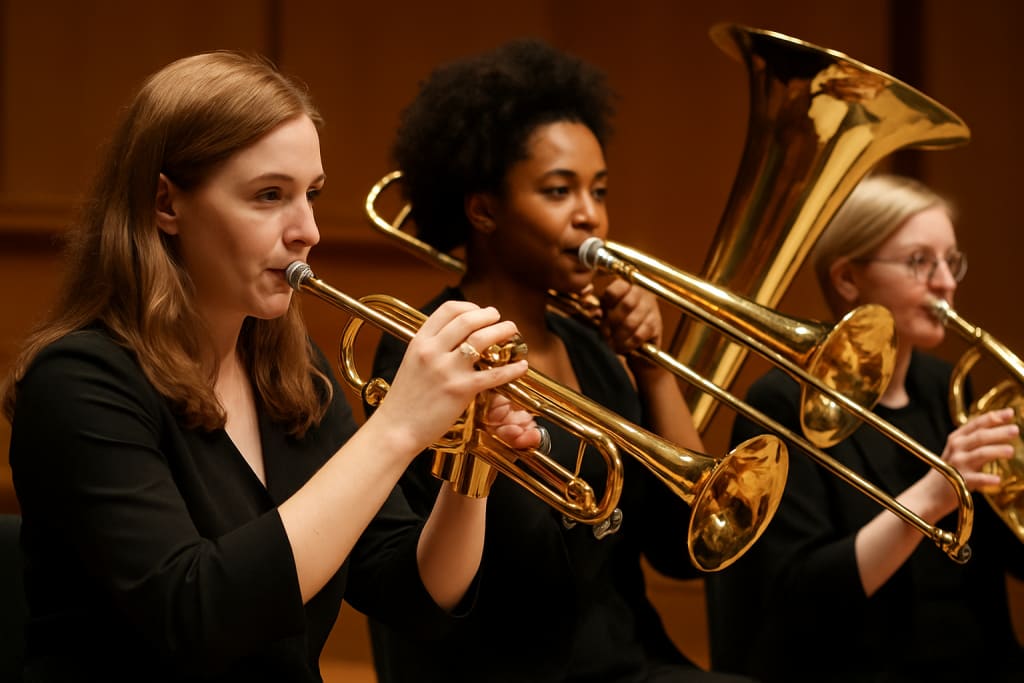
How bold brass players are challenging the norms and reshaping the sound of inclusion in orchestras.
For decades, brass sections in orchestras have echoed with a sound that was often loud, commanding—and largely male. Whether in school bands or symphony halls, tuba and trombone sections remained a bastion of masculine presence, their thunderous resonance seemingly reserved for boys and men. But today, musicians across Australia and beyond are challenging that status quo, reshaping what it means to hold the bell of a trumpet or French horn. At the center of this cultural crescendo is a movement—and a message—called Kiss My Brass.
Why the Brass Section Stayed Mostly Male
The imbalance isn’t just a coincidence. For years, musical instrument selection in schools and youth programs leaned on outdated assumptions. Teachers, consciously or not, often nudged girls toward flute, clarinet, or violin, while encouraging boys to try percussion or brass. These choices, influenced by social conditioning, reinforced the idea that brass was “too aggressive,” “too loud,” or simply “not feminine.”
This stereotype persisted well into professional spaces. Even as orchestras diversified in woodwind and string sections, brass lines lagged behind. The result? Generations of potential talent turned away before they had a chance to try.
In “The Quiet Power of Representation in the Arts”, Vocal explores how visibility influences opportunity. In the context of brass music, visibility has long been limited. Few role models, limited pathways, and a lack of targeted support have kept many women and non-binary musicians from ever picking up a trombone in the first place.
Personal Accounts That Echo Across the Stage
Musicians who did step into brass territory often found themselves the lone woman or non-binary person in an ensemble. Some share stories of teachers who questioned their “fit” in the section. Others recount being talked over, tuned out, or subtly discouraged in conservatory settings.
These aren’t isolated experiences—they represent a wider issue in music culture. The psychological toll of being constantly scrutinized, tokenised, or underestimated has pushed many out. But for others, it sparked something louder than a trumpet call: defiance.
A Community That Blows the Doors Wide Open
In the face of all this, new initiatives have emerged to foster community, challenge convention, and provide support. Leading the charge is Kiss My Brass, a platform dedicated to uplifting women and non-binary brass musicians. With a name that’s both cheeky and empowering, Kiss My Brass stands for more than just clever wordplay—it’s a rejection of the gatekeeping that has plagued the genre.
This movement offers mentorship, educational content, performance promotion, and a sense of belonging to players who may have once felt isolated. It doesn’t just challenge the culture of orchestral music—it provides alternatives, redefines norms, and gives young musicians the confidence to embrace their instruments unapologetically.
By creating space for shared stories and amplifying diverse voices, Kiss My Brass is rewriting the script for what brass performance looks—and sounds—like.
Sounding the Call for Representation
It’s no surprise that musicians are also finding power in collective storytelling and digital advocacy. In “Sounding Off: When Music Becomes a Means of Protest”, the role of music in cultural change is clear. And in the world of brass, simply being visible and unapologetically present becomes an act of resistance.
When a young student sees a woman soloing on trombone or a non-binary performer confidently owning the lead trumpet part, it sparks something bigger than inspiration—it plants a possibility. It says: “You belong here too.”
Brass musicians have long faced a culture of competition, hierarchy, and tradition. While excellence matters, access must come first. Kiss My Brass recognises that before we can hear new sounds, we need new players—and to get them, we need new support systems.
Where Change Is Happening
Thankfully, change is in motion. Music festivals are broadening their selection criteria, conservatories are revisiting audition processes, and social media has given rise to new-age brass icons who defy the mould. Young brass players now share their rehearsal sessions, educational tips, and performance clips on TikTok and Instagram, making the craft more accessible than ever.
These shifts matter. They show that the system—once a rigid structure built around exclusion—can become fluid, loud, and inclusive. And as more musicians proudly wear the badge of Kiss My Brass, the message grows louder.
Building a More Harmonious Future
This movement isn’t about silencing anyone—it’s about turning up the volume for those who’ve been quieted for too long. It’s about acknowledging the harm of musical gender stereotyping and doing something meaningful to dismantle it.
Reclaiming the brass section is not just a metaphor—it’s a tangible act of resistance. And it’s happening every time someone says, “Yes, I play tuba,” or, “This trumpet is mine,” in a room where they were once told they didn’t belong.
Kiss My Brass is more than a name. It’s a rallying cry. One that’s being echoed in rehearsal rooms, on concert stages, and across the digital soundscape.
The next time you hear a horn section swell to fill the hall, listen closely. It might sound a little different than before—and that’s a good thing.
About the Creator
Keep reading
More stories from Rochelle Martinez and writers in Art and other communities.
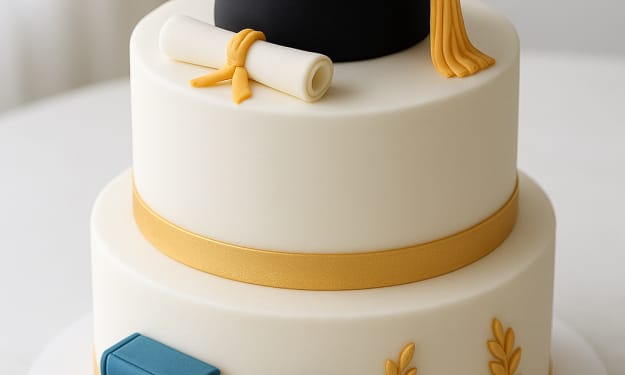
Graduation Cakes and the Stories They Tell: Sweet Symbols of New Beginnings
Graduation is one of those moments in life that sticks. It’s a boundary marker—the end of something familiar and the start of something unknown. Whether it’s a preschooler grinning in a paper cap or a mature-age student finally crossing the stage after years of night classes, the sentiment is the same: achievement deserves to be celebrated. Among the flowers, speeches, and selfies, one tradition continues to hold its ground—graduation cakes. But these aren’t just desserts anymore; they’re stories sculpted in sugar, layered with meaning, and designed to be remembered.
By Rochelle Martinez8 months ago in Art
The Uncopiable Human Wit to Write
We all have been in that spot at least once in our schooldays where we have been wringing our brains off to curate written articles of some sort until our soul-less friends were born. At just four years old, our beloved soul-less, metallic, digital assistant who is always by our side when we turn on our computers and smart phones, will be doing much more than curating written content for us all, if you know what I mean.
By Sound Savvy5 days ago in Art
Miss Persephone's Manual to a Seemingly Ordinary Life
Miss Persephone was found at the dining table, her blue eyes swollen, her tears arriving and retreating like the tides of the ocean. Earlier that day, her family had visited her in the retirement home where she had lived for eight years. It was her eightieth birthday.
By Imola Tóth3 days ago in Fiction


Comments
There are no comments for this story
Be the first to respond and start the conversation.