
Jean-Michel Basquiat, poet, artist and abstract dreamer.
Fame, tragedy and a posthumous legacy of his painting "Untitled" (1982), selling for a record-breaking $110.5 million in 2017.

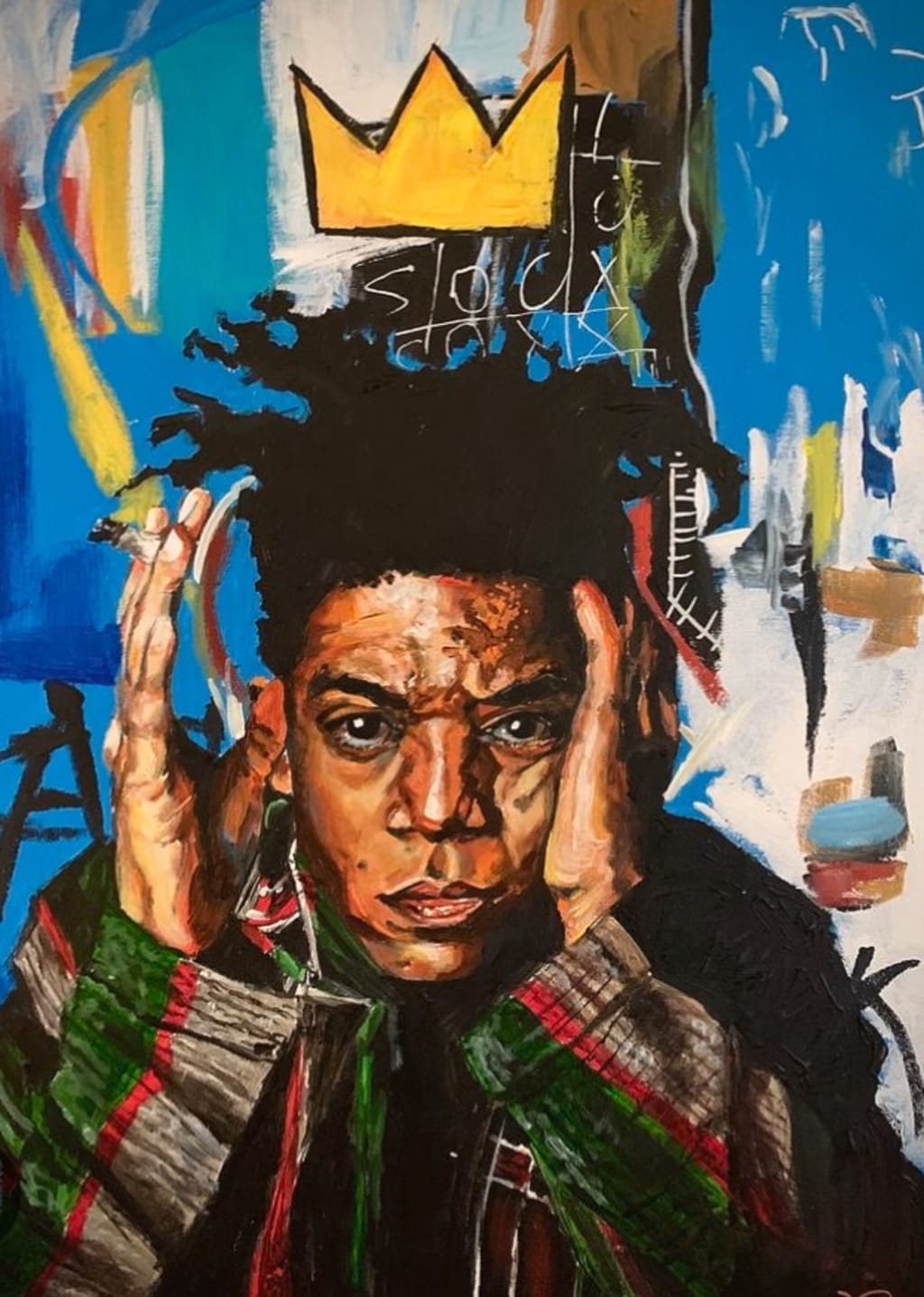
When a young artist started drawing graffiti, writing pithy sayings and clever expressions on the walls and byways of Manhattan in the troubled 80's, I doubt that he imagined his art selling for a grand sum of one hundred and ten point five million US dollars years later. Sadly after he had died.
Basquiat was born on December 22, 1960, in Park Slope, Brooklyn, New York City, the second of four children to Matilde Basquiat and Gérard Basquiat. He had an older brother, Max, who died shortly before his birth, and two younger sisters, Lisane and Jeanine. His father was born in Port-au-Prince, Haiti and his mother was born in Brooklyn to Puerto Rican parents. He was raised Catholic.
Matilde instilled a love for art in her young son by taking him to local art museums and enrolling him as a junior member of the Brooklyn Museum of Art. Basquiat was a precocious child who learned to read and write by the age of four. His mother encouraged her son's artistic talent and he often tried to draw his favorite cartoons. In 1967, he started attending Saint Ann's School, a private school. There he met his friend Marc Prozzo and together they created a children's book, written by Basquiat at the age of seven and illustrated by Prozz.
In May 1978, Basquiat and Diaz began spray painting graffiti on buildings in Lower Manhattan. Working under the pseudonym SAMO, they inscribed poetic and satirical advertising slogans such as "SAMO© AS AN ALTERNATIVE TO GOD. In June 1978, Basquiat was expelled from City-As-School for pieing the principal. At 17, his father kicked him out of the house when he decided to drop out of school. He worked for the Unique Clothing Warehouse in NoHo while continuing to create graffiti at night. On December 11, 1978, The Village Voice published an article about the SAMO graffiti.
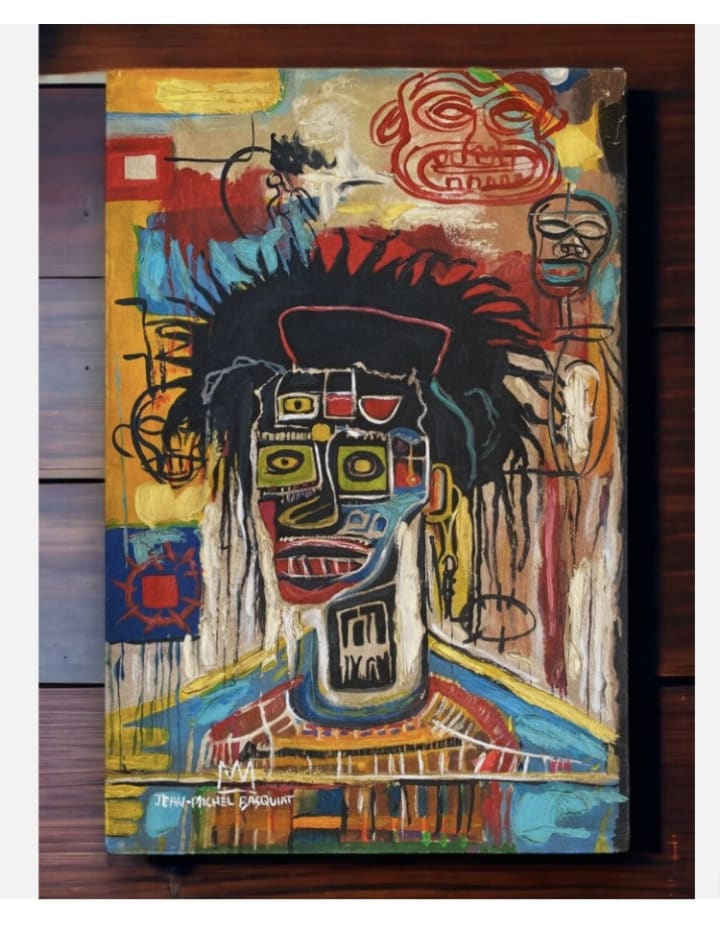
Basquiat sold his first painting, Cadillac Moon (1981), to Debbie Harry, lead singer of the punk rock band Blondie, for $200.
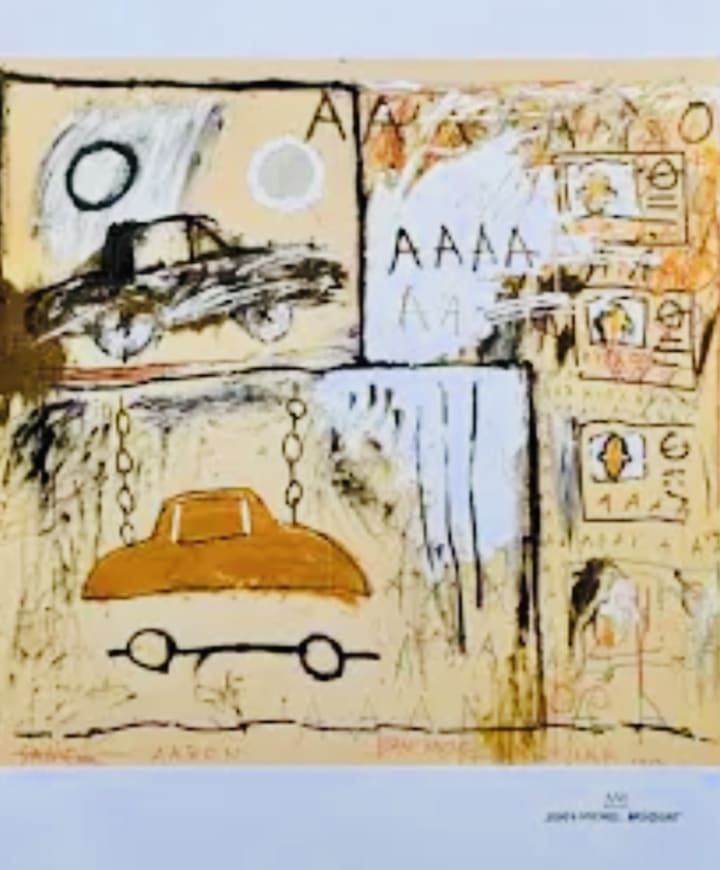
Later years.
Basquiat became an influential artist, rising to fame in the 1980s as part of the Neo-expressionism movement. He began his artistic journey as a graffiti artist under the pseudonym SAMO (Same Old Shit).
Basquiat first achieved notoriety in the late 1970s as part of the graffiti duo SAMO, alongside Al Diaz, writing enigmatic epigrams all over Manhattan, particularly in the cultural hotbed of the Lower East Side where rap, punk, and street art coalesced into early hip-hop culture. By the early 1980s, his paintings were being exhibited in galleries and museums internationally. At 21, Basquiat became the youngest artist to ever take part in Documenta in Kassel, Germany. At 22, he became one of the youngest to exhibit at the Whitney Biennial in New York.
In the mid-1980s, Basquiat was earning $1.4 million a year and he was receiving lump sums of $40,000 from art dealers. Despite his success, his emotional instability continued to haunt him. "The more money Basquiat made, the more paranoid and deeply involved with drugs he became," wrote journalist Michael Shnayerson. Many of his peers speculated that his drug use was a means of coping with the demands of his newfound fame, the exploitative nature of the art industry, and the pressures of being a black man in the white-dominated art world.
The Whitney Museum of American Art held a retrospective of his artwork in 1992.
Basquiat's work often explored dichotomies such as wealth versus poverty, integration versus segregation, and inner versus outer experience. He combined poetry, drawing, and painting, mixing text and image, abstraction, figuration, and historical information with contemporary critique. His art was deeply rooted in social commentary, reflecting his experiences in the black community and critiquing power structures and systems of racism.
Despite his early death at the age of 27 from a heroin overdose in 1988, Basquiat's legacy has continued to grow. His paintings have become highly valuable, with one of his works, "Untitled" (1982), selling for a record-breaking $110.5 million in 2017, becoming one of the most expensive paintings ever purchased.
Basquiat's work has steadily increased in value.
+
The artwork is truly unique, captivating and profound. Notable pieces that highlight his genius:
Untitled (1981): This painting features a powerful skull with fiery eyes and complex layers of color, text, and symbols. It's a vivid example of Basquiat's raw energy and his ability to convey deep emotion and critique within his art.

Exploring Death and Marginalization
Untitled (Skull) (1981)
In his exploration of death and marginalization, Basquiat’s portrayal of dismembered black bodies serves as a radical commentary on the trauma of displacement and the alienation experienced by African Americans. His depiction of anatomical parts, such as exposed internal organs and skeletal structures, mirrors the violent fragmentation of black identity under systemic racism. Basquiat’s repeated use of skulls and corpses underscores the existential anxiety of blackness in a society that dehumanizes and objectifies the black body.
A major reference source used by Basquiat throughout his career was the book Gray's Anatomy, which his mother had given him while he was in the hospital when he was seven. It remained influential in his depictions of human anatomy.
+
Hollywood Africans (1983): In this piece, Basquiat presents a self-portrait alongside his friends Toxic and Rammellzee, reflecting on the experience of African Americans in the entertainment industry. The painting is filled with poignant commentary on race, fame, and the exploitation of black culture.
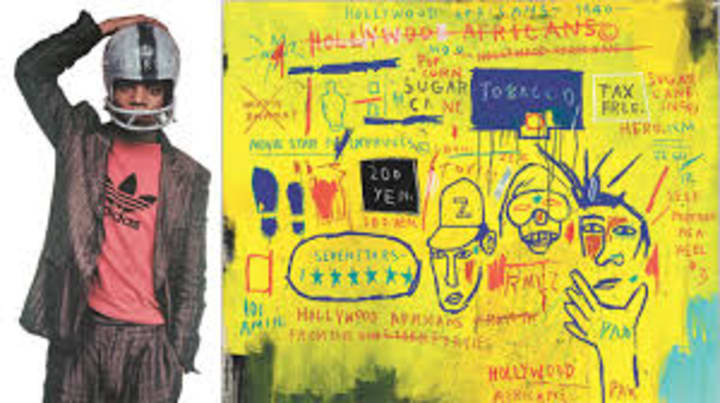
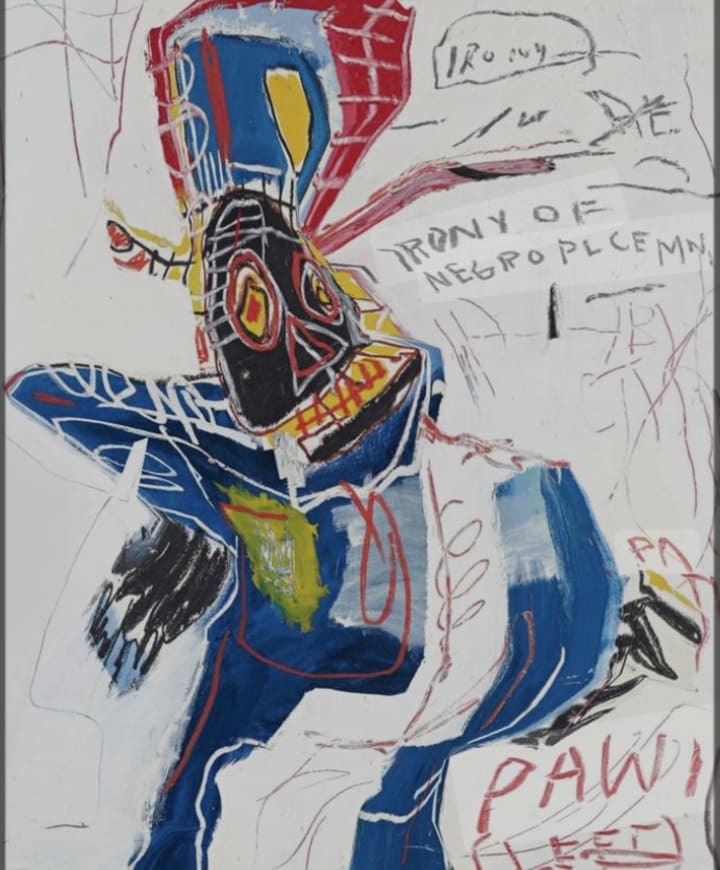
Irony of Negro Policeman (1981): This painting addresses the complexities and contradictions of identity, specifically focusing on an African American police officer. It critiques the systemic racism within law enforcement and the difficult position of those who serve within it.
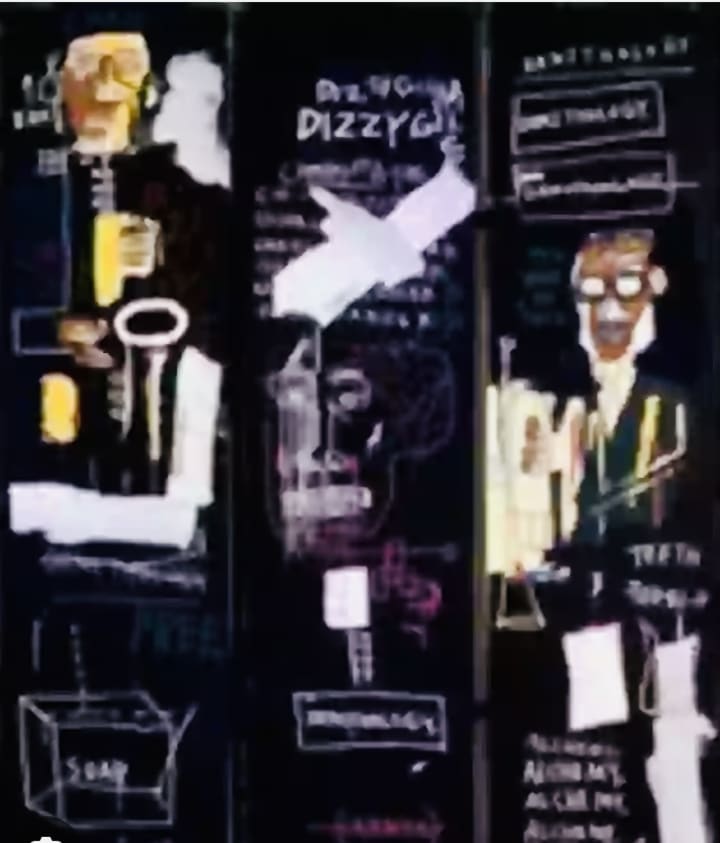
Horn Players (1983): This diptych pays homage to jazz musicians Charlie Parker and Dizzy Gillespie, merging Basquiat's love for jazz with his characteristic use of fragmented text and bold imagery. The piece is a celebration of creativity and cultural influence.
Basquiat's influence on contemporary art is immense. He broke through the predominantly white art world and brought the experiences and struggles of marginalized communities to the forefront. His work continues to inspire artists, musicians, and cultural commentators. Basquiat's unique blend of graffiti, abstract expressionism, and social commentary has left an indelible mark on the art world.
+++
This highly gifted artist may have died early, but he managed to squeeze a lifetime into his young life.
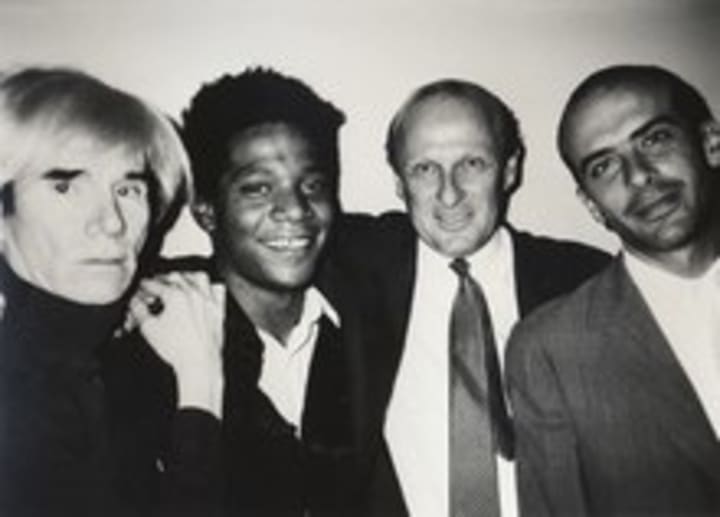
(Andy Warhol, Jean-Michel Basquiat, Bruno Bischofberger, and Francesco Clemente in 1984).
By the summer of 1982, at age 22, he had become a worldwide art dealer. One day Jean-Michel said, his friend, remembered Basquiat telling him that 'My girlfriend is coming to stay with me.' ... So I said, 'Well, what's she like?' And he said, 'Her name is Madonna and she's going to be huge.' I'll never forget that he said that, Jean mused.
Basquiat often painted in expensive Armani suits and would appear in public in the same paint-splattered clothes. He was a regular at the Area nightclub, where he sometimes worked the turntables as a DJ for fun. He also painted murals for the Palladium nightclub in New York City. His swift rise to fame was covered in the media. He appeared on the cover of the February 10, 1985, issue of The New York Times Magazine in a feature titled "New Art, New Money: The Marketing of an American Artist". His work appeared in GQ and Esquire, he was interviewed for MTV's "Art Break" segment and In 1985, he walked the runway for the Comme des Garçons Spring fashion show in New York.
For what would be his last exhibition on the West Coast, Basquiat returned to Los Angeles for his show at the Gagosian Gallery in January 1986. In February 1986, Basquiat traveled to Atlanta, Georgia for an exhibition of his drawings at Fay Gold Gallery. That month, he participated in Limelight's Art Against Apartheid benefit. In the summer, he had a solo exhibition at Galerie Thaddaeus Ropac in Salzburg. He was also invited to walk the runway for Rei Kawakubo again, this time at the Comme des Garçons Homme Plus fashion show in Paris. In October 1986, Basquiat flew to Ivory Coast for an exhibition of his work organized by Bruno Bischofberger at the French Cultural Institute in Abidjan. He was accompanied by his girlfriend Jennifer Goode, who worked at his frequent hangout, Area nightclub. In November 1986, at 25 years old, Basquiat became the youngest artist given an exhibition at Kestner-Gesellschaft in Hanover, Germany.
+
Final years and death: 1986–1988
During their relationship, Goode began snorting heroin with Basquiat since drugs were at her disposal. She said: "He didn't push it on me, but it was just there and I was so naïve. In late 1986, she successfully got herself and Basquiat into a methadone program in Manhattan, but he quit after three weeks. According to Goode, he did not start injecting heroin until after she ended their relationship. In the last 18 months of his life, Basquiat became something of a recluse. His continued drug use is thought to have been a way of coping after the death of his friend Andy Warhol in February 1987.
King.
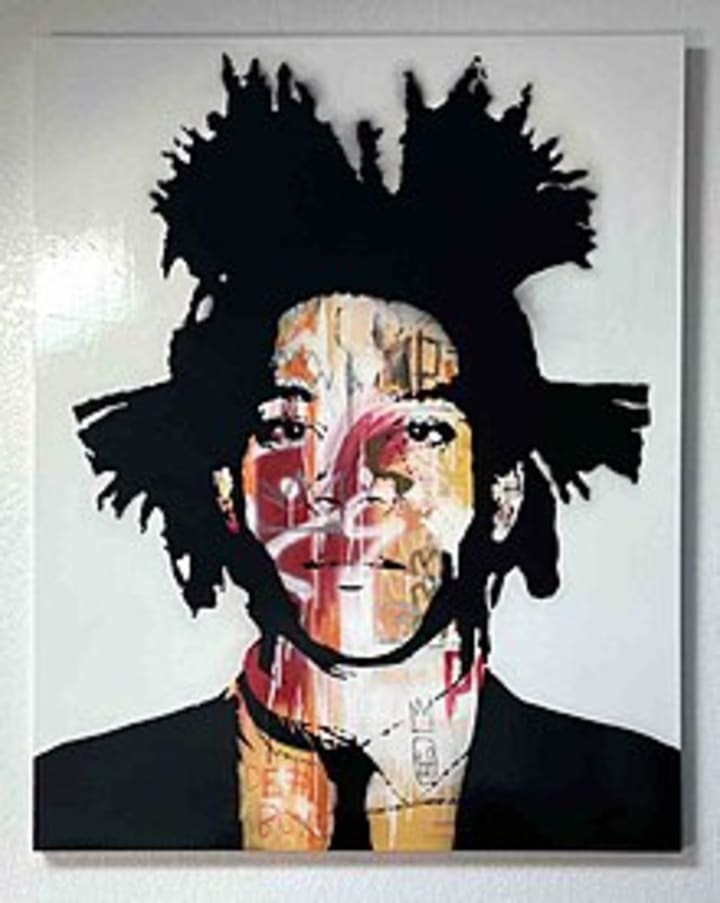
Radiant Child: The Story of Young Artist Jean-Michel Basquiat
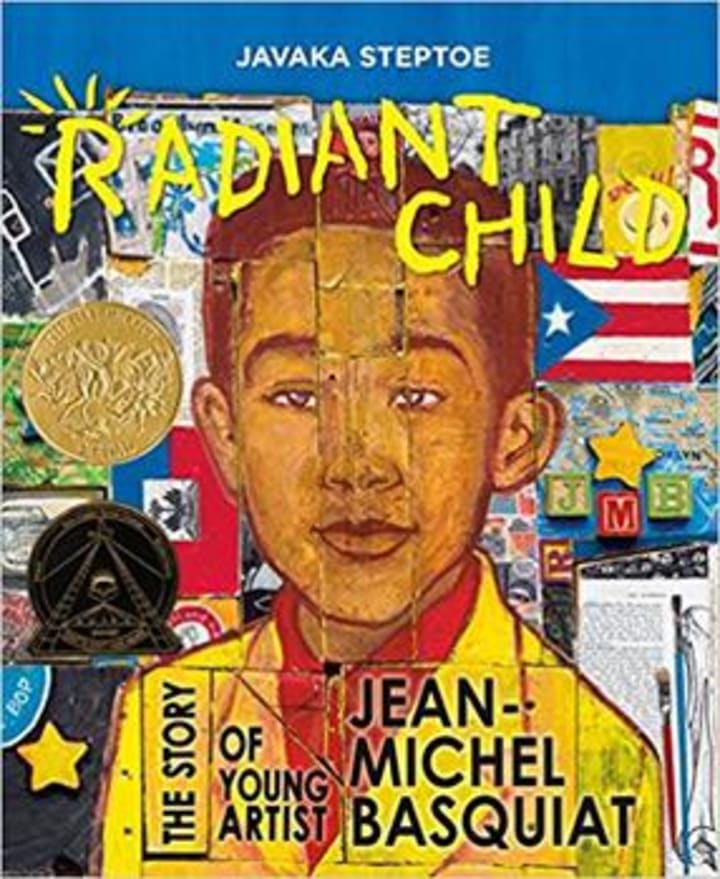
Radiant Child: The Story of Young Artist Jean-Michel Basquiat is a 2016 picture book biography by Javaka Steptoe about Jean-Michel Basquiat. Using a style similar to Basquiat's, the book tells the story of his childhood and early career. It won the 2017 Caldecott Medal and Coretta Scott King Illustrator Award for its illustrations.
5 Jul 2023 — Their father, Gerard Basquiat, created and cared for his son's estate until his death in 2013, when the sisters took over.
About the Creator
Antoni De'Leon
Everything has its wonders, even darkness and silence, and I learn, whatever state I may be in, therein to be content. (Helen Keller).
Tiffany, Dhar, JBaz, Rommie, Grz, Paul, Mike, Sid, NA, Michelle L, Caitlin, Sarah P. List unfinished.
Keep reading
More stories from Antoni De'Leon and writers in Art and other communities.
Why Nietzsche Belongs in 2026
As the world moves toward 2026, it does not feel like a calm progression into the future—it feels like a collision. Rapid technological acceleration, cultural fragmentation, economic uncertainty, and a deep crisis of meaning define the modern condition. Traditional authorities are distrusted, ideologies compete aggressively, and individuals feel both empowered and exhausted by choice. In such a landscape, Friedrich Nietzsche’s philosophy emerges not as a comfortable guide, but as a necessary one. Unsettling, demanding, and brutally honest, Nietzsche may offer the most fitting philosophical framework for the year ahead.
By Fred Bradford7 days ago in Art
2026 Commercial Space Design:How Fbierglass Sculpture Drives Traffic
Today, offline commercial spaces are facing continuous pressure. With e-commerce offering convenient and fast services, physical stores must showcase unique features to attract customers. In this context, fiberglass sculptures are no longer merely decorative items; they have become visual focal points in shopping malls, brand stores, pop-up shops, and mixed-use commercial projects, playing a crucial role in increasing foot traffic.
By Shenzhen Ruiheng Crafts3 days ago in Art


Comments (5)
Interesting and well written.
I enjoyed this immensely! What a talented risk taker he was! Thx 4 sharing Antoni! Your anointed historical writing gift shines brightly throughout this piece! Go gurl! 💪🏾🌸
The brightest flames burn out the fastest. But oh, what a spectacle they create & how long they are remembered!
He packed so much into his short life, he lived more than many of us combined. Fame is not a fickle thing to mess with. Stress and pressure plus racism,,,what a mixture, such a pity. Now he is more famous than ever, life is so strange. A great tribute to him A.
Definitely saving this to read it when I have time. Scanned through the art it’s really cool- I love the graffiti aesthetic. Also, would be good to learn more about a Haitian artist— my kids have Haitian ancestry.