
Jamie Harris's Guide to Choosing the Right Rope Access Gear
The right gear can make a difference between a smooth, safe job and a risky, unsafe situation. Here’s Jamie Harris’s expert guide to help you choose the right rope access gear for your needs.

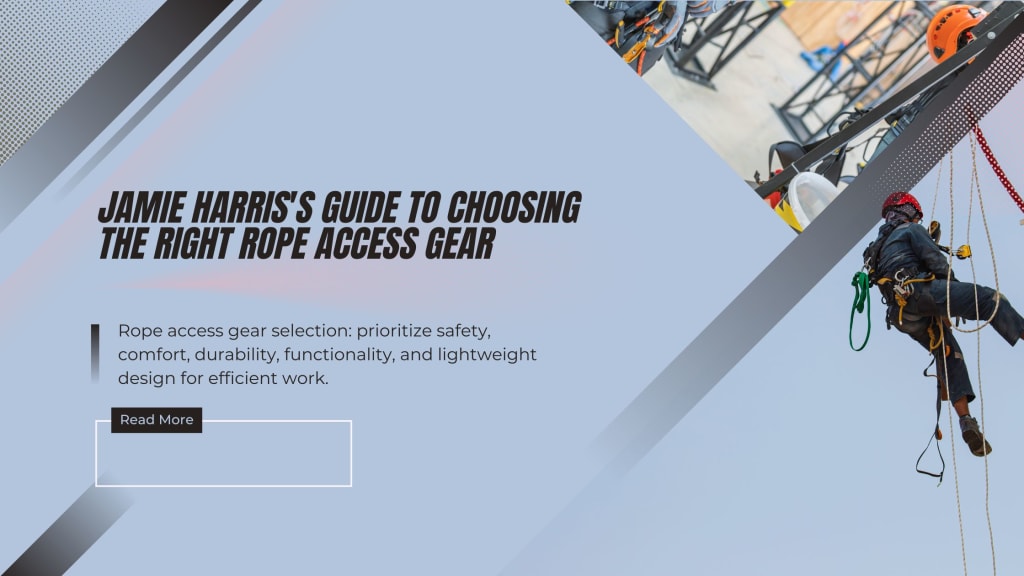
Choosing the right rope access gear is crucial for safety, efficiency, and comfort when working at height. As an experienced rope access technician based in Cardiff and Dinas Powys, Jamie Harris understands the importance of selecting high-quality, reliable equipment to ensure successful operations. The right gear can make a difference between a smooth, safe job and a risky, unsafe situation. Here’s Jamie Harris’s expert guide to help you choose the right rope access gear for your needs.
1. Prioritize Safety and Compliance
When choosing rope access gear, the primary consideration should always be safety. All equipment must meet international safety standards, such as those set by the European Union (EN) or the American National Standards Institute (ANSI). Jamie Harris emphasizes that certified gear ensures it has been tested under controlled conditions and meets the necessary strength and performance criteria.
For instance, harnesses, ropes, and carabiners should all be rated for the specific weight load you plan to carry and the type of work you will be performing. When in doubt, always opt for equipment that exceeds the minimum requirement.
2. Comfort and Fit Matter
Rope access work often involves long hours suspended in the air, so comfort is key. Jamie Harris advises that choosing the right fit can significantly improve performance and prevent fatigue or injury.
The harness is one of the most important pieces of gear, and it should fit snugly without being restrictive. Look for adjustable straps and padding for better comfort. A poorly fitted harness can cause discomfort and interfere with movement, increasing the risk of accidents. Similarly, choosing gloves and boots that provide both protection and comfort is crucial for long-lasting productivity.
3. Consider Durability and Material Quality
Rope access gear must withstand harsh conditions, including extreme weather, chemical exposure, and mechanical wear. Therefore, durability should be a top consideration when selecting your gear.
Jamie Harris recommends that technicians invest in high-quality equipment made from durable, long-lasting materials. Look for harnesses made from strong nylon or polyester, ropes with high abrasion resistance, and carabiners that are corrosion-resistant.
When purchasing ropes, consider the material’s resistance to wear, UV light, and moisture absorption. For example, ropes made of nylon or polypropylene offer excellent durability and strength. Similarly, look for gear designed to handle environmental factors such as wind, rain, and intense sun.
4. Ease of Use and Functionality
Rope access technicians need gear that is easy to use and reliable under pressure. The gear should allow for smooth operation during challenging tasks, without compromising safety. Jamie Harris emphasizes the importance of functionality in selecting equipment that is intuitive to use.
For example, ascenders and descenders should allow for quick and efficient movement, while carabiners must easily lock and unlock without catching or jamming. The gear should be designed for maximum mobility and ease of use, especially during complex tasks or in difficult-to-reach locations.
5. Weight and Packability
Since rope access technicians often have to carry their gear up and down ladders, cranes, or scaffolding, the weight and packability of the equipment are important factors to consider. Gear that is lightweight and compact can reduce fatigue, especially on longer jobs.
Jamie Harris recommends selecting ropes and harnesses that are strong yet light enough to make carrying them easier. Ropes, in particular, should be easy to store and transport, so consider options that pack down into small, manageable sizes.
Final Thoughts
Selecting the right rope access gear is a blend of considering safety, comfort, durability, functionality, and weight. Jamie Harris’s guide to choosing gear focuses on these essential elements to help technicians make informed decisions about the equipment they use. By prioritizing these factors and investing in quality gear, you can ensure safety, efficiency, and comfort during rope access operations. Whether you are based in Cardiff, Dinas Powys, or working anywhere in the world, choosing the right equipment will contribute to a successful and safe rope access career.
About the Creator
'Till Death We Do Art
There would be nothing divine in this world without art. Nature may surpass the divine to all intents and purposes, but like everything it absorbs and is absorbed by, it remains here, stuck on the surface of this world, ever-present, physically bound to the universe.
By Avocado Nunzella BSc (Psych) -- M.A.P 24 days ago in Art
The Front Seat
I found myself waking up in the front seat of the bus. My eyes were filled with the early morning darkness. I had been asleep, but I wasn’t sure for how long. I tried to wake up my body, but my head felt heavy, as though I had been sleeping for an eternity, although I couldn’t pinpoint how much time had passed.
By Aunty Sadaabout 5 hours ago in Art




Comments
There are no comments for this story
Be the first to respond and start the conversation.