
Is the "hanging" in ancient Chinese criminal law equivalent to hanging in the West? The dark history of "hanging" in the East and the West
ancient Chinese criminal law equivalent to hanging in the West

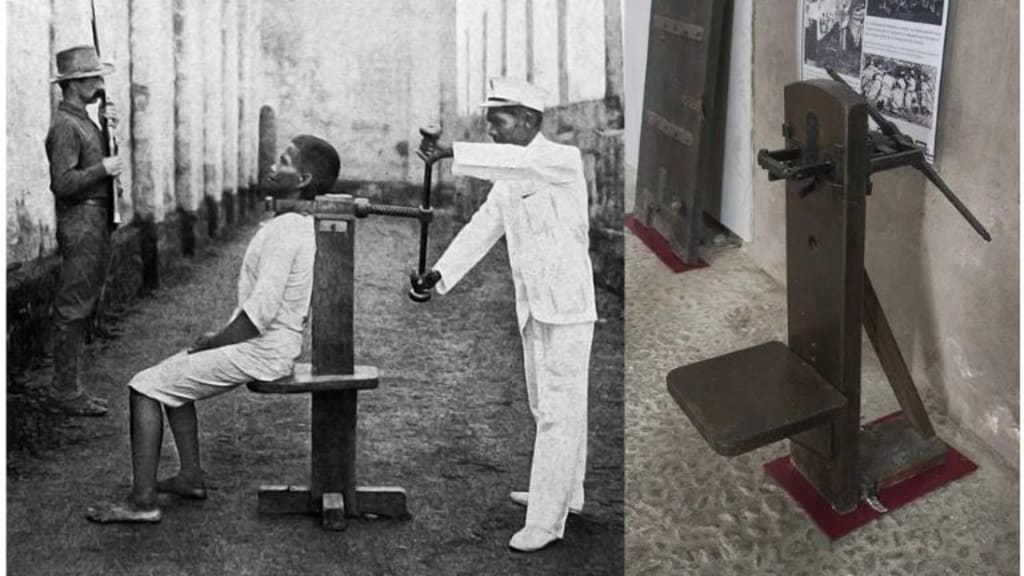
Today’s content is heavy-handed and offensive again, so let’s continue with the topic we talked about before, the death penalty.
Caiyun University is a law school. In the freshman course of Chinese legal history, there are references to the ancient criminal law of beheading, beheading pending execution, hanging, and hanging pending execution, which are the execution methods of death penalty. The "immediate execution" here refers to the execution immediately after the verdict is announced, which is generally for serious crimes such as treason, while "pending execution" refers to the death penalty, but the person is detained in prison and will be executed in autumn after the emperor's approval. This is also a more common execution method. On the one hand, the ancients believed that the atmosphere in autumn was solemn and murderous, which was more in line with the atmosphere of execution. On the other hand, the list of people waiting for execution was reported to the emperor for his approval. The only one who could decide the life and death of a prisoner was the supreme ruler. At least in form, it was a simple idea of prudent punishment.
In ancient criminal law, "beheading" means decapitation, which can be seen in various film and television dramas and is easy to understand. However, "hanging" is relatively unfamiliar. Moreover, in ancient times, "hanging" was a death penalty lower than "beheading". How should this be understood?
The "hanging" in ancient China is not the same as the European hanging we are familiar with, where a rope is put around the prisoner's neck and hanged to death - the latter is more precisely "hanging", which I will talk about later. The "hanging" in ancient China is to put a rope around the prisoner's neck, and then two executioners each use a wooden stick to pass through the knot, and rotate it in circles on both sides of the prisoner, gradually tightening the rope, compressing the prisoner's airway and carotid artery until the prisoner dies of brain deprivation.
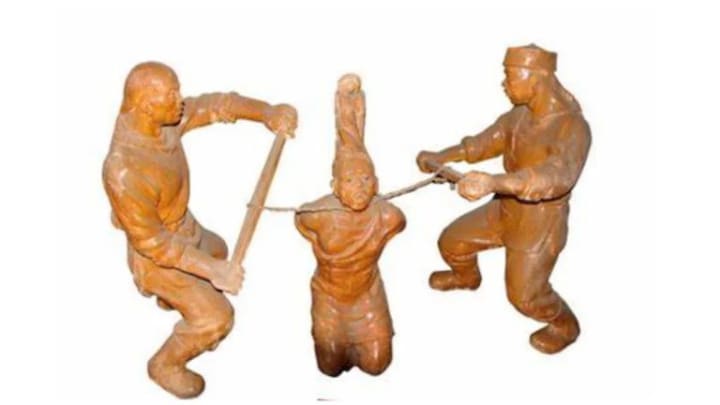
But in practice, there are other workarounds. For example, two executioners would put a rope around the neck and pull it on both sides like tug-of-war, strangling the prisoner until his eyeballs pop out and his tongue sticks out, and then he would be hung.
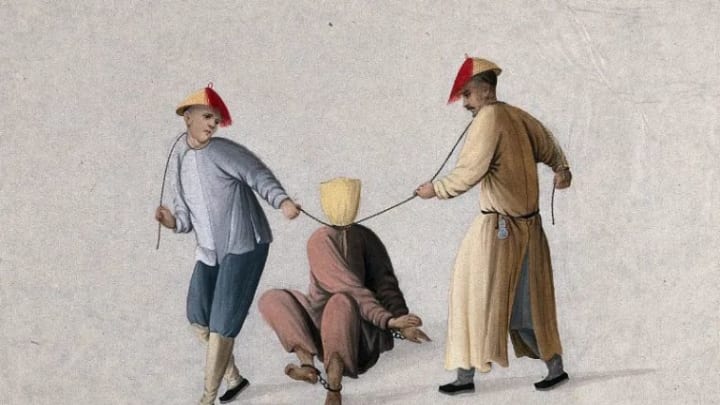
Even one person could do it. Tie the prisoner to a wooden stake, put a rope around his neck, and the executioner would pull the rope tight from behind, killing the prisoner in a moment.
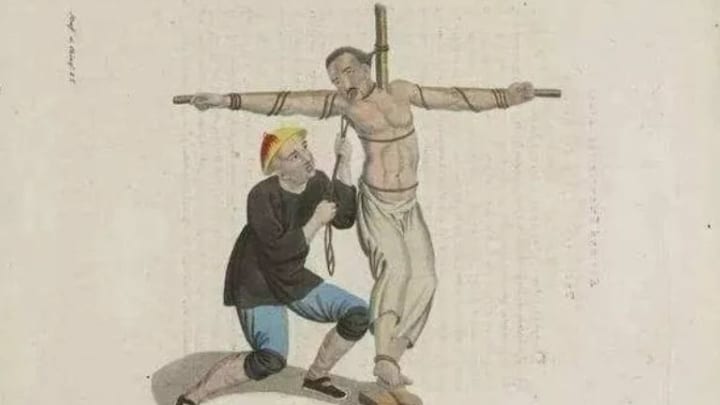
Being strangled with a rope involves suffocation and fainting, which is not a very pleasant experience. It is not as painful as having your head dropped to the ground with a click of a machete. For the latter, as long as the executioner is skilled in knife skills, he can cut the spinal cord and cervical blood vessels in an instant with one knife, and the transmission of nerve signals will be terminated instantly. The brain will lose function and consciousness within a few seconds due to lack of blood and hypoxia. But why was "hanging" a lower level of death penalty than "beheading" in ancient times?
This is mainly due to the ancient Chinese obsession with leaving a complete body. Hanging can leave a complete body, which is more decent, while beheading means the body and head are separated and the head falls to the ground, which is a more undignified way to die. Therefore, "hanging" is often used as a means of "honorary death penalty". When executing nobles and important officials, they do not want to make it too ugly or undignified. They either grant death or order them to commit suicide. If the person himself is not decent, then they will be decent for him. They are often strangled to death with a white silk. It is said that when Yang Guifei was executed at Mawei Slope, two eunuchs were asked to strangle her with a white silk.
In Europe, the concept of whether a death is decent or not is based on the opposite logic. Europeans believe that dying by sword is an honorable way to die, so beheading by sword or axe is a treatment only for nobles. Civilians of low status and bandits would be hanged with ropes, and their bodies would be hung for public display. It is understandable why the International Criminal Court used hanging to execute German and Japanese war criminals after World War II, because in the eyes of Europeans and Americans, this is an extremely undignified way to die, and it is a disgust for war criminals.
So, are there any other countries, especially Western countries, that have similar methods of execution as the ancient Chinese "hanging"? Yes, Spain has a very horrible method of execution called Garrotte.
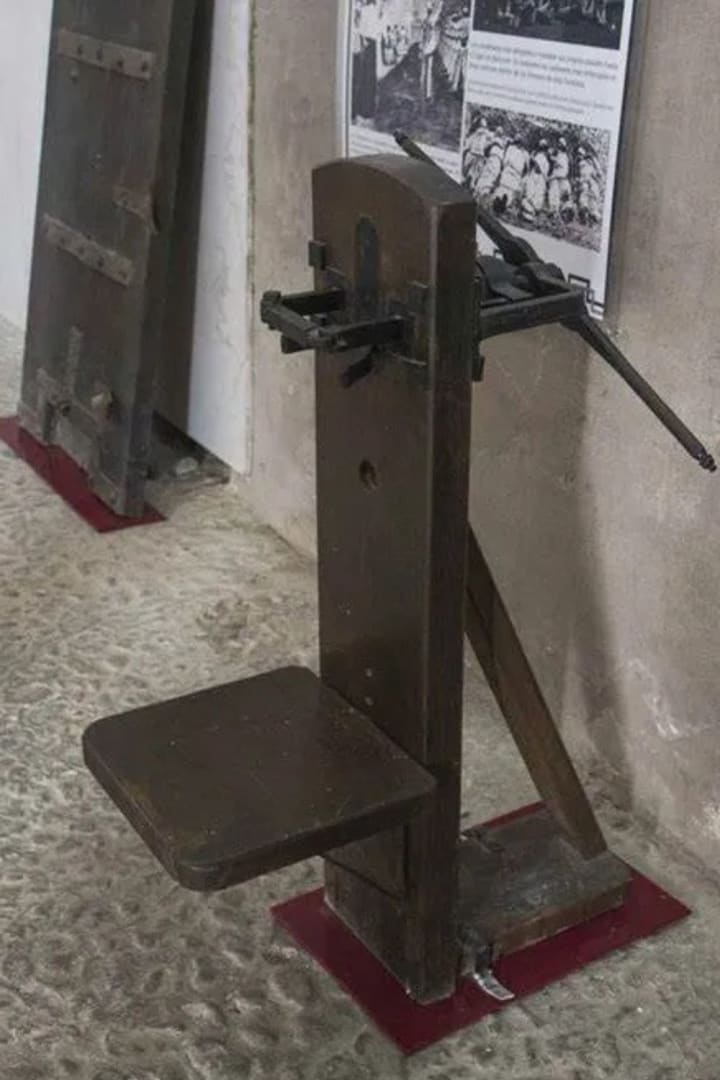
Garrotte involves tying the prisoner to a special wooden chair with a rope around his neck, which later evolved into a steel cable or metal belt. There is a rotating handle behind the chair. The executioner turns the handle, and the steel cable or metal belt will gradually tighten under the control of the screw until the prisoner suffocates or breaks his cervical vertebrae and dies.
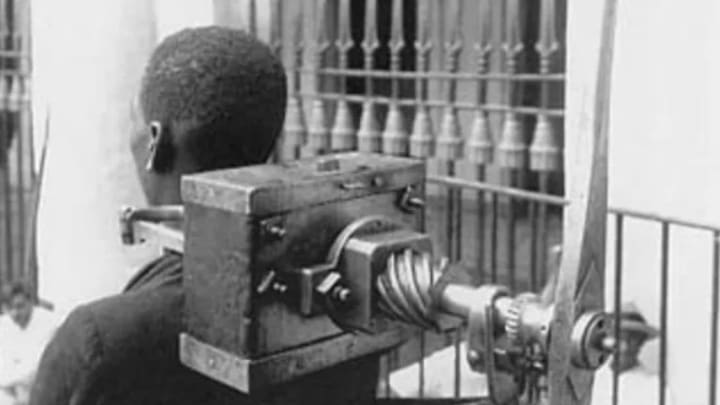
In order to speed up the execution efficiency and kill the prisoners faster, the Garrotte chair was later upgraded and evolved. A metal cone was installed at the back of the prisoner's head. The executioner did not tighten the steel cable around the prisoner's neck, but instead fixed the prisoner and turned the screw behind the metal cone, allowing the metal cone to push forward little by little until it pierced the back of the prisoner's head and caused death.
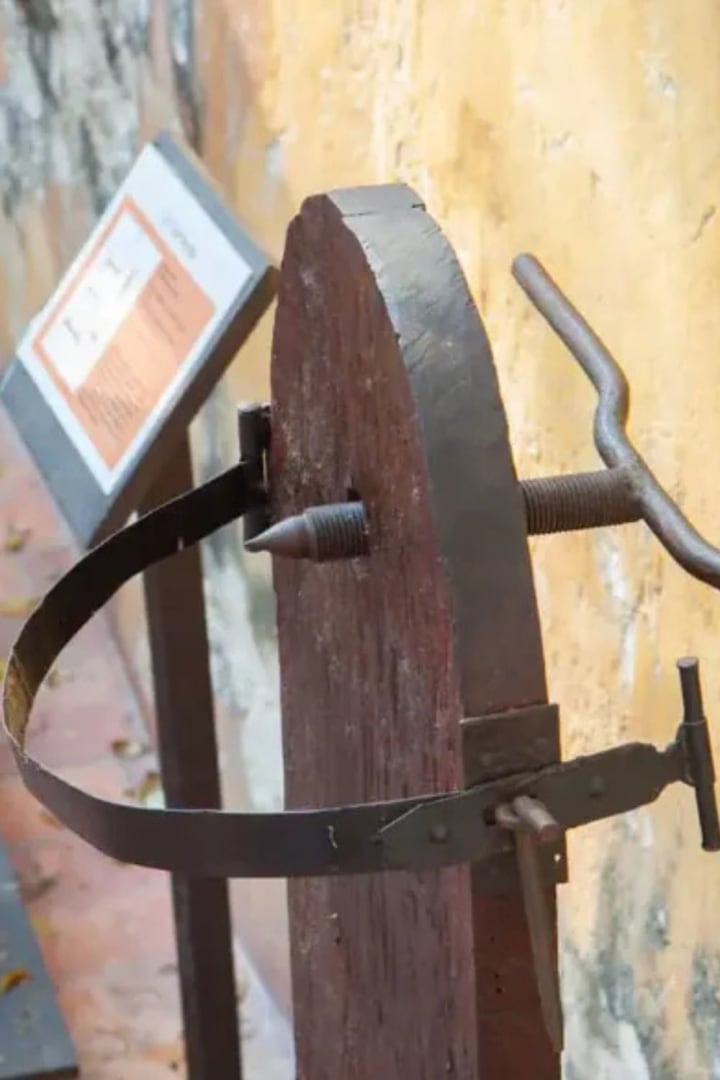
This Spanish hanging method was also brought by the Spaniards to Spain's colonies in Latin America and Asia, and was used in Cuba and the Philippines. In addition to executing criminals, it was also used to suppress local resistance forces.
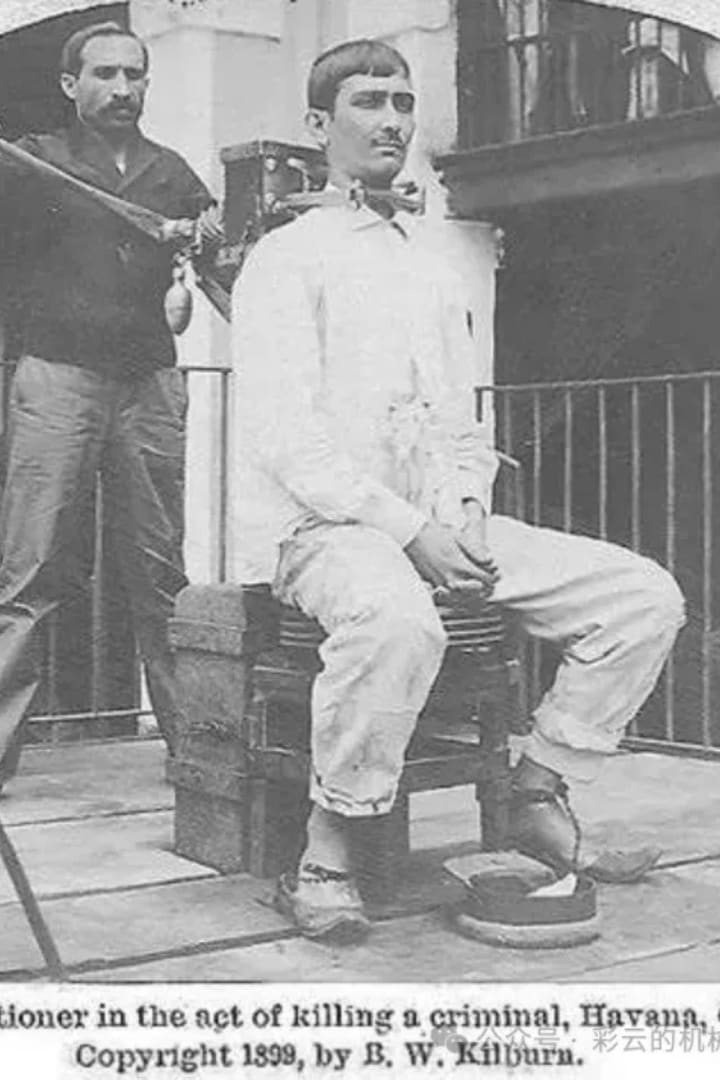
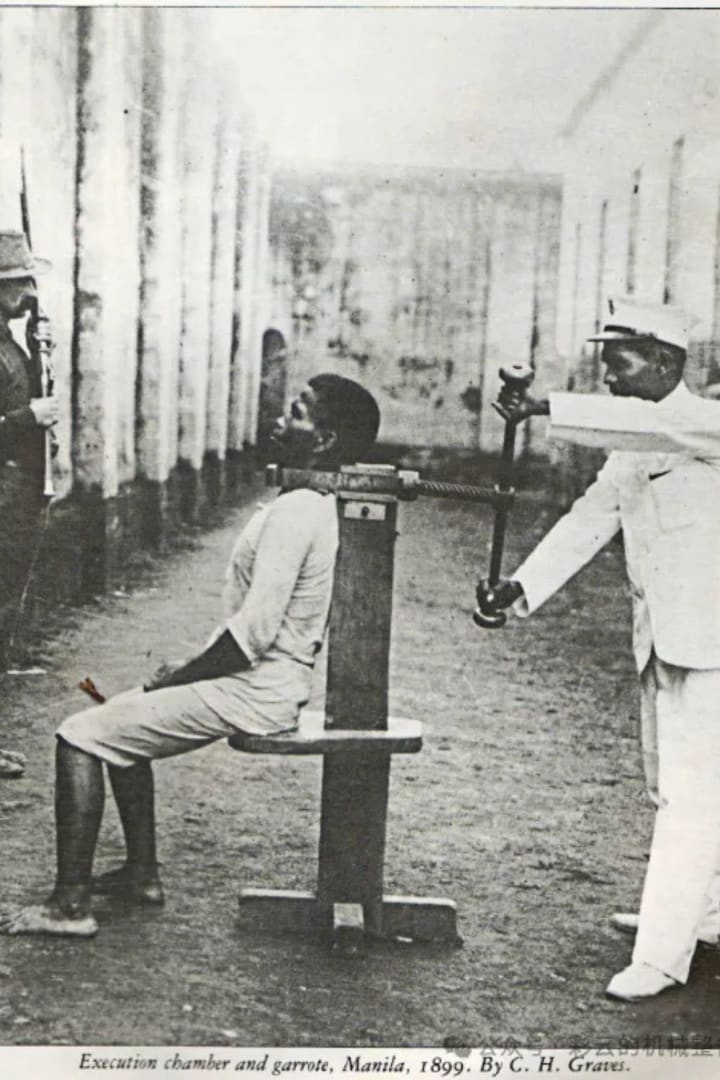
This strange method of execution using a threaded screw mechanical structure is indeed very creative and efficient. Just turning the screw a few times can break the prisoner's cervical vertebrae and cause death. Anyone can operate it, and there is no requirement for the executioner's experience or skills. However, the whole process takes several minutes and the prisoner has to endure considerable pain. It is not like the typical long-distance falling hanging that causes almost instant death, so it has been widely criticized.
According to foreign network information, after entering the 20th century, Spain gradually replaced Garrotte with firing squad to execute criminals. It was initially used only in military justice and then gradually expanded to civilians. The last time Spain used Garrotte to execute a death row prisoner was on March 2, 1974, when an ordinary criminal who killed a policeman during a robbery and a separatist who killed a lieutenant of the National Guard in a terrorist attack were executed. The last execution in Spain was on September 27, 1975, when five separatists were executed in Madrid, Barcelona and Burgos, but this time they were executed by firing squad. In 1978, Spain officially abolished the death penalty, and the strange execution method of Garrotte was completely ended.
About the Creator
Keep reading
More stories from Tanya Carroll and writers in Art and other communities.
The Best Philosophy in the World Is the One You Can Live
Ask ten philosophers what the best philosophy in the world is, and you will receive at least ten different answers—possibly delivered with footnotes, counterarguments, and mild contempt for the other nine. This disagreement is not a flaw of philosophy; it is its essence. Philosophy was never meant to be a universal prescription handed down like a rulebook. It exists to help human beings live better lives. By that standard, the best philosophy in the world is not the most elegant or complex—it is the one that can be lived.
By Fred Bradford5 days ago in Art
The River and the Drops
High in the mountains, where no one watched and no one applauded, tiny drops of water slipped from melting snow. Each drop was small, almost invisible, and carried a quiet fear within itself. They began their journey without knowing where they were going, only knowing that they were moving away from where they began.
By Sudais Zakwan7 days ago in Art


Comments
There are no comments for this story
Be the first to respond and start the conversation.