
Indian Art 🖼🖼
They started moving from traditional art to modern art and then to contemporary art.🎨🎨🎨🎨

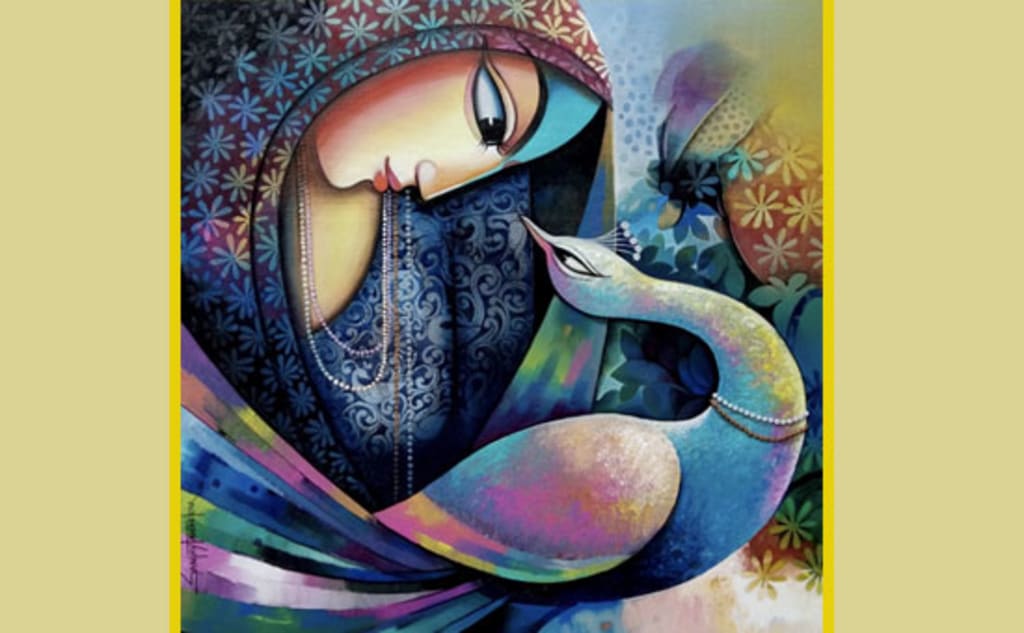
Indian art has portrayed many different emotions, mythical significance, and cultural perspectives over the years. Modern art, which has revolutionized the world and humankind since the eighteenth century, is among the most controversial and fantastical forms of Indian art, even if it has been portraying all of this.
Since then, some of the greatest painters have used canvas painting to reflect our history and culture. using brushstrokes and undercoats of oil paint to depict even the most complicated of circumstances and emotions.
While modern Indian art saw many artists claim their grounds and be known for their epic work of painting, some still confuse this with the subject of outward significance. To put things in perspective, Indian painting has an exceptionally long history in India's tradition, cultural sentiments and religious beliefs influence different styles of Indian art and paintings.
Indian art paintings have moved away from being beautiful and skilled to gorgeous and insightful. They started moving from traditional art to modern art and then to contemporary art. The well renowned artists as well as the new genre one’s paint on several themes depicting diverse cultures and societies in the form of contemporary art.
It is difficult to paint only what is visually appealing in a nation where 22 official languages are spoken, as there is a lot more going on beneath the surface. The oil paints or colors are merely illusions of what makes up Modern Indian Art, which has been the subject of numerous discussions for the past 200 years in an attempt to interpret the intense feelings that permeate every fiber of the canvas in these visually stunning works of art.
Contemporary artists were inspired to express their suppressed emotions and feelings by the events that began with the British and the East India Company. In response, a few perceptive artists noted and hypothesised that the resuscitation and expansion of the Indian traditional painting techniques can,
He had studied Indian lore and culture extensively in the meantime and was devastated by the decline and deterioration of Indian creative taste, culture, and art. He repeatedly emphasized the importance of reviving the former glory of the nation and developing a close familiarity with its customs. His contribution to the rediscovery of the aesthetic and pedagogical value of the old Indian cultural ethos and its application to contemporary art was essential. Rejecting Western realism was practically synonymous with retreating from the harsh reality of the present into a romanticized, sentimentalized past. The model was derived on miniatures from Pahari, Mughal, Rajput, and Ajanta art. Raja Ravi Varma and other artists had laid the groundwork for later artists to,
Even at that period, each of his paintings was simple, but upon closer inspection, they all showed the beginnings of suppression and revolution. They all helped to maintain our legacy and reflected culture, society, and women at various points in our history, even though they sometimes featured scenes from the Ramayana and Mahabharat or featured women draped in orange clothing.
All of this occurred prior to Indian independence, but an even more forceful phase of modern Indian art emerged in the post-independence era. In the post-colonial era, the Progressive Artists Group then stood in for the new India.
At that point, contemporary Indian art began to become increasingly inward-looking since it was transcending our historical context and reflected the conflicts that existed in the community between men and women as well as other disparities that manifested in society.
During this phase, a large number of artists contributed to this agenda. Their paintings, which mainly used primary colors, portrayed the subjective nature of society, the feelings of the characters, and occasionally the mood of the time. Indian artists have skillfully depicted the various phases India has undergone on their canvases, making Indian art a hologram of inner meaning.
"The aim of art is not to represent the outward appearance of things," as Aristotle once said,
M.F. Hussain is one of the most well-known modern artists of all time. His work was innovative even by today's standards. Even at the time, our culture lacked definition, so it was crucial that the color schemes and general atmosphere of the picture lacked detail.
Being a founding member of the Progressive Artist Groups and an avid traveler ensured that, even though his paintings lacked shape, definition, and symmetry on the surface, they nevertheless conveyed the idea he wanted to get across.
Another artist who combined the divineness and vibrancy of color with his abstract imagination is Sachin Jaltare. Despite the grim subject matter of his paintings, he was a contemporary modern artist because of its deeply ingrained causes. Even his artwork.
About the Creator
Moni ###01
Hi Am Monika
Am a fresher my day to day role searching job.
My goal obviously one of the best company for best role in my profile and given my hard work in a company my day to day hobbies searching, then I recently join vocal media thanks u
Keep reading
More stories from Moni ###01 and writers in Art and other communities.
Thangalaan:🎈 Is release date of Chiyaan Vikram’s period drama with Pa Ranjith postponed?
The Son of Gold, or Thangalaan, is a forthcoming historical action drama film in the Tamil language in India, produced by Studio Green and Neelam Productions and directed by Pa. Ranjith. K. E. Gnanavel Raja is the film's producer. In addition to Parvathy Thiruvothu, Malavika Mohanan, Daniel Caltagirone, Harikrishnan Anbudurai, and Vikram, the film stars Pasupathy and Vikram in supporting roles.
By Moni ###012 years ago in Art
The Uncopiable Human Wit to Write
We all have been in that spot at least once in our schooldays where we have been wringing our brains off to curate written articles of some sort until our soul-less friends were born. At just four years old, our beloved soul-less, metallic, digital assistant who is always by our side when we turn on our computers and smart phones, will be doing much more than curating written content for us all, if you know what I mean.
By Sound Savvy5 days ago in Art



Comments
There are no comments for this story
Be the first to respond and start the conversation.