
Impact Font: A Bold Legacy in Typography
Impact Font

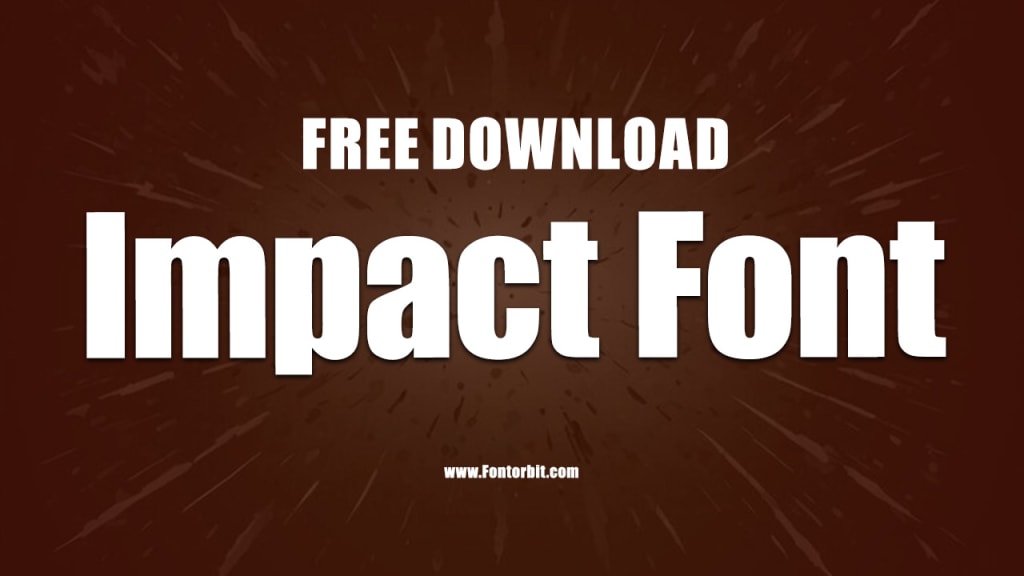
Impact Font is one of the most iconic typefaces ever created. Known for its bold, thick strokes and condensed letterforms, it has become synonymous with attention-grabbing designs and internet culture.
In this article, we delve into the history, characteristics, and cultural significance of Impact Font, along with its practical applications.
History of Impact Font
Impact Font was designed in 1965 by Geoffrey Lee and released through the Stephenson Blake type foundry. Its creation coincided with a period of typographic experimentation in the mid-20th century when designers sought to create fonts that would stand out in print media. Lee envisioned a typeface that could dominate headlines, posters, and advertisements without losing clarity or legibility.
Key Characteristics
Bold Weight: The font is unapologetically bold, making it perfect for grabbing attention.
Condensed Letterforms: Its narrow width allows for long words or phrases to fit into compact spaces.
Minimal Stroke Contrast: Uniform stroke thickness enhances its impact and clarity.
Lack of Serifs: Its sans-serif design ensures a modern and clean appearance.
Cultural Significance
Impact Font gained widespread recognition with the advent of the internet, particularly in the early 2000s. It became the go-to typeface for memes, largely due to its readability and ability to convey emotion in a single glance. The stark black letters with white outlines on images became a visual shorthand for humor, commentary, and satire.
Practical Applications
Digital Media: Widely used in memes, banners, and social media graphics.
Advertising: Its bold presence ensures it catches the eye in posters and billboards.
Branding: Some brands use it for logos and taglines to evoke a sense of boldness and simplicity.
Signage: Its legibility from a distance makes it ideal for signs and directional markers.
Criticism and Limitations
While Impact Font’s boldness is its strength, it’s not without limitations. Critics argue that its overuse, particularly in memes, has diminished its originality. Additionally, its heavy weight can overpower delicate designs, making it unsuitable for more nuanced applications.
Conclusion
Impact Font is more than just a typeface; it’s a cultural icon. Its bold and straightforward design ensures that it remains relevant in both traditional and digital mediums.
While its popularity has fluctuated over the decades, its enduring appeal lies in its ability to make a statement—loud and clear. Whether you’re designing a headline, creating a meme, or crafting impactful signage, this font remains a powerful tool in the world of typography.
FAQs
1. Who designed the Impact Font?
Geoffrey Lee designed the Impact Font in 1965, and it was released by the Stephenson Blake type foundry.
2. Why is Impact Font so popular in memes?
Impact Font’s bold and condensed design makes it easy to read, even at smaller sizes, which is essential for meme text overlaying images.
3. Can I use Impact Font for commercial purposes?
Yes, but you need to ensure you have a proper license for commercial use, especially if you’re using it outside free platforms that include it.
4. What are the alternatives to Impact Font?
Alternatives include Anton, Bebas Neue, and Oswald, which offer similar bold and condensed characteristics.
5. Is Impact Font free to use?
Impact Font is included in the Microsoft Core Fonts for the Web, making it freely available for personal use. However, commercial use may require licensing.
6. How do I pair Impact Font with other typefaces?
Pair it with minimalist sans-serif fonts like Arial or modern serif fonts like Times New Roman to create a balanced design.
7. What makes Impact Font unique?
Its boldness, condensed design, and cultural association with memes and internet humor set it apart from other typefaces.
About the Creator
Jillur Rahaman
Jillur Rahman is the creative mind behind FontOrbit. This website is a vibrant hub for typography enthusiasts. With a CSE degree and over a decade of experience in web design & development, Jillur got passion for sharing knowledge.
Keep reading
More stories from Jillur Rahaman and writers in Art and other communities.
Trade Gothic Font: A Timeless Typeface for Modern Design
The Trade Gothic font family has earned its place as a design staple, widely celebrated for its clean, versatile, and contemporary aesthetic. Introduced in the mid-20th century by the acclaimed type designer Jackson Burke, this sans-serif typeface continues to be a go-to choice for designers around the globe.
By Jillur Rahamanabout a year ago in Art


Comments (1)
Hello, just wanna let you know that if we use AI, then we have to choose the AI-Generated tag before publishing 😊