
The Cornfield John Constable
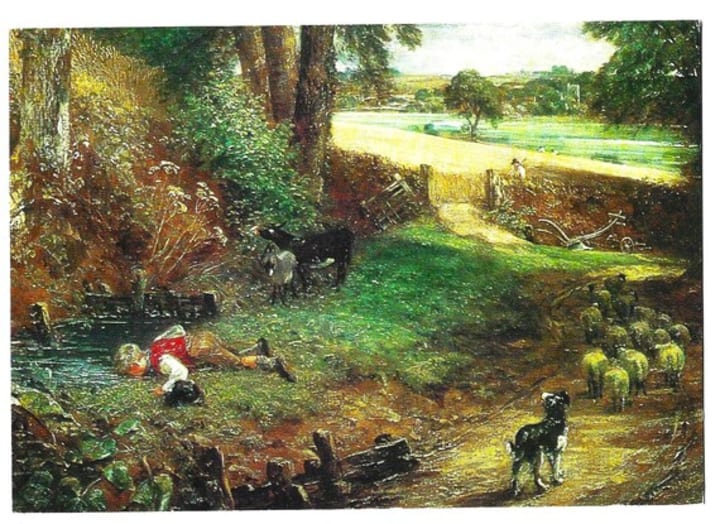
English artist John Constable created this oil painting depicting a land leding from East Bergholt toward Dedham, Essex. It shows a young shepherd by drinking from a pool in the heat of summer. Also a nice sight of farm workers, sheep, and a farm dog.
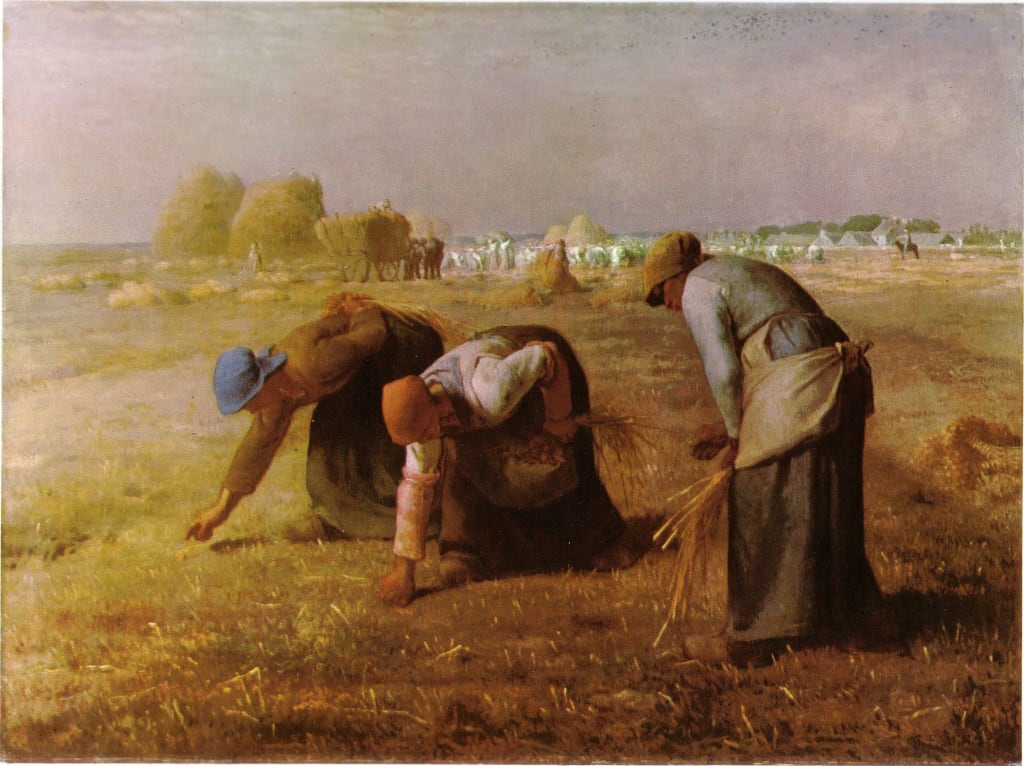
The Gleaners Jean-François Millet (Pictured above)
French artist Jean-Francoise Millet was one of the founders of the Barbizon School in rural France. He is known for with paintings of farmers and was part of the Realism movement. In this paining he depicts in detail the hard work done farming. Three women are shown gleaning a field of stray grains after harvet, highlighting the plight of the lower class. Gleaning is the art of collecting leftover crops.
The Angelus Jean-François Millet
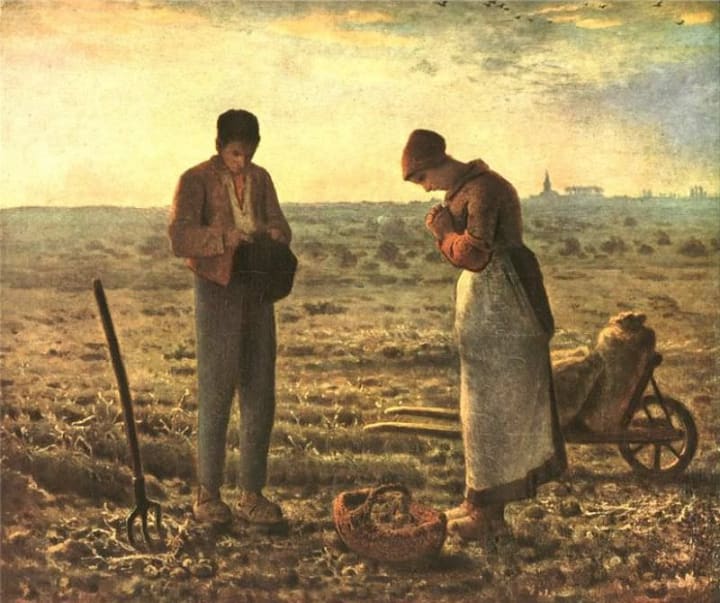
French artist Jean-Francois Millet created this artwork which is among his masterpieces depicting two peasants at dusk pausing for prayer, symbolizing purity and the rural work ethic.
Haystacks series Claude Monet
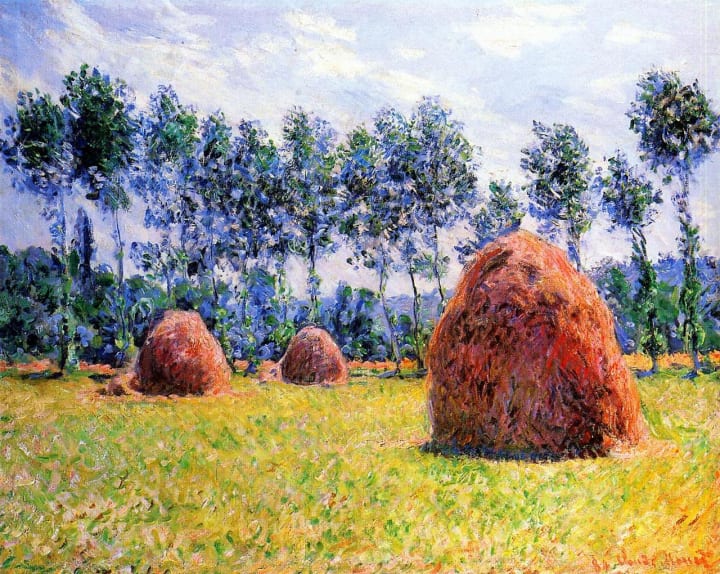
French artist Claude Monet did a series of paintings depicting haystacks. The artisti painted haystacks at different times of day and seasons showcase his fascination with light and its impact on color.
A Farmyard in Normandy Claude Monet
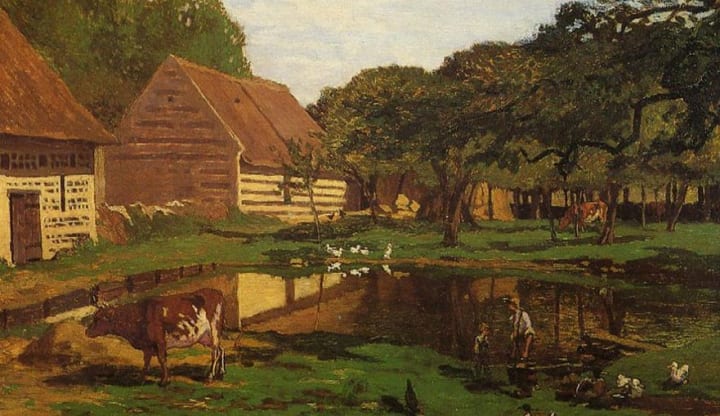
French artist Claude Monet created this artwork which is one of his first works when he was just 23. This is a beautiful detailed Impressionst style painting.
Ploughing in Nevers Rosa Bonheur
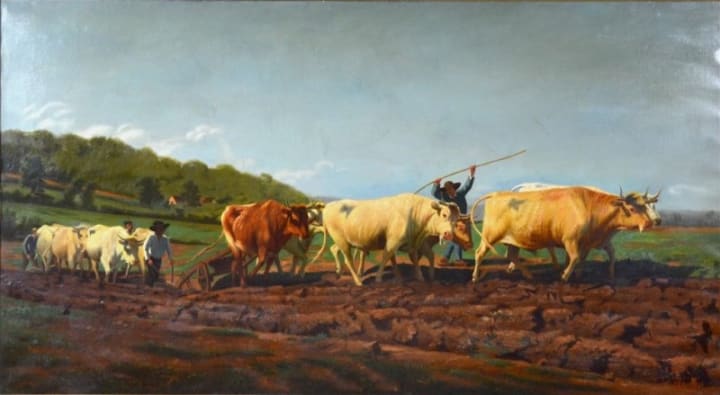
French artist Rosa Bonheur was a 19th century painter known for her artworks of animals. This is one of her most notable paintings depicting livestock during ploughing.
Landscape with a Rainbow Peter Paul Rubens
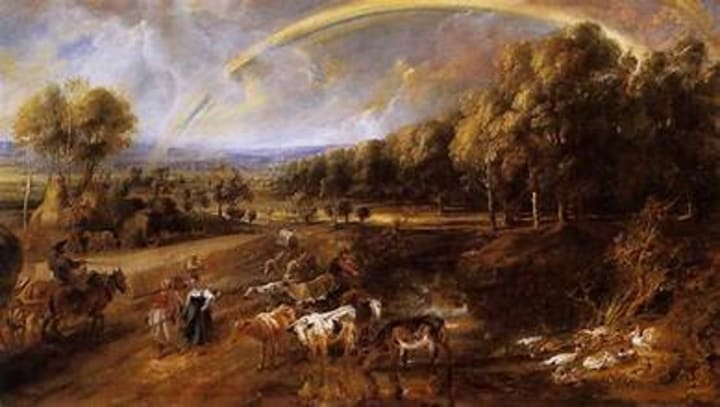
Flemish artist Peter Paul Rubens was among the most famous painters of the Baroque movement. He lived during the 16th and 17th centuries when farming and cattle were staples of virtually any community across Europe. He created this painting of people working alongside their cattle while a rainbow arches overhead.
The Harvesters Pieter Bruegel the Elder
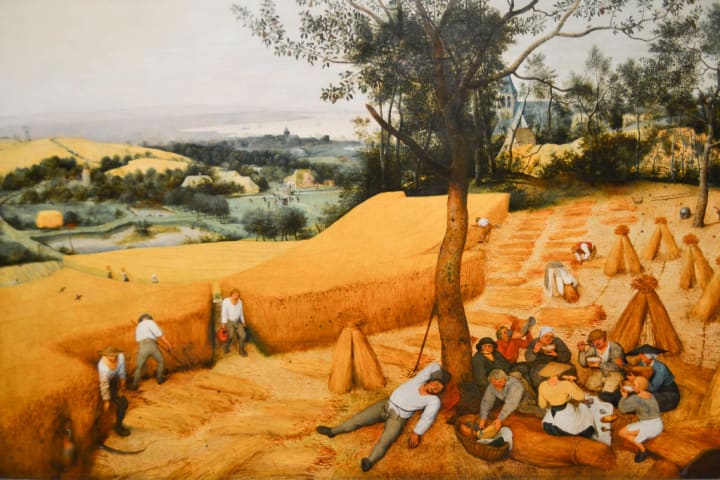
Flemish artist Pieter Brugel the Elder was among the most significant artists of Dutvh and Flemish Renaissance painting. He was known for his landscapes and peasant scenes. In this artwork he depicts the essence of peasant life in the 19th centiry showing workers in the fields during harvest.
Farmhouse in Provence Vincent van Gogh
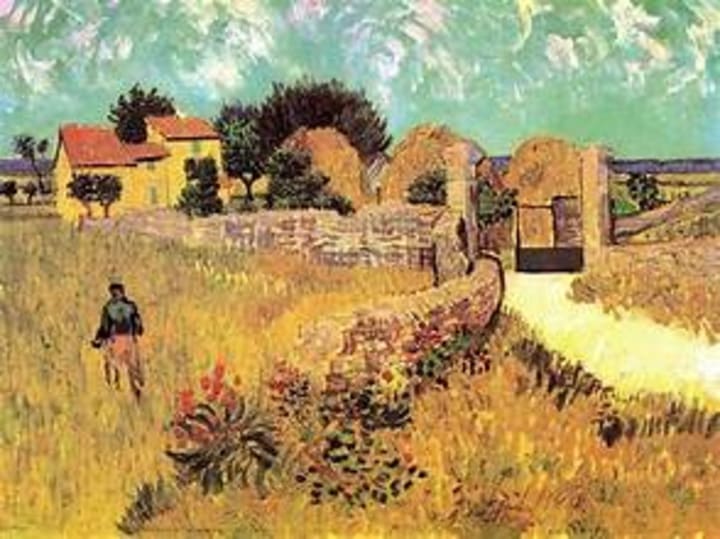
Dutch artist Vincent van Gogh has captured the beauty of a rural home in the Provencal landscape.
Red Vineyard at Arles Vincent van Gogh
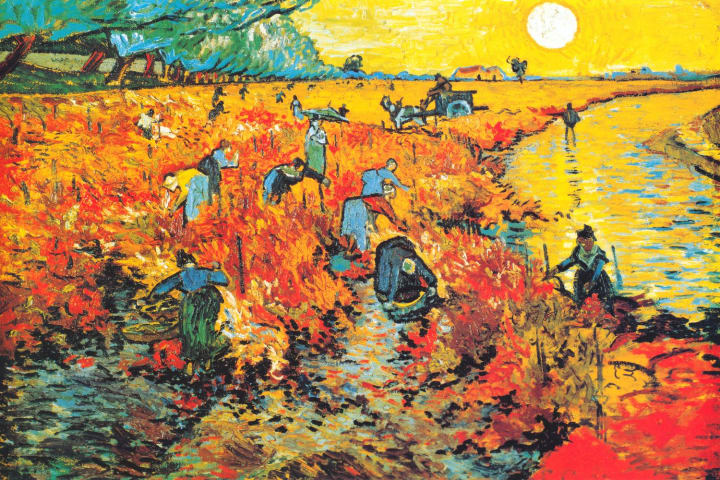
Dutch artist Vincent van Gogh has captured in vivid colors a vineyard at harvest time.
The Large Farm Paulus Potter
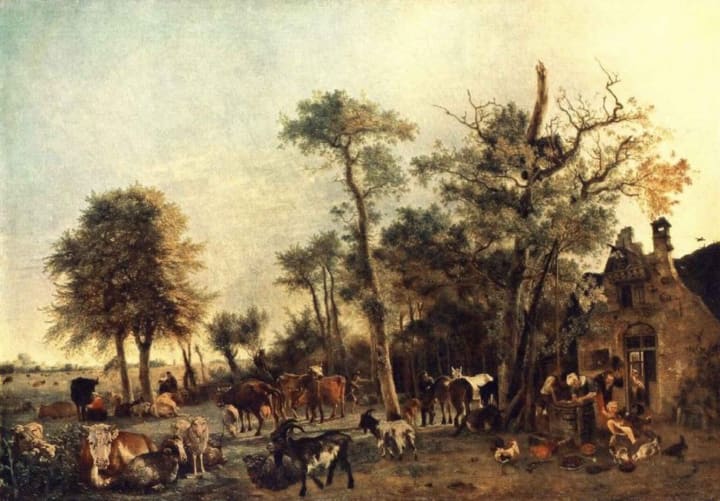
Dutch artist Paulus Potter was known for his detailed depictions of farm life and animals in the 17th century.
Apple Picking at Éragny-sur-Epte Camille Pissarro
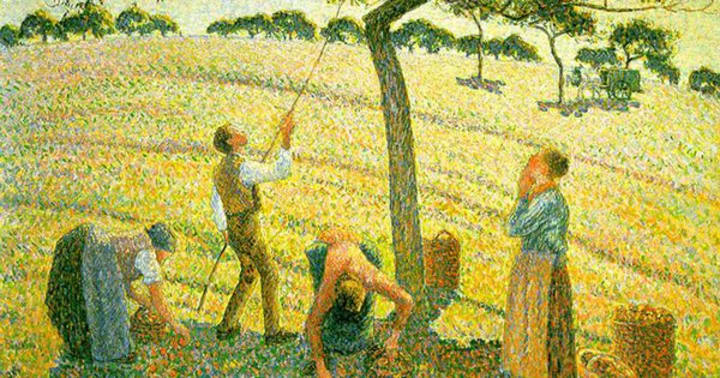
Danish-French Impressionist and Neo-Impressionist artist Camille Pissarro created this artwork which became one of his most successful Neo-Impressionist paintings. The artist owned the farm where he and his family lived.
American Gothic Grant Wood
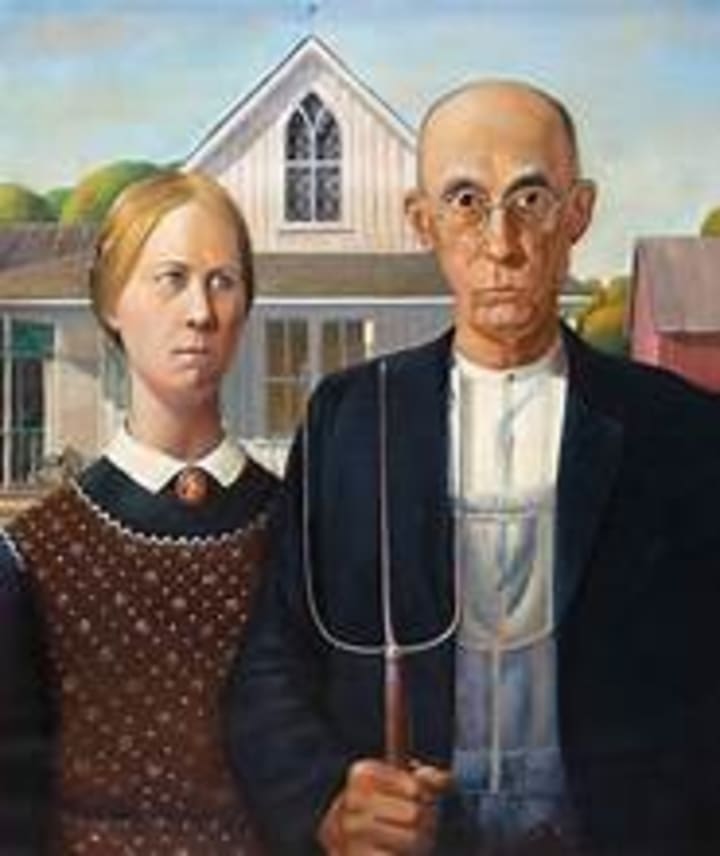
American Regionalist artist Grant Wood created this artwork which is among the most recognized work of art in history. It is the depiction of rural America showing the stern faces of a farmer and his daughter standing in front of a Gothic Revival House. American Gothic is one of the most famous American paintings of the 20th century and is frequently referenced in popular culture.
Farmer with a Pitch Winslow Homer
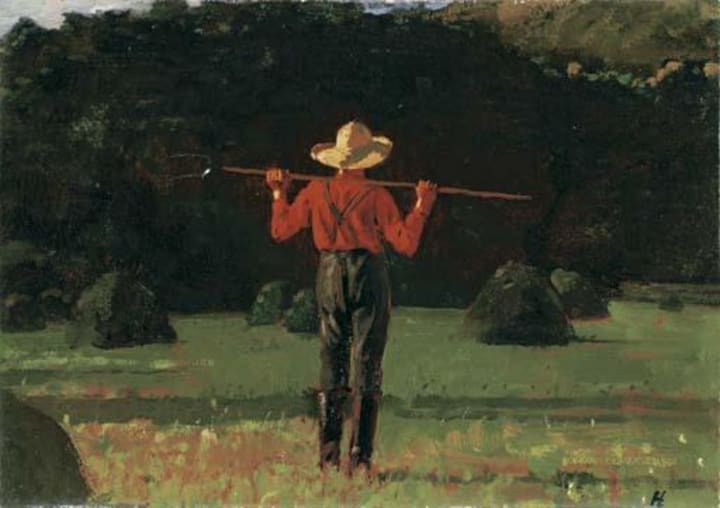
American artist Winslow Homer was known for his paintings of the Civil War and rural American life. This artwork was created in oil on board. It is an example of Realism art capturing the moment of rural like when a laborer rests from his work.
Cider Making William Sidney Mount
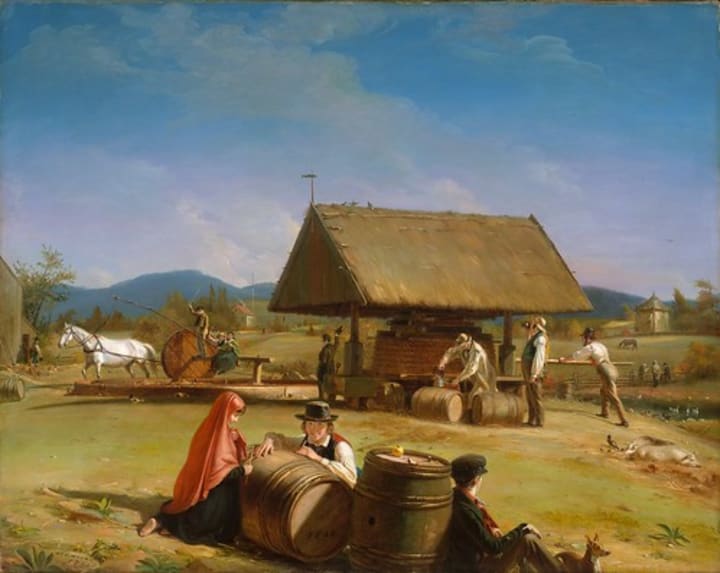
American artist William Sidney Mount created this oil on canvas artwork depicting the process of manufacturing cider at a Long Island cider mill.
About the Creator
Rasma Raisters
My passions are writing and creating poetry. I write for several sites online and have four themed blogs on Wordpress. Please follow me on Twitter.
Keep reading
More stories from Rasma Raisters and writers in Art and other communities.
Ida shaghoian and the Inner Geography of Painting
In contemporary painting, the most compelling work often resists easy definition. It lingers, unfolds, and asks the viewer to participate emotionally rather than observe from a distance. Ida shaghoian belongs to this tradition. Her paintings explore the fluid relationship between memory, feeling, and the natural world, creating spaces that feel both deeply personal and widely resonant. Through a refined balance of abstraction and suggestion, her work challenges conventional ideas of place, time, and perception.
By Ida Shaghoian2 days ago in Art
What Happened to Keith Porter?
I am writing this letter with a heavy heart and an unwavering commitment to justice. On New Year’s Eve, our community lost a beloved father, son, and friend—Keith Porter Jr., a 43-year-old Black man whose life was tragically cut short at his Northridge apartment complex. Keith was not just a name in the news; he was a loving father, a “girl dad,” and a man who brought joy and kindness to everyone who knew him. His mother, Franceola Armstrong, described him best:
By Organic Products 3 days ago in Art


Comments (1)
Loved the paintings!! I was expecting at least one Van Gogh painting because of the scenes in "Loving Vincent," and saw that you included two. These paintings show that even those things thought generally as mundane can capture an artist's interest.