
How Long Should You Color Each Day to Feel Relaxed?
Coloring Time


Coloring isn't just for kids anymore, it's a powerful method for adults desiring relaxation, mindfulness, and stress relief. Whether one loves to color mandalas, nature scenes, or whimsical worlds, the act of filling pages with color always can help them unwind, focus, and express their inner creativity.
But one common question then arises, how long should you color each day to feel truly relaxed? Is 10 minutes enough, or do you need a whole hour? The answer depends on your aims, lifestyle, and how coloring affects your body and mind.
In this in depth guide, we'll explore how long you should color to relax, what science says about coloring and stress reduction, how to find your "coloring sweet spot," and how to make the most of your creative time.
The Science Behind Coloring and Relaxation
Before deciding how long to color, it's essential first to understand why coloring works as a relaxation technique.
Coloring involves both sides of the brain: the logical side (left) for color choices and pattern planning, while the creative or right side takes over for free expression and imagination. This balance in engagement shifts your attention away from stressful thoughts, allowing the body and mind to enter a state of calm focus.
Research has documented that coloring can:
- Lower heart rate and blood pressure
- Reduce cortisol, the body's stress hormone.
- Induce a meditative state akin to mindfulness.
- Improve sleep quality
- Improve concentration and mood.
When you color, your brain gets hooked on the process: choosing shades, staying within the lines, and blending colors. This totally immersed flow state relieves anxiety and clarifies the mind.
So, the most critical question is how much coloring is necessary to reach that state of relaxation and mindfulness.
Ideal Colouring Duration- Finding Your Sweet Spot
Everyone experiences relaxation differently. Some need only a few minutes of coloring to calm down, while others prefer long, immersive sessions. However, some general time ranges work for most people and are usually suggested by research and user experience.
5–10 Minutes: Quick Mental Reset
If you are on the go, an even 5- to 10-minute coloring session can be sufficient. Short bursts of creativity help your brain take in pauses from stimulation ,which is especially helpful on work breaks, study sessions, or stressful days.
In just a few minutes, you can:
- Shift your focus away from concerns.
- Slow your breathing
- Feel grounded in the present moment.
Think of this as a mini meditation , perfect for people who say they "don't have time to relax."
Best for:
- Office workers on short breaks
- Students who need to refocus
- Parents amidst daily chores
Tip: Keep a small coloring book or a set of printable mini pages on hand. Even just 10 minutes of focused coloring can help you recharge.
20–30 Minutes: Balanced Relaxation
For most adults, a 20–30 minute coloring session is the "sweet spot". This duration allows you to enter a deeper flow without feeling rushed.
In Half an Hour You Can.
- Engage mind and body in calm focus.
- Feel your muscles relax.
- Experience meditative breathing
- Complete part or all of a coloring page
This timeframe relaxes and clears your mind. After about 20 minutes, your parasympathetic nervous system, which is responsible for rest, becomes more active.
Best for:
- Evening unwinding rituals
- Midday mental resets
- Bedtime relaxation
Tip: Try combining coloring with some calm background music, herbal tea, or soft lighting for a whole sensory experience.
45–60 Minutes: Deep Relaxation & Creative Flow
If you like coloring and can give it more time, then 45 to 60 minutes can make your mind deeply relaxed.
This duration allows you to:
- Be fully immersed in creativity.
- Lower levels of stress hormones
- Experience "flow," where time seems to stop.
- Be revitalized and emotionally in tune.
A one-hour coloring session works exceptionally well on weekends or before bedtime to transition your mind from activity to rest.
Best for:
- Weekend self care sessions
- Therapy or mindfulness routines
- Creative hobbyists
Tip: Take an hour each week to color and make it a personal "mental spa time."
Over 60 Minutes: Extended Mindfulness Practice
Spending more than an hour coloring is highly therapeutic, but one should avoid perfectionism while doing it. Longer sessions of coloring work best when you intentionally engage in a mindfulness practice: focus on the process, not rush to complete the page.
Some find the longer sessions allow for deeper self-reflection and healing, similar to journaling or meditation. Others may get fatigued or frustrated if they lose focus during this.
Best for:
- Artists who use coloring as therapy
- People seeking emotional healing
- Long creative retreats or workshops
Tip: Take short stretching or eye breaks every 30 minutes to avoid strain.
How Coloring Duration Affects Relaxation Levels
Relaxation through coloring depends on how deeply your mind disconnects from daily stress. Below is a general breakdown of what most people experience at different durations
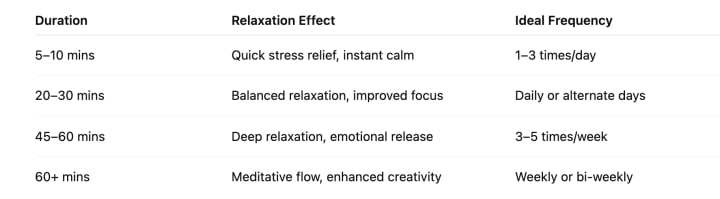
These are guidelines, not set-in-stone rules. The key is consistency—coloring regularly brings greater long-term benefits than infrequent, long sessions.
Factors That Affect How Long You Should Color
1. Your Stress Level
If your day is quite stressful, you might need a more extended session to help you relax. A 30-minute evening coloring routine could help transition from "fight - flight" mode to "rest & digest."
2. Your Coloring Goal
- Quick Relaxation: 10 to 15 minutes
- Mindful Focus: 20 to 40 minutes
- Creative Therapy: 45 to 60 minutes or over
Set an intention at the start: relaxation, focus, creativity. Color accordinly.
3. Complexity of the Design Pages
The straightforward pages, which feature striking floral designs, are ideal for quick pauses. The more intricate, intricate mandalas and panorama pages are perfect for longer sessions because they demand more effort and aid in maintaining concentration.
4. Time of Day
- Morning: A quick 10 minute coloring session boosts focus.
- Afternoon: 20 minute reset prevents burnout
- Evening: 30 to 60 minutes helps you wind down before bed
5. Your Environment
Relaxation improves in a calm space: use soft lighting, pleasant music, and comfortable seating. Distractions can reduce the quality of your coloring time, no matter how long it is.
Why Consistency Matters More Than Duration
It's not about how long you color once in a while; it's about how often. Frequent coloring, even in short intervals, may condition your mind to enter into a state of relaxation more quickly.
Like meditation or yoga, the effects become cumulative over time. Daily coloring reduces anxiety, improves sleep, and increases levels of happiness hormones like dopamine and serotonin.
Example routine:
- Morning: 10-minute coloring meditation
- Evening: 20–30 minutes before bed
That's less than one hour a day, yet it can dramatically change how you feel and your energy.
The Psychological Benefits of Regular Coloring
Coloring daily for relaxation offers benefits extending beyond simple stress relief. Here are some of the most reported improvements:
1. Sharper focus and clarity
Coloring clears your mind. The attention to tiny details will make you more present and improve your concentration.
2. Lower Anxiety Levels
Coloring replaces overthinking with sensory awareness ,the sensation of pencil on paper, the blend of colors, to quiet anxious thoughts.
3. Increased mindfulness
Coloring activities always help you stay in current moment, just like meditation. Since each stroke needs careful attention, it teaches patience and acceptance.
4. Better Sleep
Before going to bed, coloring is a great way to tell your body to unwind. It always aids in disconnecting from screens and overstimulating the mind, setting it up for a good night's sleep.
5. Creative Confidence
You don't have to be an artist to enjoy coloring. Completing pages builds confidence and joy in your creative expression.
6. Emotional Healing
Many people use coloring as a form of art therapy. It provides a safe release for emotions and is therefore effective in maintaining emotional balance.
How to Create a Daily Coloring Routine for Relaxation
Far more important than perfection for deriving the benefits of coloring are consistency and mindset. Here's how to create a de stressing coloring habit that suits your daily schedule
Step 1: Choose Your Ideal Time
Specify when you feel your need for relaxation: in the morning, at noon, or in the evening. You will train the brain to associate that time with relaxation.
Step 2: Prepare a Comfortable Coloring Space
Set up a quiet corner with comfortable lighting, pencils, and soothing music. A peaceful space enhances focus and calm.
Step 3: Choose the Right Coloring Pages
Start with simple, strong designs if you're new to coloring. You can go to intricate or themed pages, such as mandalas, fantasy worlds, natural settings, or quaint towns, once you feel at ease.
Step 4: Start Small
Start with only ten minutes every day. You may then progressively extend your time as you get more at ease and see the benefits.
Step 5: It's All About the Process
Do not hurry to finish the page. It is about enjoying the rhythm of coloring, your hand movements, the combination of colors, and the act of creating.
Step 6: Reflect Afterwards
After each session, take a moment to stop. Notice how your body feels: calmer, lighter, or more focused. This reflection reinforces the habit of relaxation.
Combining Coloring with Other Relaxation Techniques
Coloring becomes even more effective when paired with other calming activities:
- Deep breathing: Try to breathe in slowly for four counts, out for 6, while coloring.
- Aromatherapy: Light either a lavender or chamomile candle for added relaxation.
- Soft Music or Nature Sounds: Gentle background sound improves concentrtion.
- Tea Ritual: Sip herbal tea as you color , it's soothing to both your mind and body.
- Mindful Affirmations: Repeat calming phrases like "I am present" or "I release stress" while you color.
These little touches can turn a simple hobby into a powerful ritual of self care.
Coloring as Part of a Mental Wellness Routine
Adding coloring to a larger wellness plan amplifies its effectiveness. It can be combined with mindfulness, journaling, yoga, or other forms of gentle stretching to promote overall relaxation.

By the end of the week, you will have colored for about 3–4 hours and will thus notice meaningful improvements in relaxation and emotional balance.
Listening to your mind and body
There's no one-size-fits-all rule in terms of the amount of time spent coloring. The most important thing is to pay attention to your body's signals.
- If you're feeling tense, extend your session.
- If you feel sleepy - stop and rest.
- If you lose focus, take a break or switch to a different design.
Relaxation isn't a factor of time; it's about connection. As long as you are fully engaged and present, even 10 minutes can be profoundly healing.
How to Tell When Coloring Is Working
You'll know that coloring is helping you relax when you notice:
- Slower breathing
- Reduced muscle tension
- A sense of calm focus
- Unperceived passage of time.
- A lighter, happier mood
These are signs that your nervous system is shifting towards relaxation. The more often you practice, the stronger this response will become.
Conclusion
The perfect time for you to color. How much time should you spend coloring each day to unwind? There is no one-size-fits-all solution, but for ten minutes, here's a useful guideline: A brief, peaceful reset Twenty to thirty minutes: The best time of day to unwind 45 to 60 minutes: a profound, creative, and emotional release. Consistency and intention hold the key.
Whether you color for 10 minutes or an hour, focus on being present, breathing deeply, and enjoying the creative process. With time, this daily ritual of coloring can be your own sanctuary ,a place where your anxieties slowly fade with each stroke, as calmness creeps in.
About the Creator
Shenal Jay
All about Free Coloring Pages and Learning Materials (Pre-K to 5th)
For free download
Visit
https://freecoloringpagepro.com/
Or
https://www.patreon.com/FreeColoringPagesPro
Keep reading
More stories from Shenal Jay and writers in Art and other communities.
'Till Death We Do Art
There would be nothing divine in this world without art. Nature may surpass the divine to all intents and purposes, but like everything it absorbs and is absorbed by, it remains here, stuck on the surface of this world, ever-present, physically bound to the universe.
By Avocado Nunzella BSc (Psych) -- M.A.P 18 days ago in Art
The Dress That Broke the Internet Was Gold and Nobody Could Agree on Why
She walked into the room and everything stopped. Not because of her confidence or music that was playing, though there was plenty of that. Everything stopped because of the dress. Floor-length, liquid, blazing gold, it caught every light in the room and threw it straight back.
By CurlsAndCommas2 days ago in Art




Comments
There are no comments for this story
Be the first to respond and start the conversation.