
How did Ukrainians save their cultural heritage during the war? |Art & Architectural Heritage|
Paintings, buildings, monuments

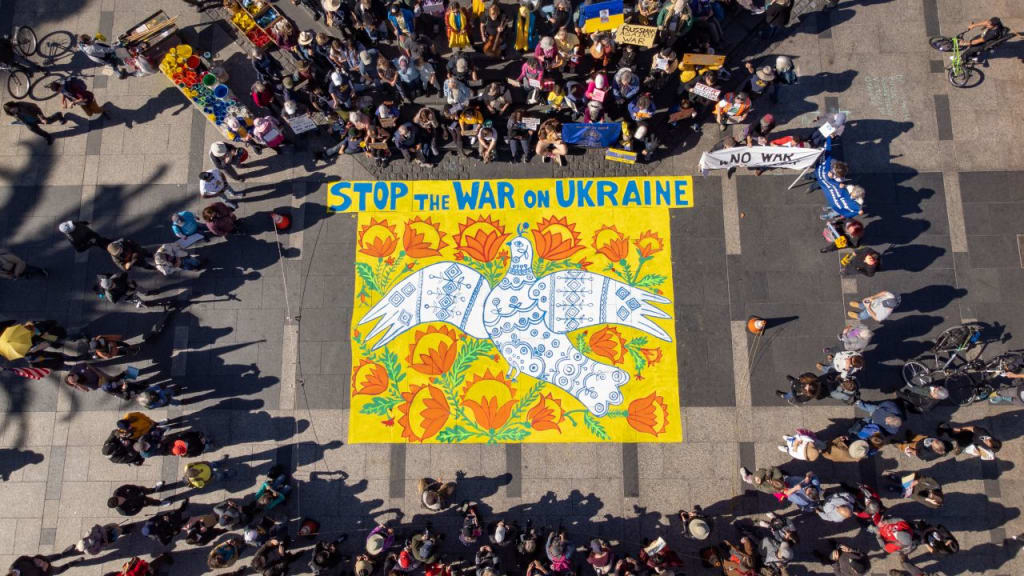
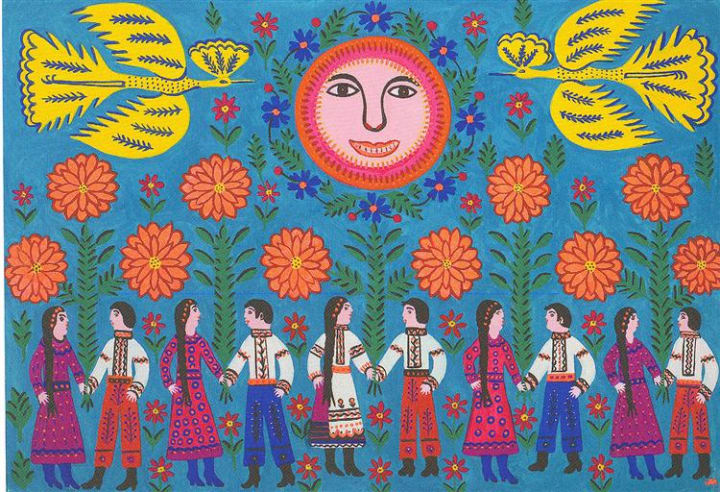
Protesters convened in San Francisco on March 6th, uniting in support of peace in Ukraine. On the ground beneath their feet, a blue and white dove with outstretched wings was painted, surrounded by vibrant orange flowers. This artwork replicates a 1982 piece called "A Dove Has Spread Her Wings and Asks for Peace" by Maria Prymachenko, a Ukrainian artist renowned for her colorful and cheerful depictions inspired by Ukrainian folk traditions. Pablo Picasso once referred to her as an "artistic miracle." In the week leading up to the rally, social media posts showcased a small museum housing Prymachenko's paintings engulfed in flames. Reports suggest that the fire consumed approximately 25 significant workers. Satellite imagery indicates that the surrounding structures remained untouched, suggesting a deliberate and targeted assault carried out by Russian forces. This incident is an early example of the dire consequences feared by experts for Ukraine's cultural heritage.
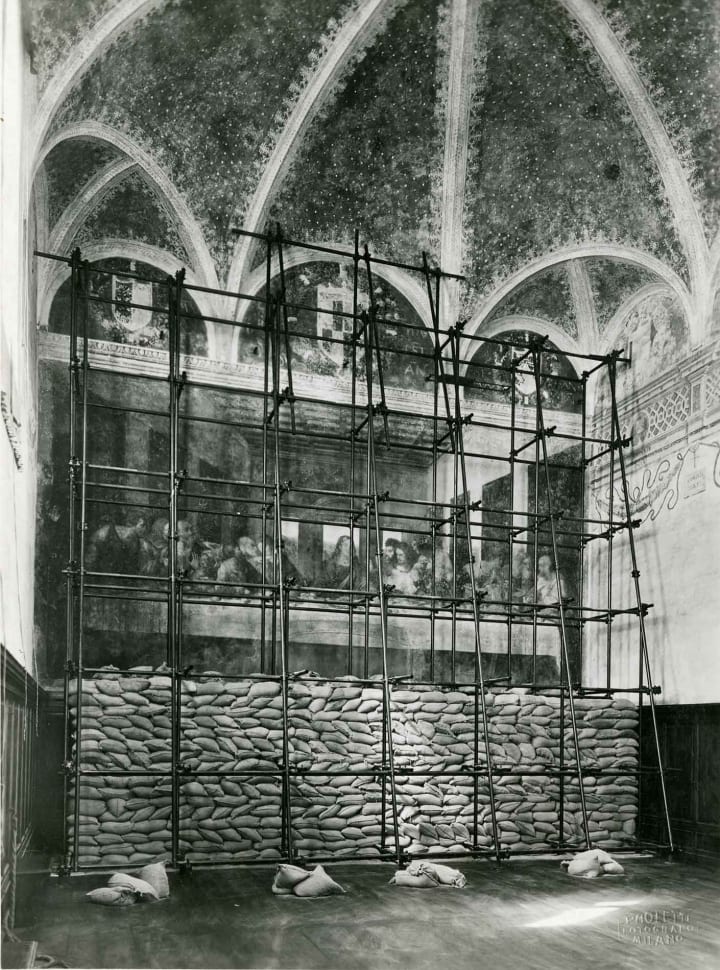
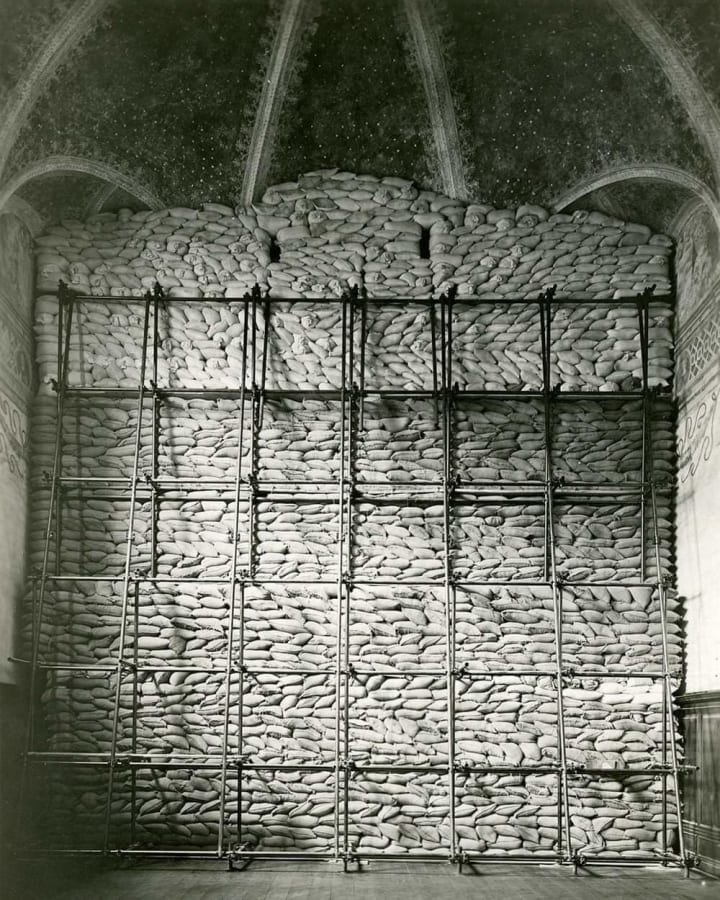
Across history, people have risked their lives to save art from war zones. So how do they do it? And What do we stand to lose if they fail? World War II was a turning point in the history of cultural heritage preservation. In America, Britain, and all over Europe, soldiers and volunteers worked to shield masterpieces using bricks, sandbags, and scaffolds. It works pretty well. Leonardo da Vinci's "The Last Supper" survived an accidental bombing in Milan. Thanks to the scaffolding that supported the wall, it was painted and sandbags and wood absorbed some of the blasts.
How to protect cultural heritage during times of war?
After World War II, in an effort to prevent future damage, the international community signed the 1954 Hague Convention. This convention obliged them to protect cultural property in the event of armed conflict and include clauses or requirements that do not target cultural heritage. According to the terms of the 1954 Convention, “damage to cultural property means damage to the cultural heritage of all mankind”. As UNESCO also mentions, “The 1954 Hague Convention aims to protect cultural property, such as architectural, artistic or historical monuments, archaeological sites, works of art, manuscripts, books and other objects of artistic, historical or archaeological value as cultural property, scientific collections of all types, regardless of their origin or ownership.” Therefore, attacks on cultural heritage are considered war crimes. But treaties can only do so much.
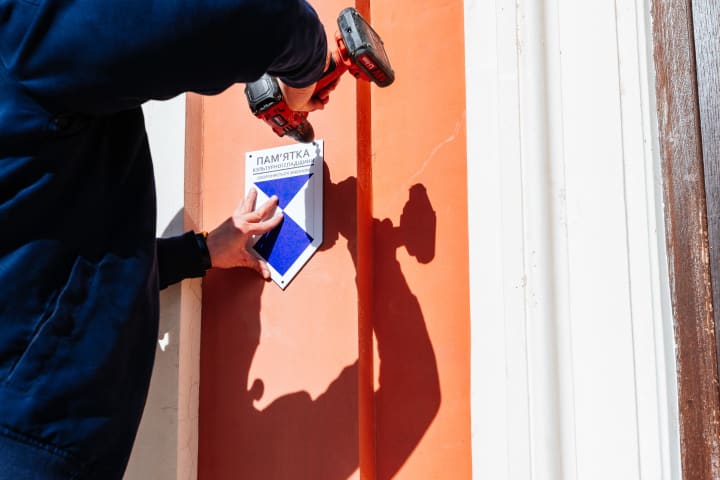
How did Ukrainians protect their cultural heritage during the war?
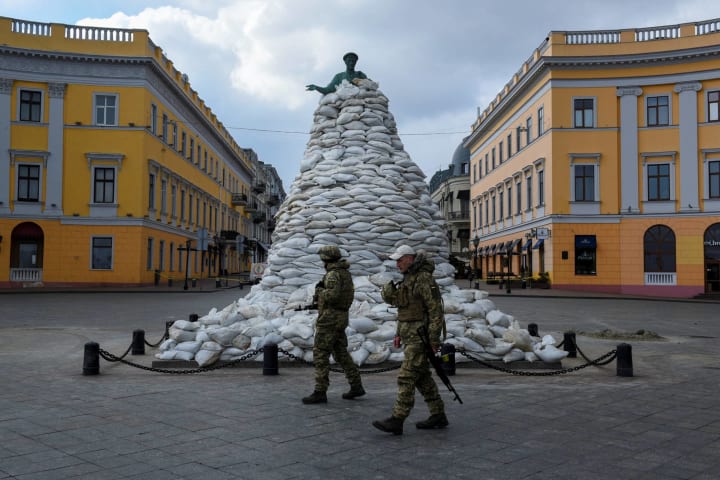
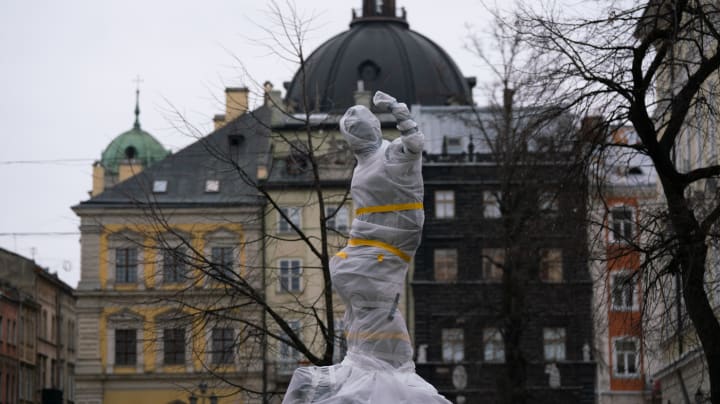
The first step in protecting cultural heritage is determining what needs to be protected. The 1954 Hague Convention requires each country to inventory its cultural heritage. Ukraine is home to seven UNESCO World Heritage sites, including the entire historic center of Lviv. When the invasion began, museums struggled to compile their own inventories, secure buildings, and move objects to safety. Even in besieged cities, volunteers and workers return day after day to protect Ukraine's treasures. In Lviv, volunteers covered stained glass windows with metal panels and went around the city wrapping statues with canvas, insulation, tape, and whatever materials they could gather.
From the beginning, the Ministry of Culture of Ukraine launched a website to collect evidence of crimes against cultural heritage, organizing everything in a timeline. Used as evidence to prosecute war crimes. And as a way to organize future efforts to secure and restore anything damaged.
Here is a list of actions that Ukrainian have taken:
1. Establishing a conservation area: Governments can establish protected areas around cultural heritage sites to prevent them from being targeted during wartime.
2. International treaties: International treaties such as the 1954 Hague Convention for the Protection of Cultural Property in the Event of Armed Conflict provide the legal framework for the protection of cultural heritage in times of war.
3. Training and education: Military personnel can be trained to recognize and respect cultural heritage, and civilians can be educated about the importance of protecting cultural heritage.
4. Emergency evacuation plan: Museums and other cultural institutions can develop emergency evacuation plans in the event of an imminent attack.
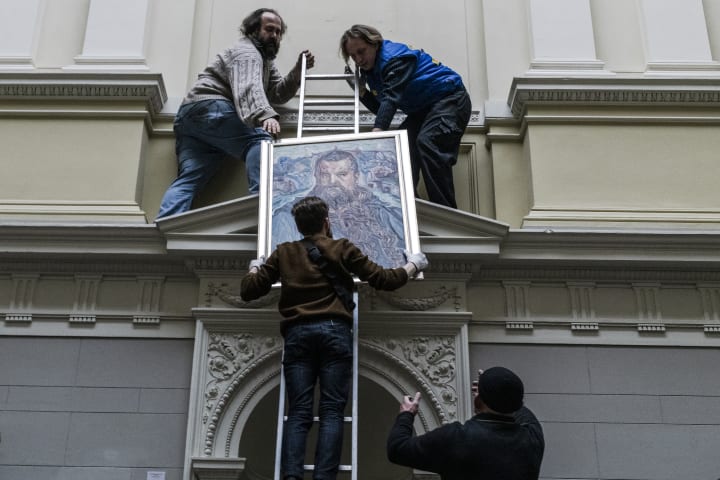
5. Document number: Digitally recording cultural heritage sites can help preserve their history and make rebuilding easier if they are damaged or destroyed.
6. Enhance security measures: Increased security measures such as surveillance cameras, guards, and fences around cultural heritage sites can deter potential attackers.
7. International cooperation: Nations can work together to protect their cultural heritage in times of war.
8. Temporary artifact removal: Artifacts may be temporarily removed from museums and other cultural facilities to protect them from damage or destruction.
9. Restoration and reconstruction: Once the conflict ends, recovery and reconstruction efforts can be undertaken to repair damaged or destroyed cultural heritage.
10. Community awareness campaign: Public awareness campaigns can help raise awareness of the importance of protecting cultural heritage in times of war and encourage people to take action to protect it.
About the Creator
ArchiReader
ArchiReader is bringing you the latest news, trends, and insights into the world of Art and Architecture. cover a wide range of topics, from the history of architecture to the latest design trends.
Reader insights
Nice work
Very well written. Keep up the good work!
Top insights
Eye opening
Niche topic & fresh perspectives
Easy to read and follow
Well-structured & engaging content
Heartfelt and relatable
The story invoked strong personal emotions
Expert insights and opinions
Arguments were carefully researched and presented
On-point and relevant
Writing reflected the title & theme
Excellent storytelling
Original narrative & well developed characters
Masterful proofreading
Zero grammar & spelling mistakes
Compelling and original writing
Creative use of language & vocab
Keep reading
More stories from ArchiReader and writers in Art and other communities.
How do you build a sacred place? |Baháʼí temple of chile architecture|
In the autumn of 2016, Mr. Hariri successfully concluded a project that he had initiated in 2003, namely the construction of the Bahá’í Temple of South America, situated in Santiago, Chile. This temple represents the final continental temple of the Bahá’í faith. It was secured through an international competition that involved a rigorous design process, attracting 185 entries from 80 countries. The temple is poised to become a significant architectural landmark located at the foothills of the Andes. It has already garnered several prestigious architecture awards. here, we’re going to read about his design process and thoughts of him. How he answered these two important questions “How do you design sacred space today?” And “How do you even define what's sacred today?” Hariri explained all in a TedTalk held in 2017.
By ArchiReader2 years ago in Art
The Best Philosophy in the World Is the One You Can Live
Ask ten philosophers what the best philosophy in the world is, and you will receive at least ten different answers—possibly delivered with footnotes, counterarguments, and mild contempt for the other nine. This disagreement is not a flaw of philosophy; it is its essence. Philosophy was never meant to be a universal prescription handed down like a rulebook. It exists to help human beings live better lives. By that standard, the best philosophy in the world is not the most elegant or complex—it is the one that can be lived.
By Fred Bradford4 days ago in Art
My New Book is Finally Here
My poetry collection Beautiful and Brutal Things is done. It's actually done and finally published over 270 pages. Over a year of my life went into this book. More than a year, really. Long days at my computer, sometimes seven days a week because I couldn't stop even when I probably should have. Then two months of editing that felt harder than the writing itself. But it's finished, and I'm still standing, and the book is real.
By Tim Carmichael2 days ago in BookClub



Comments (4)
😍👌🏻
Awesome👌🏻
Masterpiece
Perfect 👍🏻