
How Custom Stickers Became the Silent Language of Subcultures
A look into how custom stickers have evolved into powerful tools of identity, rebellion, and unspoken connection among underground communities.
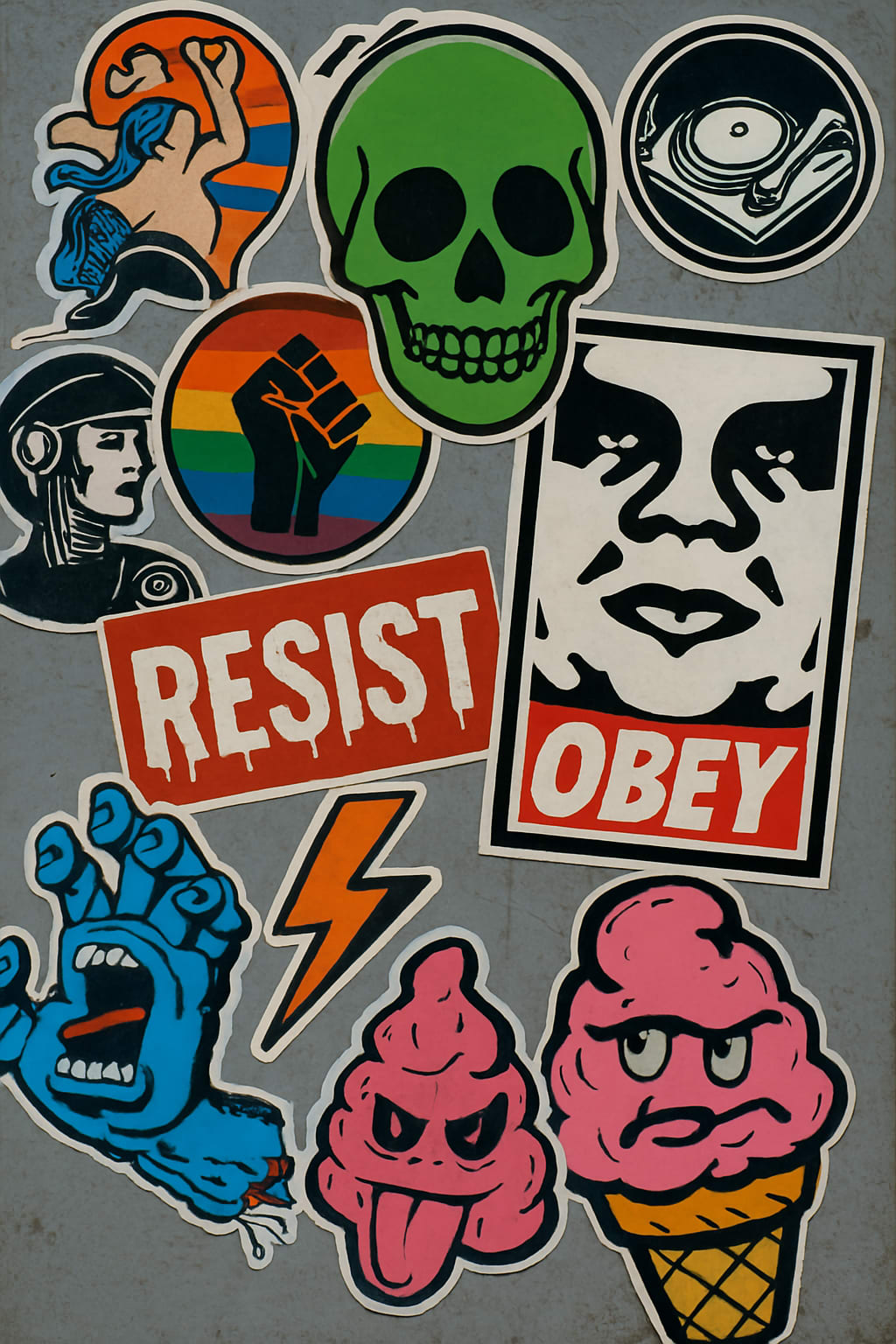
Walk through any major city—Sydney, Melbourne, Berlin, New York—and chances are, you’ll spot them. A cryptic symbol on a street sign, a vintage cassette decal stuck to a laptop, or a stylised message plastered on a skate ramp. Custom stickers are everywhere. But beyond their decorative charm lies something far deeper: a quiet form of communication, shared among those who know how to read the code.
Custom stickers have become a silent language—one that speaks volumes without ever raising its voice. And for many subcultures, these sticky pieces of expression are more than just visuals. They’re identity, rebellion, and community, all rolled into one adhesive square.
The Sticky Roots: From Advertising to Rebellion
The journey of stickers as a cultural medium is surprisingly rich. Originally popularised in the 1940s and ‘50s through bumper stickers and political campaigns, they were used to promote everything from tourist attractions to presidential hopefuls. But as with most tools, it didn’t take long before fringe communities reimagined their purpose.
By the 1980s and ‘90s, punk rock bands, skaters, and graffiti artists had claimed stickers as their own. Suddenly, they were no longer just marketing gimmicks—they were statements. A skull logo on a lamppost or a zine’s cut-and-paste aesthetic pasted onto a notebook wasn’t just cool; it meant something. It signified belonging.
Custom stickers offered a low-cost, highly mobile way to get your message out without needing permission. And that subversive quality is exactly what made them so appealing to underground communities.
Want to dive deeper into how culture shifts shape creative media? You might enjoy reading How Emo Culture Defined a Generation on Vocal’s Beat channel.
Custom Stickers as Visual Code
Subcultures thrive on symbols—visual shorthand that tells you who’s in and who’s not. Think of the band logo that only true fans recognise, or the colour scheme used by a particular activist group. In this world, custom stickers serve as silent code.
For example, environmental activists may use minimalist tree or wave icons, while underground techno scenes are known for cryptic QR code stickers that link to secret party locations. In many cases, these stickers act as digital breadcrumbs—marking safe spaces, promoting shared beliefs, or simply nudging others to ask, “What does that mean?”
The design elements themselves are part of the message. From vintage glitch fonts to raw, hand-drawn sketches, the aesthetics chosen by each subculture are carefully curated. They carry emotion, attitude, and sometimes even a touch of mischief.
And perhaps that’s the point. In a world saturated with noise, these little symbols don’t shout. They whisper, in a voice only a few can understand.
The Power of Customisation
What makes this medium so powerful is its customisability. Unlike mass-produced stickers you might find in a stationery store, custom stickers give creators full control. They allow people to craft something unique—whether it’s a feminist slogan, an indie band’s tour art, or a visual pun that only Reddit users would get.
Thanks to online tools and local providers, it’s never been easier to design your own stickers. With platforms that offer affordable custom sticker printing, individuals and small collectives alike can turn their ideas into tangible street art, laptop statements, or pocket-sized merch. It’s DIY expression at its most versatile.
For subcultures, that accessibility is key. It means the power to represent yourself, spread your message, or connect with like-minded people is literally at your fingertips.
Digital Culture, Physical Expression
In the age of memes, TikTok trends, and digital storytelling, stickers might seem old-school. But here’s the twist: the online world has breathed new life into physical stickers.
Artists now use platforms like Instagram to share their designs and then sell them as physical stickers. TikTok creators unbox sticker hauls, showcasing their aesthetic journaling spreads and laptop decorations. Reddit communities exchange sticker packs in the mail. In short, custom stickers have become a way to bridge digital identity and real-world expression.
It’s not just about personal use either. Indie brands, niche podcasts, zine collectives, and even underground event organisers are using stickers to spark real-life engagement in a way social media often can’t. Stickers, unlike posts, stick around. Quite literally.
Looking for more insights on creative culture and community? Check out Why Creativity Thrives in Small Communities on Vocal’s Humans channel.
Subcultures Stick Together
One of the most fascinating aspects of sticker culture is how it helps subcultures maintain a sense of intimacy. Even in sprawling cities or across digital distances, stickers can create micro-moments of connection.
Someone slaps a sticker on a pole near your bus stop. A week later, someone else places a similar one next to it. Over time, that spot becomes a silent message board, a tiny testament to a shared experience.
For those outside the group, these stickers might just look like random graphics. But for those in the know, they’re breadcrumbs leading home.
What’s Next for Sticker Culture?
As awareness around sustainability and ethical production grows, sticker makers are adapting too. Biodegradable materials, water-based inks, and recycled packaging are becoming more common. Subcultures that prioritise environmental or ethical consciousness now seek sticker providers who match their values—not just in aesthetics, but in process.
What’s clear is that the humble sticker isn’t going away. If anything, it’s evolving. As more people seek meaningful, tangible ways to express themselves in a digital-first world, the appeal of custom stickers only grows stronger.
They don’t ask for attention—they earn it. They don’t demand explanation—they invite curiosity. And in doing so, they continue to be one of the most enduring, intimate, and democratic tools of cultural expression.
Final Thoughts
Whether you’re part of a movement, an underground scene, or just someone who appreciates great design, custom stickers offer more than a creative outlet. They’re tiny, sticky acts of rebellion, belonging, and storytelling.
So next time you see one, stop and look. There might be a message waiting just for you.
About the Creator
Keep reading
More stories from Rochelle Martinez and writers in Art and other communities.
Why Noosa Beach Prints Are More Than Décor: The Rise of Place-Based Mindfulness in Art
In a time when mindfulness is more than just a wellness buzzword and our homes have become sanctuaries for self-care, the kind of art we choose to live with is shifting. Gone are the days when generic prints simply filled a blank wall. Instead, people are seeking out pieces that anchor them emotionally—works that evoke calm, stir nostalgia, or remind them of places they love. Among the most quietly powerful examples of this movement are Noosa beach prints—images that speak to more than just beauty, but to presence and peace.
By Rochelle Martinez11 months ago in Art
'Till Death We Do Art
There would be nothing divine in this world without art. Nature may surpass the divine to all intents and purposes, but like everything it absorbs and is absorbed by, it remains here, stuck on the surface of this world, ever-present, physically bound to the universe.
By Avocado Nunzella BSc (Psych) -- M.A.P 27 days ago in Art



Comments
There are no comments for this story
Be the first to respond and start the conversation.