
How AI is Revolutionizing Education: The Future of Learning
AI Features

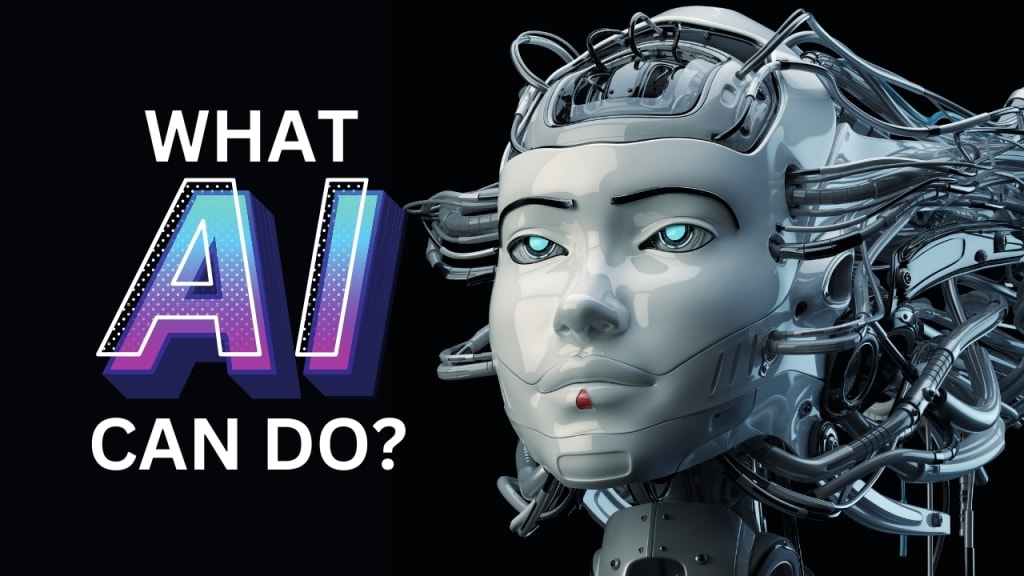
How AI Is Revolutionizing Education: The Future of Learning
AI is one of the fast-evolving industries around the world, and education is no exception. From improving learnings and teachings to changing the face of interactions occurring in educational institutions, AI grows and changes day by day. From personalized learning to administrative automation, AI is opening new doors for educators and students alike. In this article, we shall explore how AI is revolutionizing education and what that will look like for the future of learning.
Personalised Learning at Scale
Perhaps the most exciting promise of AI in education is that of personalised learning. In a traditional classroom, it is usually a challenge to accommodate the individual needs and aptitudes of each and every student because of the uniform system of teaching. AI solves this problem by personalizing the educational experiences for each learner as per his or her needs.
AI-powered platforms diagnose students' strengths, weaknesses, and modes of learning. With such information, the platform recommends what the student should work on and creates personalized learning pathways comprising focused content and feedback. For example, **DreamBox** and **Smart Sparrow** platforms conduct real-time adaptations of lessons, ensuring that students proceed only when they've really grasped the current concept.
This personalized attention keeps students much more engaged and improves learning. But in addition, AI systems provide insight into student performance so that when a student is struggling, a teacher can intervene more effectively. The ability to personalize education at scale has the potential to democratize learning, making it both more inclusive and more effective for all.
AI Tutors and Chatbots
AI tutors and chatbots have become a common feature; they can offer support to students at any time of the day outside of the classroom. The intelligent system replies to the general questions, explains in detail the more complex topics, and even provides additional resources for easy comprehension.
Whereas human tutors can never be available 24x7 and instant feedback, AI-powered tutors can. Two platforms that clearly show how effectively artificial intelligence can emulate one-on-one tutoring experiences are **Knewton** and **Socratic**. This kind of AI Tutoring saves time and reduces the cost of customized tutoring to make education more accessible.
The use of chatbots also lightens some administrative functions such as answering students' frequently asked questions around assignment, deadlines, and course material. This enables educators to strike more balances in teaching rather than managing the repetitions.
Automating Administrative Tasks
More practical use of AI in education would involve automating many administrative tasks, which are very time-consuming on the part of teachers and school administrators. From grading papers to managing schedules, AI-driven systems can handle such tasks with speed and accuracy.
For example, grading assignments is a very cumbersome process if done manually. AI-driven tools like **Grammarly** and **Turnitin** grade written work on grammar, plagiarism, and overall content quality in no time. These tools, while still not being able to substitute human judgment completely, at least lessen the time taken in grading and evaluating the assignments considerably.
Similarly, AI can ease administrative jobs related to student admission, keep records of students, and even forecast the rate of success among students by analyzing past trends. In this respect, automation of these jobs offers an opportunity for educational institutes to work in an efficient manner. This, in turn, helps teachers put more effort into engaging with students towards better learning outcomes.
#### Enhanced Engagement and Immersive Learning
AI could provide learning in a more appealing and interactive way with the use of various technologies, such as virtual and enhanced reality. Such a tool will provide an interaction-based approach to learning in ways which go beyond textbooks and lectures. For instance, students would take tours through historical events, dive deep into the ecosystems of the sea bed, or even conduct scientific experiments in a virtually safe space.
This gives educators a unique opportunity to create new learning experiences by blending AI with VR and AR to make learning more interactive, hands-on, and fun. This will also help learners retain information better through real-world scenarios.
AI can also engage more with students once it notices that a student is losing interest or, for that matter, failing to understand something. In AI systems, a shift in the pace of the lessons or change in the nature of content, such as videos or games, can again attract learners. That is where the ability to monitor the level of engagement of students in real time and the ability for automatic response toward it gets revolutionary for education.
Bridging the Gap in Global Education
Probably one of the strongest potentials of AI in education is that it will help narrow the gap in global education. In too many countries of the world, schooling is unfortunately characterized by a lack of qualified teachers, good learning materials, and proper facilities. AI has the potential to help solve these shortcomings by making learning platforms available in areas that cannot support or host traditional classrooms.
AI-powered tools translate the learning content into several languages, therefore opening opportunities for non-native speakers to have access to learning. Other ways artificial intelligence adapts curricula to a local context are embedding education in the students' environmental experiences. For instance, **Duolingo** and **Khan Academy** are examples of such platforms that have been using AI to do this.
Thus, online learning programs powered by AI can also access and educate students in distant and remote areas devoid of physical classrooms. Such systems may indeed boost up educations in developing countries where infrastructural facilities for the traditional type of education are sorely lacking.
Future of AI in Education
With AI already integrated into education, the future certainly promises more. The more innovative and advantageous AI that develops, the more advanced AI-powered systems that can provide even deeper insight into student behaviors, predict any challenges in learning that might happen in the future, and show better ways to handle those.
AI can also help promote lifelong learning. Technologies are changing at a rapid pace, and continuous learning increasingly will be a necessity. AI can support upskilling and reskilling of adults by offering them customized learning pathways adapted to flexible and changing demand.
However, there is a need to acknowledge the challenges and ethical issues that come along with AI in education. Indeed, data privacy, algorithmic bias, and over-reliance on technology are challenges that must be identified to ensure that AI enhances and does not detract from education.
Conclusion:
AI makes education more personalized, efficient, and accessible. From AI tutors, administrative automation, immersive learning experiences-the possibilities ahead of time are endless. Though there are still various challenges to overcome, the future of AI in education seems very bright and promising-a world where learning is more inclusive, engaging, and effective for all. As AI keeps improving further, so will its contribution to the shaping of education's future, opening up huge opportunities both for students and educators.
About the Creator
Antor Ahmed
I am a Professional Writer.
Keep reading
More stories from Antor Ahmed and writers in Art and other communities.
From Idea to Publication: A Step-by-Step Guide for New Authors
# From Idea to Publication: A Step-by-Step Guide for New Authors Entering this journey, from the idea to publication, may be exhilarating and sometimes overwhelming for new authors. This journey involves creativity, planning, and a lot of learning and perseverance. Whatever your aspiration may be, to write a novel, memoir, or nonfiction, this guide takes you through the vital steps involved in building up your ideas into a tangible published work.
By Antor Ahmedabout a year ago in Art
A Dummies Guide to UX Basics
Designing a website that incorporates UX design elements is becoming more in demand as businesses begin to understand the importance of UX. Having useless bells and whistles on your website, no longer makes it a good design. Creating the right balance between an excellent user experience and the functionality of the site for your business goals is paramount.
By Dena Falken Esq6 days ago in Art


Comments
There are no comments for this story
Be the first to respond and start the conversation.