
History of Greeting Cards: A Deep Dive into Origins, Evolution, and Cultural Significance
Observing art through the lens of History
Greeting cards, have a real connection with human emotions for the centuries, have an illustrious history that stretches across cultures and epochs. These art form invented in the ancient mediaeval times, preserving the essence of human emotion and communication. Let's embark on a comprehensive journey through time, exploring the origins, evolution, cultural influences, and modern significance of greeting cards.
Origins and Early Beginnings
The roots of greeting cards trace back to the dawn of human civilization. In ancient Egypt, messages of goodwill were exchanged on papyrus scrolls. These scrolls weren't just conveyors of sentiments but also vessels to communicate with the afterlife. In China, silk cards were exchanged during festivals and special occasions, a tradition that echoed the intricate artistry of the culture.
While these early forms of communication laid the foundation, the concept of modern greeting cards emerged in the 15th century in Europe. With the advent of paper production and printing technologies, handwritten notes transitioned into more structured forms of communication. These early cards, often adorned with intricate calligraphy and hand-painted designs, were sent to convey everything from well-wishes to invitations.
Flourishing Through the Ages
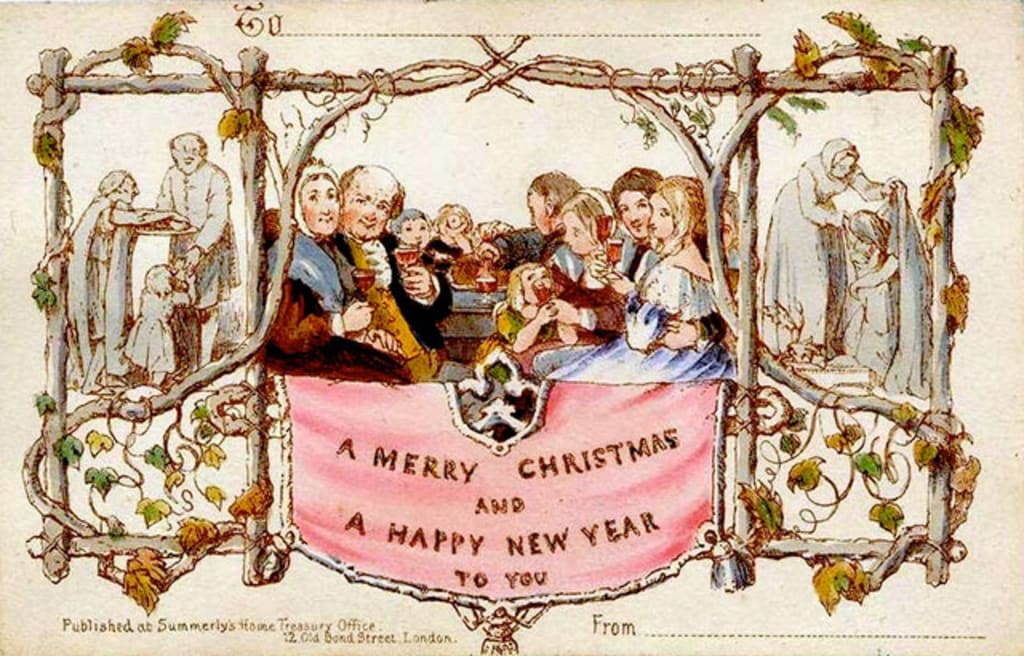
The 18th and 19th centuries witnessed the blossoming of greeting cards in European societies. The Industrial Revolution played a pivotal role in shaping the landscape, making cards more affordable and accessible to a wider audience. One of the most significant moments in the history of greeting cards was the creation of the first commercially produced Christmas card in 1843. Designed by John Callcott Horsley and commissioned by Sir Henry Cole, this card depicted a joyful seasonal scene and bore the iconic message "A Merry Christmas and a Happy New Year to You."
The Victorian era, characterized by opulence and ornamentation, had a profound impact on the art of greeting cards. Elaborate designs featuring lace, ribbons, and intricate illustrations became the hallmark of the time. However, not all cards were sweet sentiments; "vinegar valentines" emerged as a satirical trend, with cards designed to mock or insult recipients anonymously.
Cultural Influences and Global Reach
Greeting cards' evolution wasn't confined to Europe. In Japan, the exchange of "meishi" or business cards dates back to the 15th century. These cards were often beautifully designed, reflecting the significance of making a lasting impression. The Persian New Year, Nowruz, celebrated in Iran and Central Asia, involves the exchange of "Eid Didani" cards. These vibrant cards showcase the rich cultural symbols and colors associated with the festivities.
India's festival of lights, Diwali, is marked by the exchange of "diwali padva" cards. These cards feature intricate designs and images of deities, capturing the essence of the celebration. The integration of cultural traditions into card designs emphasizes the deep connection between customs and communication.
Cultural Influences of Greeting Cards from the Arab World
The intricate tapestry of greeting card history is not complete without exploring the profound impact of the Arab world's rich culture and traditions. The Arab world, spanning across the Middle East and North Africa, has significantly influenced the art and sentiment of greeting cards. From calligraphy to symbolism, the Arab cultural heritage has left an indelible mark on this cherished tradition.
Arabic Calligraphy: A Living Art
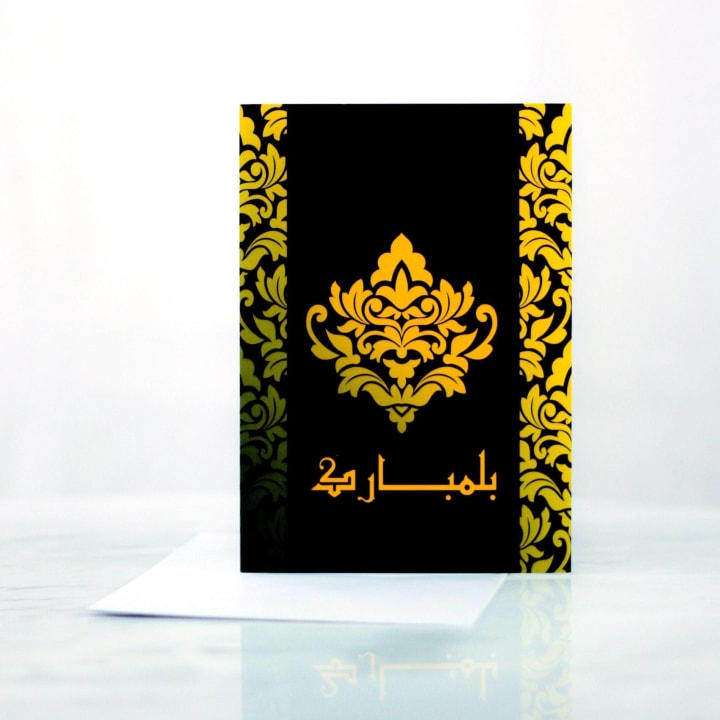
At the heart of Arab culture is the art of calligraphy, which is more than just writing—it's an expression of beauty and devotion. Arabic calligraphy, characterized by its flowing lines and intricate design, has found its way onto greeting cards as a powerful form of artistic expression. The elegance of calligraphy transforms well-wishes into works of art, resonating deeply with both the sender and the recipient.
Greeting cards adorned with Arabic calligraphy convey messages of love, blessings, and celebrations in a uniquely artistic manner. The graceful curves and bold strokes of the letters infuse each card with a sense of reverence and cultural identity. Arabic calligraphy's influence extends beyond the text—it encapsulates the essence of the Arab world's deep-rooted traditions.
Islamic Art and Symbolism
Islamic art, with its geometric patterns, intricate designs, and symmetrical compositions, has a profound influence on creating Modern aesthetic greeting card designs in the Arab world. The motifs and symbols drawn from Islamic architecture and artistry bring a distinctive visual language to these cards. Intricate geometrical patterns, often inspired by the mesmerizing beauty of mosques, transform the cards into stunning pieces of visual art.
The use of symbols such as the crescent moon and star, representing Islam, further enriches the cultural significance of greeting cards in the Arab world. These symbols not only convey sentiments but also embody religious and cultural values, creating a profound connection between the card and the recipient's identity.
Regional Festivals and Celebrations
The Arab world is a tapestry of diverse cultures and traditions, each contributing to the vibrant mosaic of festivals and celebrations. Greeting cards in the Arab world often highlight these celebrations, paying homage to events such as Eid al-Fitr and Eid al-Adha. These cards encapsulate the joy, spirituality, and communal spirit that define these occasions.
The intricately designed cards for Eid celebrations often feature Arabic calligraphy, symbols, and colors associated with the festivities. They become more than just cards; they become tokens of cultural pride and unity, connecting people across borders and generations.
Hospitality and Generosity
Arab culture is renowned for its hospitality and generosity, values that are reflected in greeting cards as well. Cards exchanged in the Arab world often convey warm wishes for health, prosperity, and happiness. The sentiment behind these cards resonates with the region's cultural ethos, encapsulating the desire to bring joy and well-being to the recipient.
The act of exchanging cards itself is an extension of Arab hospitality, a way to bridge distances and strengthen relationships. These cards carry with them the genuine affection and kindness that are integral to Arab culture.
Preserving Tradition in Modernity
In a rapidly evolving world, the Arab world's influence on greeting cards stands as a testament to the preservation of tradition amidst change. Even as digital communication becomes more prevalent, the practice of exchanging physical cards remains steadfast, a reflection of the enduring cultural connections that bind individuals to their roots.
Greeting Traditions in the Ancient World
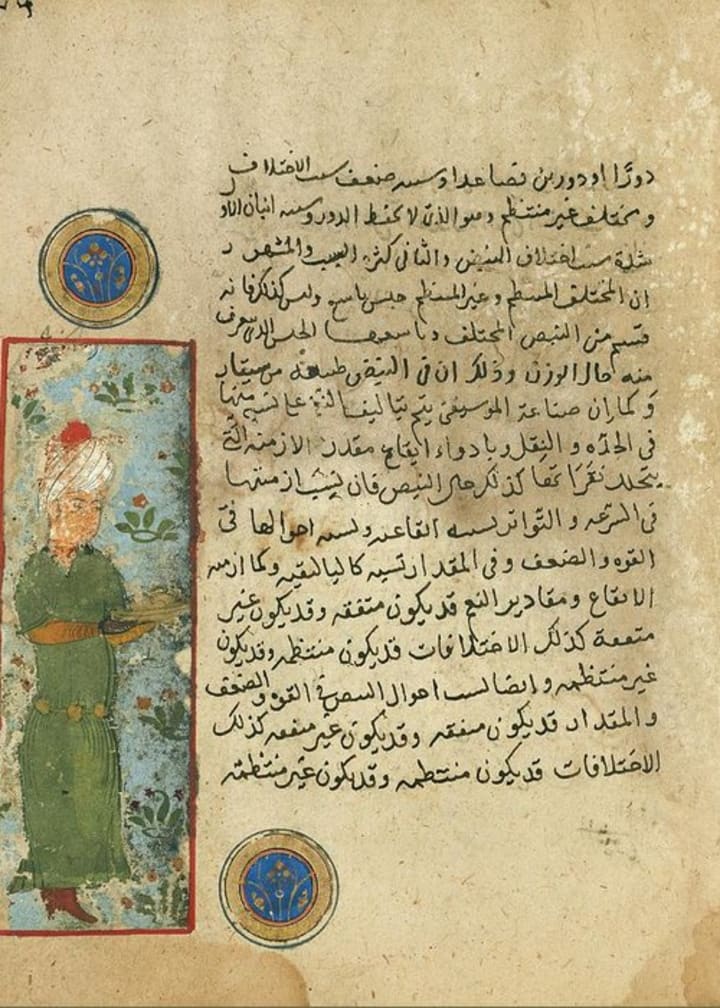
Even before the emergence of modern greeting cards, ancient civilizations had their own methods of exchanging greetings. In ancient Egypt, hieroglyphics were inscribed on tombs, conveying messages to the afterlife. The Romans engraved tablets to celebrate the new year, and medieval illuminated manuscripts featured intricate artwork combined with messages of goodwill.
Asia also had its unique traditions. Japanese "ukiyo-e" woodblock prints often contained celebratory messages, while Chinese scrolls with poetry and art were exchanged during the Lunar New Year. These practices laid the groundwork for the visual exchange of sentiments, a precursor to the modern greeting card.
Modern Cultural Significance
In today's digital age, greeting cards maintain their cultural and emotional significance, There are brands trying to preserve this legacy even in this century with holding the customs and tradition. While electronic communication is convenient, physical cards offer a tangible connection. The act of selecting, writing, and sending a physical card conveys thoughtfulness and authenticity that digital messages can't replicate. Greeting cards remain a cherished medium for expressing emotions on occasions ranging from birthdays and weddings to holidays and anniversaries.
Greeting card designs span a broad spectrum, catering to diverse tastes. From minimalist elegance to whimsical extravagance, cards capture the essence of the occasion. The integration of cultural motifs and symbols mirrors the globalized nature of modern society, reinforcing the idea that connection transcends borders.
Conclusion
The captivating journey through the history of greeting cards unveils an enduring human need for connection and expression. From ancient scrolls to elaborate Victorian cards, and from global influences to modern manifestations, greeting cards have evolved into cherished messengers of emotions, love, and appreciation.
As we navigate a digital world, the practice of exchanging physical cards reminds us of the significance of tactile connections. Amid ever-changing modes of communication, the tradition of sending and receiving greeting cards is a celebration of continuity, individuality, and the unbreakable thread that binds human hearts across time and cultures. So, the next time you hold a greeting card in your hand, remember that you're embracing a legacy that bridges generations and transcends barriers.
About the Creator
21 Freelancing Tips to Build a Successful Career (From Someone Who Actually Did It)
TL;DR version (60 seconds read time) + Paypal receipt at the end of the blog. I’ve made thousands of dollars with freelancing. See screenshots at the end of the post. Everything I say to you, I’ve tested it first on myself.
By Dena Falken Esqa day ago in Art
Impressive Artwork by Odilon Redon
French symbolist artist Odilon Redon was famous for his drawings in the 1880s. The artist’s artworks were mentioned in the popular 1884 novel “A Rebours,” or “Against the Grain,” by Joris-Karl Hysmans. His later artworks were created in oils and pastels. He developed an interest in Hinduism and Buddhism, and this interest in mysticism is reflected in his works of art.
By Rasma Raisters7 days ago in Art


Comments