
Héctor Celano, Poet, Troubadour and Word Militant
Introduction
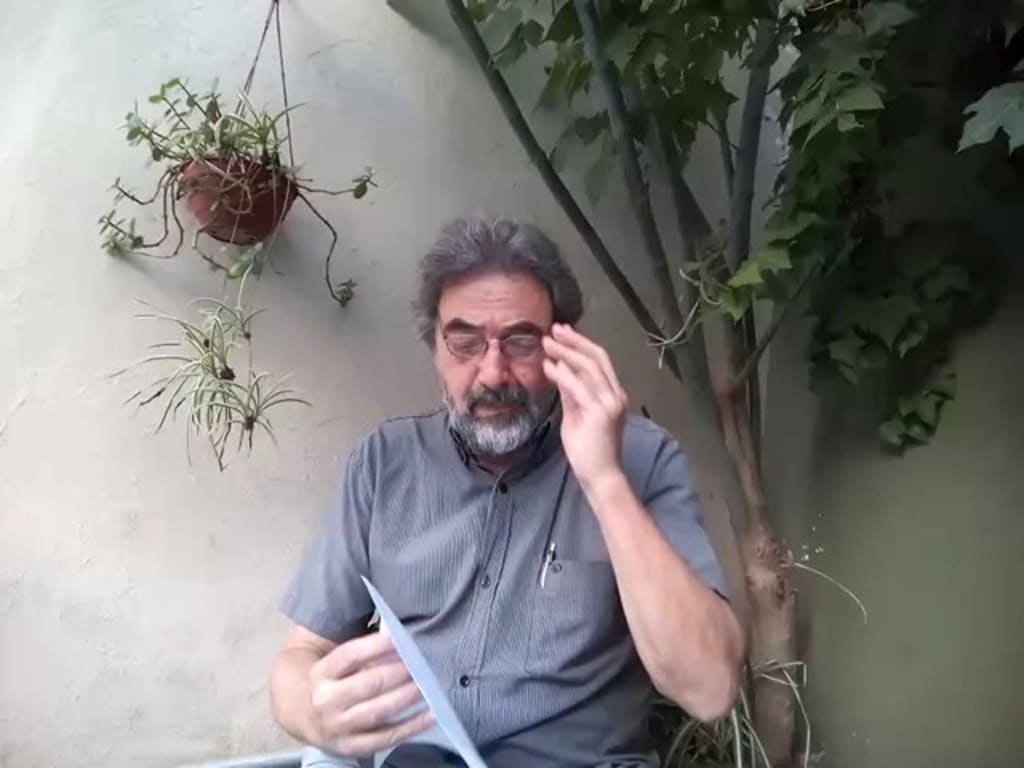
Héctor Celano is much more than a poet: he is a witness of his time, an artist with memory, and a militant of the word. Born in La Matanza, Buenos Aires, Argentina, and welcomed by Cuba at the height of his creative powers, his life has been marked by the fight against injustice, the search for truth, and an unshakable commitment to the oppressed peoples of Latin America. His poetry, profound and testimonial, does not shy away from pain, love, or hope, and serves as a bridge between lived history and written resistance.
In this interview, we retrace his vital, literary, and political trajectory: from the turbulent days of Argentine dictatorships to his present divided between Argentina and the revolutionary island—always with the conviction that writing is also a form of struggle.
INTERVIEW
1. Héctor, can you tell us about your childhood in Argentina and what memories you keep from those years?
I was born in 1950. My family environment was one of absolute simplicity, but filled with love and harmony. As the youngest of three siblings (Ruben, 12 years older, and Elida, 8), I received a lot of affection.
So many memories: I used to call the neighborhood “the house outside.” Dirt roads, wide spaces to play (especially football), and a "swarm" of children and youth of various origins—mostly Italians and Spaniards, but also from other parts of Argentina.
Literature, especially for those who lived in that context, could not ignore all this. My poetry and prose are deeply marked by it.
2. When and how did you discover poetry? Do you remember your first poem?
I wrote my first poem at age 9, at my teacher’s request for Mother’s Day. I came up with verses in quatrains. The text was very well received. Then I wrote others for my mother, Matilde, and my father, Pedro, when he became seriously ill—I was 13.
Even my first emotional turmoils found expression in my “poetic delusions.”
3. How did your family and social environment influence your political and literary commitment?
Enormously. My convictions were formed early on. I was struck by the fact that many children in the neighborhood couldn’t continue studying after elementary school.
I started working at 11 as a glass engraver, but I was lucky to receive a scholarship from the Rotary Club of San Justo.
The inequality of opportunities has been—and remains—the engine of my struggle.
4. Which authors influenced your poetic development and militant consciousness?
Initially, children’s literature, then the classics: Victor Hugo, Verne, Cervantes… Reading is a fundamental pleasure for me.
5. How did you experience Argentina’s fervent political and cultural atmosphere before the dictatorship?
Argentina endured several military dictatorships. Before the bloodiest one (1976), there were others, although popular resistance prevented them from consolidating.
I was a militant in the Argentine Communist Party, and even under democratic governments we faced persecution.
6. During the dictatorship, did you ever consider going into exile?
No. Those of us active in working-class neighborhoods didn’t think about it. Even knowing about the disappearances, we continued to hope.
I was a young father—my daughter Violeta Libertad was born in 1977, over a year after the coup.
7. What has Cuba represented in your personal, political, and poetic life?
Cuba was the next step, the concrete possibility of a great socialist homeland.
It gave me certainty and creative momentum, an epic and social sense that still accompanies me.
8. How did you integrate into Cuban society? Did you feel welcomed as a poet and militant?
In Cuba, poets are not seen as strange figures. After winning the "Ciudad del Che" prize in 1997, I was warmly welcomed.
I was later invited to join the "Guerrilla de Teatreros" in Granma province, and a deep bond was born there.
9. What role does poetry play in contexts of repression and resistance, in your view?
Poetry is by nature subversive—it breaks patterns, shortens distances, fosters a different kind of communication.
During the dictatorship, it infiltrated everywhere, even if it was harshly repressed.
10. You have written about exile, memory, and struggle. Can poetry be a weapon of resistance?
Yes. As Gabriel Celaya said in 1955: “Poetry is a weapon loaded with the future.”
Words can also be used to perpetuate the system, but true poetry must combat that lie.
11. What is your relationship with Argentina today? Do you feel part of its political and cultural history?
Always. Argentina gave me everything: the good, the mediocre, and the questionable.
I love the identity that shaped me, even if at times I curse it. I recognize the dignity of the working classes.
12. What influence has José Martí had on your work?
I discovered Martí as a child, through his poems. Later, I read his complete works.
Martí remains a fresh, profound, and incredibly relevant thinker.
13. Your verses contain strong testimonial elements. Do you consider yourself a lyrical chronicler of your time?
Yes. As Armando Tejada Gómez said: the poet is the chronicler of their time.
Art in general bears witness to the present and becomes a tool for understanding history.
14. What place do the desaparecidos and the Mothers of Plaza de Mayo occupy in your poetic universe?
Pain, emptiness, absence.
The barbarity inflicted by human beings upon their fellow humans is unimaginable.
The Mothers, Grandmothers, Children, Grandchildren represent the highest dignity in the struggle for Truth and Justice.
Many men also fought and were killed, but the dominant public figure is that of the woman, for historical and cultural reasons.
15. What are your thoughts on the present, considering the serious wars currently underway?
I speak with anguish and rage. A handful of powerful people decide for everyone else.
If the vast majority of humanity doesn’t change course, destruction and death will continue.
Wars are no longer distant. Capitalism needs war, conquest, and expansion.
Art, to exist, needs peace.
That’s why warmongers attack culture first.
Creativity needs peace and awakens sensitivity—the most human quality we have left.
As Cortázar said: “Did humanity have to get this far, or did it take the wrong path from the start?”
Perhaps there is still time to correct our course.
About the Creator
Keep reading
More stories from Maddalena Celano and writers in Art and other communities.
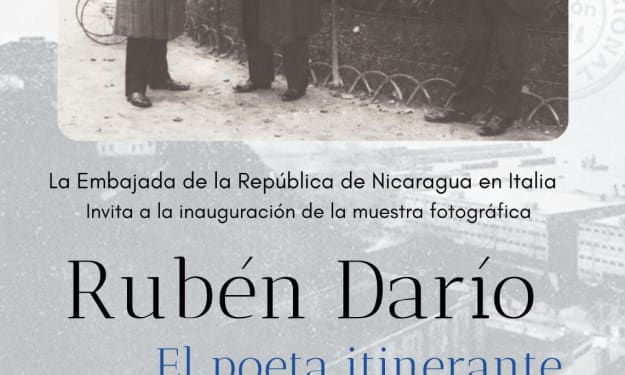
Rubén Darío: el Poeta Itinerante" – A Tribute to the Father of Modernism at the IILA in Rome
An Iconographic Journey through Rubén Darío’s Life The exhibition is structured around a photographic journey that retraces the key stages of Darío's life and career, exploring his cosmopolitanism and cultural influence. At the heart of the exhibition are 20 images from the book "Biografía Iconográfica de Rubén", curated by scholar Edmundo Enrique Montenegro Parrales. The photographs and documents on display cover a time span from 1889 to 1915, years in which the poet traveled across Latin America and Europe, solidifying his reputation as an intellectual and diplomat.
By Maddalena Celanoabout a year ago in Art
'Till Death We Do Art
There would be nothing divine in this world without art. Nature may surpass the divine to all intents and purposes, but like everything it absorbs and is absorbed by, it remains here, stuck on the surface of this world, ever-present, physically bound to the universe.
By Avocado Nunzella BSc (Psych) -- M.A.P 28 days ago in Art
The Rising Demand for Custom Physical Therapy Apps
Healthcare delivery is evolving faster than ever, and rehabilitation is no exception. Physical therapy — once limited to in-clinic sessions and paper-based exercise plans — is now being transformed by mobile technology. With increasing smartphone adoption and a growing demand for remote care, healthcare providers are exploring digital solutions to improve patient engagement and treatment outcomes.
By Steve Waugh4 days ago in Art



Comments
There are no comments for this story
Be the first to respond and start the conversation.