
Healing the Child Within
A Journey Through Shadows Toward Light


There’s a strange ache that follows you quietly into adulthood. It shows up in the way you apologize too much, or not at all. It appears in your fear of abandonment or your inability to trust. You may not even realize it at first—but deep inside, a child you once were still cries for safety, attention, and love.
This is a story of Maya—a woman who seemed to have it all together, until her inner world began to unravel.
Chapter One: The Invisible Bruises
Maya was thirty-one, a marketing executive in a fast-paced city, known for her wit and her ability to manage crises with an unnerving calm. But in the stillness of her apartment, silence didn’t feel peaceful. It felt terrifying.
She began noticing things she couldn’t explain: why she would panic when someone raised their voice, why affection made her tense, or why she avoided conflict like it was fire. It wasn’t until a minor argument with her boyfriend left her in tears on the bathroom floor that something clicked: “This is not just about now. This is something older.”
The memories returned in fragments—her father’s alcoholism, her mother’s emotional absence, the nights she cried into her pillow while pretending she was fine. As a child, she was told to be “strong,” to not make a fuss, to grow up fast. And so, she did.
But now, the child inside her was done being ignored.
Chapter Two: Meeting the Inner Child
The idea of “inner child work” seemed silly at first. Her therapist, a gentle woman named Sarah, asked her to imagine herself as a little girl. Maya laughed awkwardly. “You want me to talk to... my child self?”
“Yes,” Sarah replied. “That part of you still lives inside, waiting to be heard.”
So Maya tried. She closed her eyes and saw herself at seven—skinny knees, tangled hair, eyes filled with fear and hope. She looked lonely. And for the first time, Maya didn’t push the feeling away. She sat with it.
That night, she wrote a letter to her younger self. She apologized for the things she couldn’t control back then, and promised that she wouldn’t be abandoned anymore.
Healing didn’t happen overnight. But it began.
Chapter Three: Breaking Patterns
Maya started seeing how her childhood wounds had shaped her life—how she often attracted emotionally unavailable partners, how she would people-please to earn love, how she mistook anxiety for excitement.
Awareness was painful, but it gave her power.
She learned to set boundaries, though it made her feel guilty. She learned to say “no,” even when her voice trembled. She cut off toxic friendships and finally began forgiving herself for the survival patterns that once protected her but now held her back.
Every step toward healing was a step toward reclaiming her lost self.
Chapter Four: Finding Safe Spaces
Maya joined a support group for adult children of dysfunctional families. There, she met others whose smiles hid similar pain. Sharing her story—and hearing theirs—was a form of medicine.
She began practicing self-compassion. The same way she would comfort a friend, she began comforting herself. On hard days, she’d write affirmations on her mirror:
“You are safe now.”
“You didn’t deserve what happened to you.”
“You are worthy of love.”
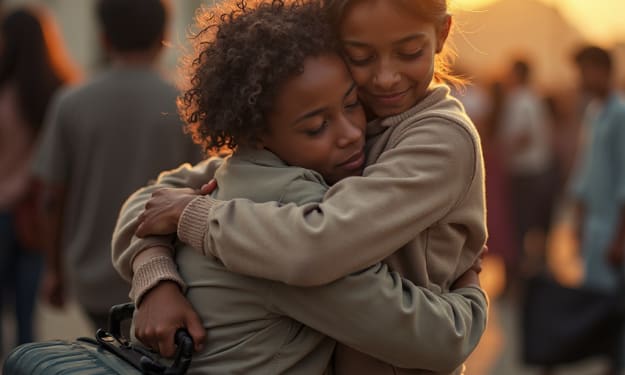
And slowly, something shifted. The panic that once gripped her chest started to loosen. The little girl inside her, once ignored, was finally being held.
Chapter Five: Becoming Whole
Healing doesn’t mean forgetting. It means integrating. Maya stopped wishing her past had been different. Instead, she honored the resilience it gave her.
Years later, she would become a therapist herself. Not because she had it all figured out, but because she knew what it meant to be broken and to rebuild. Her childhood wounds no longer defined her—but they shaped her into someone empathetic, grounded, and wise.
And on quiet evenings, she still closes her eyes and sees that seven-year-old girl. Only now, she’s smiling.
Epilogue: The Universal Wound
Maya’s story is personal, but it’s also universal.
Many of us walk around carrying childhood wounds that never had words. We tell ourselves to “move on” or “get over it.” But healing isn’t about erasing the past—it’s about creating a new relationship with it.
If you, too, carry invisible bruises, know this: You are not alone. And it’s never too late to go back, find your inner child, and say: “I see you now. I’m here. And I’m not going anywhere.”
About the Creator
Mehtab Ahmad
“Legally curious, I find purpose in untangling complex problems with clarity and conviction .My stories are inspired by real people and their experiences.I aim to spread love, kindness and positivity through my words."
Keep reading
More stories from Mehtab Ahmad and writers in Art and other communities.
The Joy of Reuniting with Loved Ones
For three years, Ahmed hadn’t seen his mother. It wasn’t by choice. Life, as it often does, had intervened. After securing a job in Dubai to support his family back in Pakistan, Ahmed found himself caught in the relentless rhythm of work, savings, and sacrifice. He told himself he’d return next year. Then the pandemic struck. Flights stopped. Borders closed. And what was supposed to be a year away stretched into a long, aching wait.
By Mehtab Ahmad8 months ago in Art
'Till Death We Do Art
There would be nothing divine in this world without art. Nature may surpass the divine to all intents and purposes, but like everything it absorbs and is absorbed by, it remains here, stuck on the surface of this world, ever-present, physically bound to the universe.
By Avocado Nunzella BSc (Psych) -- M.A.P 20 days ago in Art
Writing To Succeed
If you want to find something that will help readers find your writing, possibly expand your audience, and maybe even get you noticed for other things, then you’re not alone. But how can you get it done in a world full of want-to-be writers? Look less at what you’re writing now, and more at what other writers have used to boost their views and reads.
By Jason Ray Morton a day ago in Writers



Comments
There are no comments for this story
Be the first to respond and start the conversation.