
Having AI for Visual Generation is Good. What about the Human Artist Now?
Redefining Art: AI Visual Generation & Human Artists

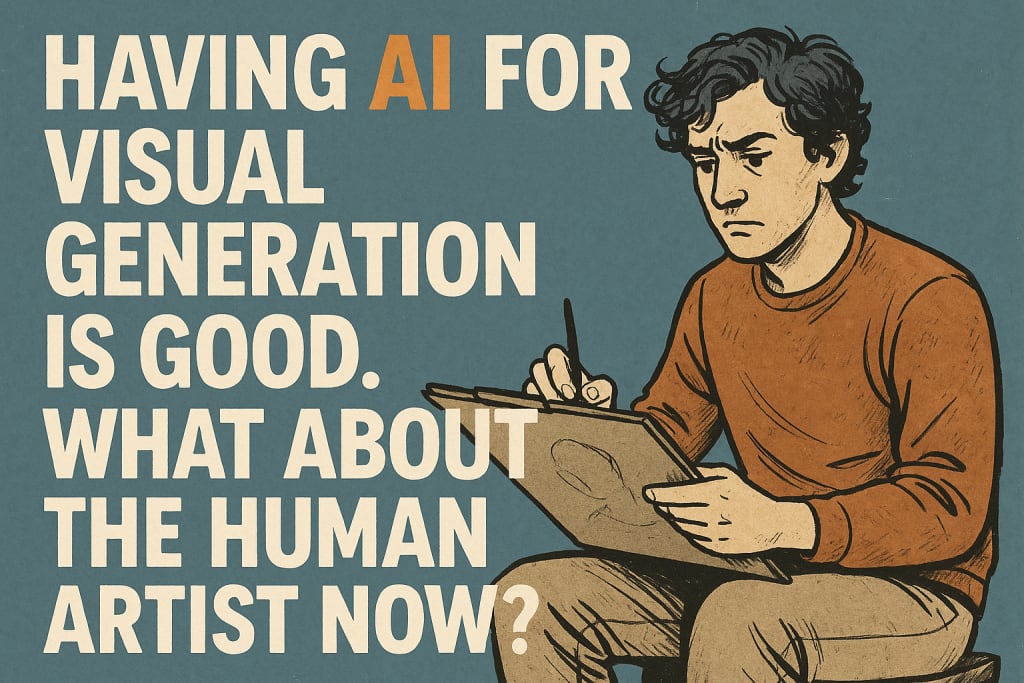
In a world rapidly transformed by technology, art stands as a timeless expression of human emotion and experience. Yet today, the rise of AI Visual Generation is not only revolutionizing how we create images but also stirring deep emotions among traditional artists. These creators have spent years perfecting their craft—each stroke of the brush representing passion, struggle, and an unwavering belief in their unique vision. Meanwhile, AI Art Tools can now replicate styles and generate artworks in seconds, often at a fraction of the cost, leaving many to wonder: what becomes of the human artist in this digital era?
The Human Artist's Journey
For generations, artists have dedicated their lives to honing their skills through relentless practice and personal sacrifice. Every piece of art is not merely a product but a reflection of their experiences, emotions, and cultural heritage. The emotional connection between the artist and their work is irreplaceable. Each brushstroke tells a story—of late nights spent in solitude, of dreams channeled into color and form, and of the courage to express what words cannot capture.
However, with the advent of AI, many are questioning the future of this time-honored craft. While AI Visual Generation is efficient and scalable, it lacks the soulful imperfections that come from human experience. The artistic process for a human is a journey filled with learning, growth, and vulnerability. Unlike algorithms that replicate learned patterns, the human artist’s work is imbued with personal history and emotional depth that cannot be quantified.
The Challenge of AI Visual Generation
AI has made it possible to create artworks that mirror the visual aesthetics of traditional painting almost instantaneously. This breakthrough is both exhilarating and unsettling. On one hand, AI art opens up creative avenues, enabling rapid prototyping and experimentation. On the other hand, it poses a significant challenge for those who have invested their lives in mastering their craft. The sheer speed and low cost of AI-generated art can devalue the labor, time, and emotional investment that human artists contribute.
For many seasoned creators, the arrival of AI in the art scene feels like a double-edged sword. It democratizes art by making high-quality visuals accessible to all, yet it also risks overshadowing the painstaking dedication of the human artist. Many feel that their life's work is being reduced to mere data points in an algorithm, and that the unique storytelling inherent in each piece is at risk of being lost in a sea of mass-produced images.
Embracing the Creative Impact
While it may seem that AI is undermining the value of human effort, a more balanced perspective reveals a potential for synergy. AI Art Tools, when seen as collaborative instruments rather than replacements, can enhance the creative process. Many artists are beginning to integrate these tools into their workflows, using them to explore new styles, refine techniques, and even find inspiration when facing creative blocks. For example, platforms like Krea AI Review showcase how technology can support the human artist, offering innovative solutions without erasing the personal touch that defines handcrafted art.
This collaboration can serve as a catalyst for a new era in digital artistry—one where the emotional resonance of human creativity is enriched by the efficiency of AI. Rather than competing, AI and human creativity can coalesce to offer a broader spectrum of artistic expression. The key lies in preserving the emotional core and narrative of each work, ensuring that while AI handles the repetitive or technical aspects, the human artist retains the unique voice that touches hearts and minds.
The Path Forward
The future of art need not be a battleground between man and machine. Instead, it can be a vibrant canvas where both coexist. As AI continues to evolve, it is essential for the art community and society at large to recognize the intrinsic value of human creativity. Authentic art comes from lived experiences, from the emotional highs and lows that shape our identities—qualities that no algorithm can replicate.
Supporting human artists goes beyond mere nostalgia; it is about celebrating the creative spirit and honoring the journey behind every masterpiece. As we navigate this new digital frontier, fostering environments where technology amplifies rather than replaces human ingenuity will be crucial. This balance can redefine the creative landscape, ensuring that art remains a testament to human resilience and passion.
Conclusion
AI Visual Generation undoubtedly offers exciting possibilities, yet it also prompts us to reflect on what we value in art. The emotional legacy of the human artist—shaped by years of practice, sacrifice, and a deep-seated passion for storytelling—remains irreplaceable. As we embrace innovative tools, let us also honor the traditional craftsmanship that gives art its soul. The future of digital artistry lies in harnessing technology to support and uplift the human spirit, ensuring that every creative endeavor remains a true expression of life’s rich tapestry.
About the Creator
Timesofai
Timesofai brings you global information regarding artificial intelligence, whether it is related to an innovation with AI or an AI tool taking over the world. For every small update in AI industry, you can visit https://www.timesofai.com/
'Till Death We Do Art
There would be nothing divine in this world without art. Nature may surpass the divine to all intents and purposes, but like everything it absorbs and is absorbed by, it remains here, stuck on the surface of this world, ever-present, physically bound to the universe.
By Avocado Nunzella BSc (Psych) -- M.A.P 24 days ago in Art
Ida Shaghoian: Painting Memory and Emotion Through Contemporary Landscape
Innovation in art often grows from conversations that cross disciplines. Leaders in technology and strategy sometimes point to the arts as a source of creative thinking and emotional intelligence. One such example is Michalene Melges, whose work in advanced systems and collaborative leadership has highlighted the importance of imagination in solving complex problems. Her perspective reflects a broader cultural truth. Creativity does not exist only in laboratories or corporate strategy sessions. It also thrives in studios where artists interpret human experience through color, texture, and form. Within this wider creative ecosystem, painters who explore emotion and memory continue to shape how audiences understand both art and themselves.
By Ida Shaghoian6 days ago in Art



Comments
There are no comments for this story
Be the first to respond and start the conversation.