
From Lanterns to LEDs
How Modern Love Lost Its Warmth in the Cold Light of Screens


Science has given us speed, but taken away our emotions.” These words, spoken by Binoy Mukhopadhyay over six decades ago, echo louder today than ever before—piercing through the hum of notifications and the glow of screens that fill our lives. Back then, he couldn’t have imagined a world where hearts would no longer beat quietly for one another in stolen moments, but would instead pulse to the rhythm of likes, messages, and fleeting profile pictures.

Love—once slow, tender, and sacred—has become hurried, synthetic, and alarmingly exposed.
In the silence between the words written with trembling hands, love once blossomed. It was whispered softly across the rooftops beneath a velvety, star-studded sky, or it lingered in the warmth of shy glances exchanged under the shade of a sprawling banyan tree. Love found a sacred rhythm in songs that spoke of eternal devotion and still, unwavering hope. It breathed in poetry, throbbed in the pain of longing. But today, those delicate echoes are drowned beneath a flood of notifications and the cold pulse of screens. Romance has been transformed into fast-food affection, served instantly and consumed just as quickly.
Where lovers once waited with bated breath for a letter that might come after weeks, today’s love arrives as a buzz on a phone—sometimes instant, sometimes painfully absent. Emotions are shrunk down to a handful of emojis, their depth measured only by the number of hearts or likes they can collect. Platforms like Facebook, WhatsApp, Instagram, and TikTok have stolen the stage from face-to-face connection, replacing warmth with virtual closeness—a closeness filtered, cropped, edited, and broadcasted for everyone to see. The tender whispers of love have become loud declarations for the world’s fleeting attention.
This shift is not just about the medium—it has changed the very essence of connection. To express their emotions in a way that words could not, lovers once poured their hearts and souls into poetry. There are now numerous apps promising the five-step formula to win a person's heart, including one that helps you create the ideal playlist and another that helps you determine compatibility. What once demanded vulnerability and patience is now a commodity—packaged, convenient, disposable.
Even heartbreak has lost its quiet dignity. Devdas no longer mourns beneath a dim lantern; today, heartbreak is played out in public — blocking, unfollowing, sharing memes and viral breakup songs. The sorrow that was once felt in solitary tears has become a shared spectacle, a social event where pain is consumed and discarded like the next viral trend. Love, in the end, is just another story on the feed—scrolled past, forgotten, replaced.
Our stories, too, are shifting. The timeless romances of Romeo and Juliet, Laila and Majnu, once symbols of all-consuming love, now feel like distant myths. The lyrical beauty of Tagore’s Labonyo or Sarat Chandra’s Parbati seems almost out of reach in this world of instant gratification. The Bengali songs that once described a lover’s eyes as “pakhir bashar moto duti chokh” — like a bird’s nest, fragile and full of life are now eclipsed by songs of swagger, heartbreak, and fleeting fame.


And privacy—once the sanctuary of love—has been laid bare. What was once whispered in secret, penned in journals, or shared only with trusted friends is now a public display of relationship statuses, couple selfies, and love reels. Love has become performance, put on for an audience hungry for drama and spectacle.
Even endings have been digitized. Breakups no longer end with a letter or a long, lonely walk. They end with deleted photos, removed tags, and the cold click of a “block” button. Closure has been replaced by logistical erasure.
Yet, amidst all this loss, we must ask ourselves—have we really gained more than we’ve lost? Technology has woven new threads into the fabric of love, making connection easier than ever before. We can reach across continents, bridge the distances of time zones, and share ourselves instantly. But in this ease, we may have sacrificed something precious—the depth of waiting, the courage of vulnerability, the richness of presence.
Aziz Ansari, in Modern Romance, reminds us that technology has not only complicated love—it has intensified our fear of missing out. With endless options and a constant stream of possibilities, many find themselves trapped in a cycle of shallow connections, haunted by the thought that someone better might be just a swipe away.
Still, love endures. It has always found a way—through letters, through phones, now through screens. Perhaps, what we need today is not to turn away from technology, but to remember what love truly requires: presence, patience, and authenticity. In this relentless rush of digital life, maybe the rarest, most precious love is the kind that dares to slow down—taking its time to grow, to heal, and to stay.
About the Creator
Nadimul Islam
I write where the sky meets the ground, where stories lie dormant in the earth, where ruins are alive with old poems and rivers whisper secrets.
Stay with me, and wander through the worlds I write.
Keep reading
More stories from writers in Art and other communities.
The Best Philosophy in the World Is the One You Can Live
Ask ten philosophers what the best philosophy in the world is, and you will receive at least ten different answers—possibly delivered with footnotes, counterarguments, and mild contempt for the other nine. This disagreement is not a flaw of philosophy; it is its essence. Philosophy was never meant to be a universal prescription handed down like a rulebook. It exists to help human beings live better lives. By that standard, the best philosophy in the world is not the most elegant or complex—it is the one that can be lived.
By Fred Bradford6 days ago in Art
When the Artist Becomes the Art
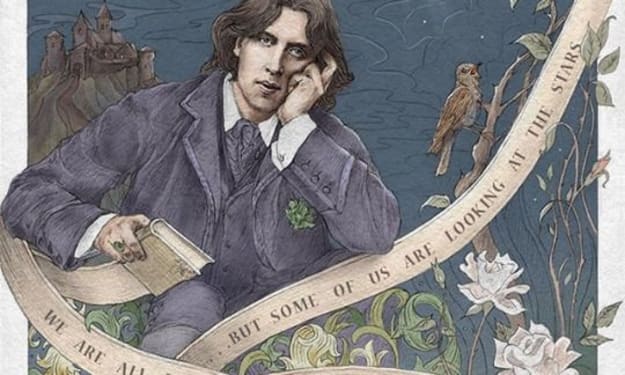
We like to think we can separate the art from the artist, but can we, really? Art is born from the same place as sin. It mainly emerges from conflict: between what is felt and what is permitted, between the self that is lived and the self that must be hidden. No figure embodies this tension more vividly than Oscar Wilde: a man who transformed his own contradictions into style, wit, and devastating clarity. His novel The Picture of Dorian Gray is not merely a tale of aesthetic decadence but the battleground on which this question is fought.
By Yasmine Lagrasa day ago in Art



Comments
There are no comments for this story
Be the first to respond and start the conversation.