

The Changing Landscape
The design industry is one marked by rapid change and constant evolution. New technologies, shifting client expectations, and emerging design trends continuously reshape the landscape. For Alex Carter’s design studio, staying ahead in such a dynamic environment required a commitment to continuous evolution and adaptation.
As Alex reflected on the studio’s journey, he recognized that evolution was not just about keeping up with changes but also about proactively driving innovation and setting trends. The studio had already navigated significant challenges and embraced major innovations. Now, it was time to focus on evolving in response to ongoing changes and seizing new opportunities.
Embracing Technological Advancements
One of the key areas of evolution for the studio was in embracing technological advancements. The digital landscape was expanding, with new tools and technologies offering unprecedented possibilities for design. Alex and his team needed to stay at the forefront of these developments to continue delivering cutting-edge solutions.
Exploring Emerging Technologies
The studio began exploring several emerging technologies that had the potential to transform the design process and client experiences. These included:
Augmented Reality (AR): AR technology was gaining traction in the design world, offering immersive and interactive experiences. Alex saw potential in using AR for design presentations, allowing clients to visualize designs in real-world settings before finalizing them. The studio began experimenting with AR applications and developed a few pilot projects that showcased the technology’s capabilities.
Virtual Reality (VR): VR offered a more immersive way to experience design concepts, especially for complex projects like architectural design. Alex invested in VR equipment and software to create virtual walkthroughs and simulations. This technology provided clients with a more engaging and realistic preview of their projects, enhancing their decision-making process.
Artificial Intelligence (AI): AI was revolutionizing various industries, including design. Alex explored AI-driven tools for data analysis, pattern recognition, and even design generation. By integrating AI into the studio’s workflow, Alex aimed to streamline repetitive tasks, gain insights from data, and enhance creativity.
Adapting to Changing Client Expectations
As technology evolved, so did client expectations. Clients were becoming more informed, demanding, and sophisticated. They sought not only innovative design solutions but also a deeper understanding of how design could drive business outcomes and connect with audiences.
Data-Driven Design
To meet these evolving expectations, Alex and his team embraced a data-driven approach to design. They began incorporating analytics and user research into their design process, using data to inform decisions and optimize design solutions. This approach allowed the studio to create more effective and targeted designs that resonated with clients’ audiences.
Personalization and Customization
Clients also increasingly valued personalization and customization. Alex recognized the need to offer tailored design solutions that reflected each client’s unique brand identity and goals. The studio developed a more consultative approach, working closely with clients to understand their needs and preferences. This personalized approach not only improved client satisfaction but also set the studio apart from competitors.
Innovative Design Practices
In addition to embracing new technologies and adapting to client expectations, Alex continued to push the boundaries of design innovation. The studio experimented with unconventional design methods, explored new materials and techniques, and sought inspiration from diverse sources.
Design Thinking Workshops
One of the studio’s initiatives was to conduct design thinking workshops. These workshops brought together clients, team members, and industry experts to collaboratively brainstorm and solve design challenges. The workshops fostered creativity, encouraged diverse perspectives, and led to innovative solutions that might not have emerged through traditional design processes.
Cross-Disciplinary Collaboration
Alex also explored opportunities for cross-disciplinary collaboration. By working with professionals from different fields—such as technology, psychology, and sociology—the studio was able to approach design challenges from unique angles and create more holistic solutions. These collaborations led to groundbreaking projects that combined design with technology, user experience, and human behavior.
Responding to Market Trends
Staying attuned to market trends was crucial for the studio’s evolution. Alex and his team kept a close eye on industry developments, consumer behavior, and design trends to identify emerging opportunities and potential challenges.
Sustainability and Social Responsibility
Sustainability continued to be a significant focus for the studio. Alex recognized that clients and consumers were increasingly prioritizing environmental responsibility and ethical practices. The studio expanded its commitment to sustainability by incorporating eco-friendly materials, reducing waste, and promoting sustainable design practices.
Additionally, the studio became involved in social responsibility initiatives, supporting projects and causes that aligned with its values. This included designing for non-profit organizations, participating in community outreach programs, and advocating for social and environmental issues.
Fostering a Culture of Innovation
To support the studio’s evolution, Alex fostered a culture of innovation within the team. He encouraged experimentation, risk-taking, and continuous learning. The studio’s environment was designed to inspire creativity and collaboration, with open workspaces, flexible processes, and opportunities for professional development.
Alex also implemented a feedback-driven culture, where team members were encouraged to share ideas, provide constructive feedback, and contribute to the studio’s growth. Regular brainstorming sessions, innovation challenges, and creative retreats were organized to keep the team engaged and motivated.
Scaling with Integrity
As the studio continued to grow and evolve, Alex remained committed to scaling with integrity. He wanted the studio’s expansion to be sustainable and aligned with its core values. This included maintaining high standards of quality, fostering a positive work environment, and staying true to the studio’s mission and vision.
Alex was mindful of the challenges that came with growth, such as maintaining a cohesive team culture and managing increased operational complexities. He focused on strategic planning, transparent communication, and ensuring that the studio’s growth was driven by a shared sense of purpose and vision.
Legacy and Future Vision
The evolution of the studio was not just about adapting to change but also about shaping the future. Alex envisioned a design studio that continued to lead in innovation, inspire creativity, and make a positive impact on clients and the broader community.
He aspired to build on the studio’s legacy by driving meaningful change through design, exploring new frontiers, and embracing emerging opportunities. Alex’s vision for the future was rooted in the values and experiences that had shaped his journey, and he was determined to continue pushing the boundaries of design and creativity.
Conclusion
Chapter 8, "The Evolution," explores Alex Carter’s journey as his design studio adapts to ongoing changes in the industry, embraces new technologies, and continues to innovate. It highlights the studio’s commitment to staying at the forefront of design, meeting evolving client expectations, and fostering a culture of creativity and collaboration. The chapter also delves into the studio’s focus on sustainability, social responsibility, and strategic growth. As Alex looks to the future, he remains dedicated to shaping the design industry and building on the studio’s legacy, guided by a vision of continuous evolution and innovation.
About the Creator
'Till Death We Do Art
There would be nothing divine in this world without art. Nature may surpass the divine to all intents and purposes, but like everything it absorbs and is absorbed by, it remains here, stuck on the surface of this world, ever-present, physically bound to the universe.
By Avocado Nunzella BSc (Psych) -- M.A.P 18 days ago in Art
The Dress That Broke the Internet Was Gold and Nobody Could Agree on Why
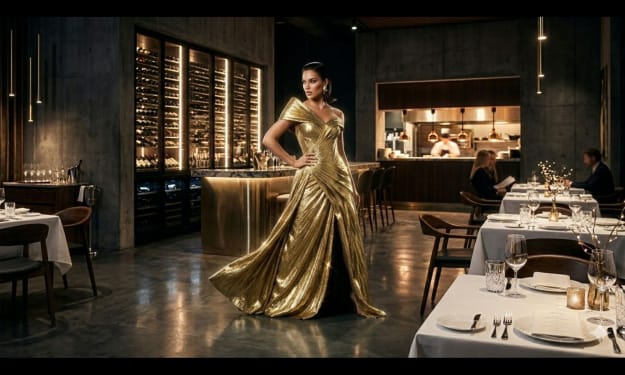
She walked into the room and everything stopped. Not because of her confidence or music that was playing, though there was plenty of that. Everything stopped because of the dress. Floor-length, liquid, blazing gold, it caught every light in the room and threw it straight back.
By CurlsAndCommas2 days ago in Art



Comments
There are no comments for this story
Be the first to respond and start the conversation.