
Five Common Surface Finishes for Stainless Steel Sculptures
Which one do you prefer?
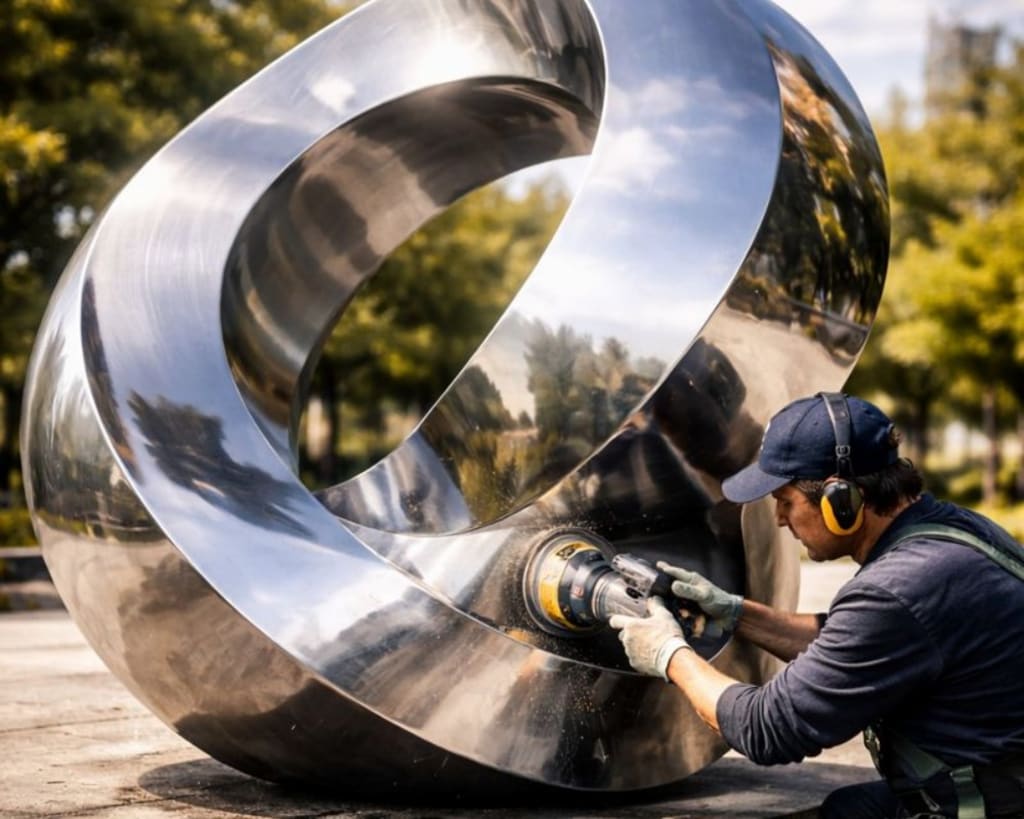
Stainless steel sculptures are increasingly popular in modern decoration, public art, and commercial landscapes due to their durability, aesthetic appeal, and low maintenance. One of the key factors that define the visual impact of a stainless steel sculpture is its surface finish. Here are five common surface treatment methods that transform stainless steel sculptures from simple metal into eye-catching art pieces.

1. Brushed Finish
The brushed finish features fine linear textures, giving the sculpture a sleek, modern, and slightly matte appearance. It is effective in hiding minor scratches and fingerprints, making it a practical choice for high-traffic areas. Brushed stainless steel is commonly used for geometric or minimalist designs, and its low maintenance makes it a cost-effective option.
2. Matte Finish
Matte finish offers a soft, non-reflective surface that gives the sculpture a subtle and elegant appearance. In projects located near roads, water features, or glass façades, matte finishes help avoid excessive glare that may affect visual comfort or even safety. Additionally, this surface treatment naturally conceals dust, water marks, and minor imperfections, making it a reliable choice for medium to large outdoor sculptures where consistent appearance is a priority.

3. Mirror Polished Finish
Mirror-polished stainless steel provides a reflective, shiny surface that mirrors the surrounding environment. This finish requires meticulous hand polishing to remove weld marks and surface imperfections. While visually striking, it is more prone to fingerprints, smudges, and scratches, and requires regular cleaning to maintain its glossy appearance. Mirror-polished sculptures are often chosen for landmark or artistic installations where the reflection adds a dynamic element.
4. Combination Finish
Some stainless steel sculptures incorporate a combination of brushed, matte, and mirror-polished areas. This approach creates contrast, depth, and visual hierarchy, allowing specific forms or details to stand out.
Combination finishes are frequently chosen for custom or abstract sculptures, where designers want to emphasize certain curves, edges, or focal points. From a manufacturing standpoint, this method requires precise coordination during fabrication and finishing to ensure clean transitions between surfaces. When executed correctly, it adds layers of texture and light interplay that significantly enhance the sculpture’s artistic presence.
5. Sandblasted Finish
Sandblasting produces a textured matte surface with fine granularity. It enhances the sculpture's durability, provides a non-slip texture if placed on low surfaces, and gives a raw, industrial aesthetic. Sandblasted finishes are ideal for large outdoor sculptures exposed to the elements, as they minimize visible wear over time.
Application Beyond Stainless Steel
While these finishes are most commonly applied to stainless steel due to its corrosion resistance and durability, they can also be used on other metal sculptures such as aluminum, copper, bronze, and iron. Each metal requires careful consideration of its properties: for example, copper and brass may need protective coatings to prevent oxidation after polishing, aluminum is soft and prone to scratching, and iron needs rust protection for outdoor use.
Choosing a surface finish is a critical step that affects both the visual impact and long-term performance of a stainless steel sculpture. From the understated elegance of brushed and matte finishes to the striking reflections of mirror polishing, each option serves different design intentions and practical requirements.
About the Creator
Shenzhen Ruiheng Crafts
https://www.craftsornaments.com/
Keep reading
More stories from Shenzhen Ruiheng Crafts and writers in Art and other communities.
How much does a custom stainless steel sculpture cost?
Stainless steel sculptures are widely used in modern decorative and public art projects. They can be found in urban landmarks, tourist attractions, commercial plazas, and private outdoor spaces. Their popularity is largely due to their durability, resistance to weather conditions, and distinctive reflective surfaces, which allow them to adapt to both contemporary architecture and open landscapes. Despite their common appearance in public environments, the cost of a stainless steel sculpture is not standardized and varies significantly from project to project.
By Shenzhen Ruiheng Crafts2 months ago in Art
'Till Death We Do Art
There would be nothing divine in this world without art. Nature may surpass the divine to all intents and purposes, but like everything it absorbs and is absorbed by, it remains here, stuck on the surface of this world, ever-present, physically bound to the universe.
By Avocado Nunzella BSc (Psych) -- M.A.P 17 days ago in Art
Truth Is Often Rejected Because It Demands Change
There is a widespread assumption, rarely spoken but deeply believed, that truth will eventually be accepted if it is communicated clearly, patiently, and with genuine goodwill. When resistance appears, the instinct is to search for error in tone, framing, or explanation. The underlying belief is simple: if the truth were presented well enough, rejection would disappear. This belief is comforting, but it is false. History, Scripture, and lived experience all point in the same direction. Truth is often rejected not because it is unclear, but because it is costly.
By Peter Thwing - Host of the FST Podcast7 days ago in Art



Comments
There are no comments for this story
Be the first to respond and start the conversation.