
Film Chronicles | Winter in Altay
Discovering the Frozen Silence of Xinjiang

A few years ago, I embarked on a winter journey to Xinjiang with two close friends. It was my first time venturing into this vast and enigmatic region, a place that had always lingered on the edges of my imagination but had never before revealed itself to me. As we made our way deeper into Xinjiang, I was unprepared for the sheer intensity of the cold that awaited us—a cold so fierce, so unrelenting, that it seemed to seep into every fiber of my being.
The images I captured during this journey are a stark contrast to those from my "Altay Chronicles" series. In Altay, I found warmth in the simplicity of everyday life, a vibrant energy that pulsed through the streets and homes. But here, in the depths of a Xinjiang winter, life seemed to slow to a whisper. The bustling activity of daily life was subdued, replaced by a profound stillness that permeated every scene.

I remember the first morning we ventured out into the frozen landscape. The sun had not yet risen, and the village where we stayed was shrouded in darkness, the only light coming from the faint glow of the stars above. As we stepped outside, the cold hit me like a physical force, making me gasp for breath. I had experienced cold before, but nothing like this. This was a cold that cut through layers of clothing, that numbed fingers and toes within minutes, that made every movement feel like an effort.

Despite the cold, there was a certain beauty in the stillness of the winter morning. The village lay silent, as if holding its breath, waiting for the first rays of sunlight to bring it back to life. The snow-covered rooftops and tree branches glistened under the faint starlight, creating a scene that was both serene and hauntingly beautiful. I was compelled to capture it, to preserve the quiet elegance of the moment in the only way I knew how—through the lens of my camera.

But as soon as I pulled out my camera and clicked the shutter, I was reminded of the unforgiving nature of the cold. My fingers, exposed to the air for just a few seconds, began to sting with pain, and by the time I had taken a second shot, they were nearly numb. I quickly shoved my hands back into my pockets, trying to warm them up before the cold could seep any deeper. It was a stark reminder that winter in Xinjiang was not to be taken lightly.
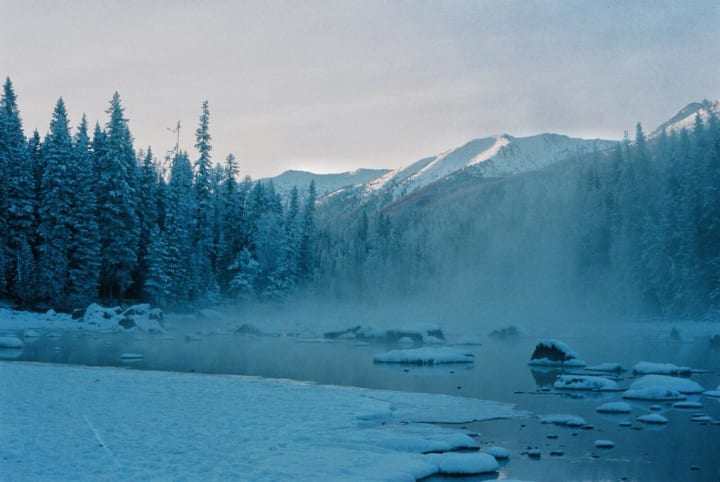
As the days went on, I found myself growing more accustomed to the cold, though never fully comfortable with it. Each morning, we would venture out into the frozen wilderness, exploring the villages and landscapes that dotted the region. The silence that greeted us each day was unlike anything I had ever experienced. There were no sounds of traffic, no chatter from passersby, not even the chirping of birds. It was as if the world had been wrapped in a thick blanket of snow, muffling all noise and movement.

This silence, combined with the vast, empty landscapes, created a sense of isolation that was both unsettling and strangely peaceful. There was a purity to the environment that I had not encountered in my previous travels—a sense that we were standing in a place untouched by time, where nature reigned supreme and humanity was merely a visitor. It was a feeling that deepened my respect for the region and its people, who had learned to thrive in such a harsh, unforgiving climate.

One of the most striking memories from that trip was the sight of the village at dawn. On those frigid winter mornings, just before the sun broke the horizon, the entire village seemed to be suspended in time. The snow-covered streets were empty, the windows of the houses dark, as if the village itself was still asleep. The only sound was the crunch of our boots on the frozen ground, a sound that seemed almost sacrilegious in the stillness of the morning.
It was during these quiet moments that I felt most connected to the essence of Xinjiang in winter. The absence of human activity, the subdued colors of the landscape, and the biting cold all combined to create an atmosphere of profound tranquility. It was a far cry from the lively, bustling scenes I had captured in Altay, but it was no less beautiful. In fact, it was this very stillness that made the experience so memorable—a reminder that beauty can be found in even the most desolate places, if we are willing to look for it.

As I review the photographs I took during that journey, I am struck by the contrast between these winter images and those from my time in Altay. The Altay photos are full of life and warmth, capturing the everyday moments that make up the fabric of life in that region. In contrast, the Xinjiang winter photos are stark, almost monochromatic, with a focus on the interplay between light and shadow, snow and sky. They lack the vibrancy of daily life but compensate with a depth of emotion that speaks to the quiet power of nature.

Looking back, that winter journey to Xinjiang was one of the most challenging experiences I have ever had, but it was also one of the most rewarding. It taught me to appreciate the beauty of stillness, the value of silence, and the resilience required to survive in such a harsh environment. It also deepened my connection to Xinjiang, a place that continues to inspire me with its rugged landscapes and the quiet strength of its people.
If you like my content, please remember to give it a thumbs up.
About the Creator
'Till Death We Do Art
There would be nothing divine in this world without art. Nature may surpass the divine to all intents and purposes, but like everything it absorbs and is absorbed by, it remains here, stuck on the surface of this world, ever-present, physically bound to the universe.
By Avocado Nunzella BSc (Psych) -- M.A.P 23 days ago in Art
Keto and Kote
This story has been sitting in my drafts for a long time because I didn't have good pictures for it. Murphy's law: I went to the performance with my phone discharged. But then I found the entire performance on YouTube and am now delightfully happy to share it with you.
By Lana V Lynx2 days ago in Art
📢 Raise Your Voice Thread: 03/05/2026
Our “Raise Your Voice Threads” are hosted most alternating Thursdays at 12PM ET to offer creators more avenues to uncover exceptional stories on Vocal. As we are continuously searching for fresh creators and inspiring stories, this thread provides an opportunity to exchange and discuss the stories that have moved and motivated us on Vocal.
By Raise Your Voice by Vocal6 days ago in Resources




Comments (1)
A better one.