
Famous Australian Paintings
Artwork from Australia
The amazing Australian landscapes have inspired artists in many ways from traditional aboriginal iconography to the first European settlers. Many of them have been influenced by European modernism and contemporary art. The evidence of Aboriginal paintings dates back at least 30,000 years. European settlers were influenced by both the Realism and Impressionism art movements.
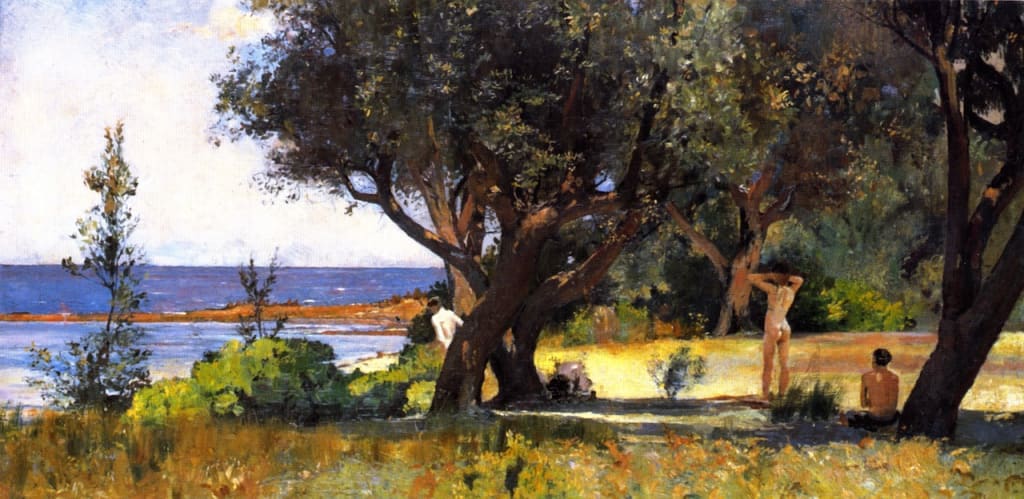
The Sunny South Tom Roberts
English-born Australian artist Tom Roberts was a key member of the Heidelberg School art movement also known as Australian Impressionism. This artwork was created in 1887 and depicts a group of nude women swimming at Ricketts Point in Beaumaris, Victoria, a suburb of Melbourne, Australia.
Golden Summer, Eaglemont Arthur Streeton
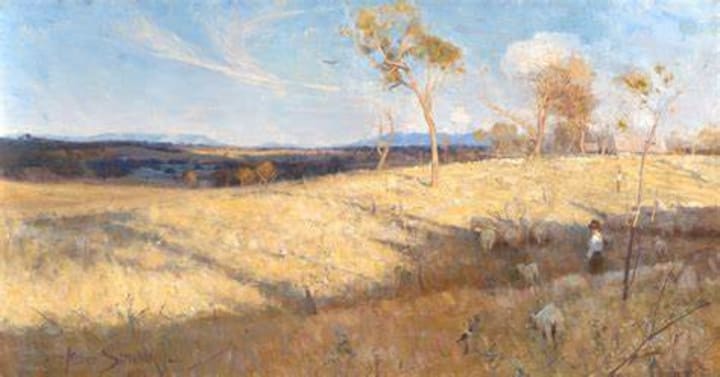
Australian landscape artist Arthur Streeton created this artwork in 1889. The painting depicts bright, undulating plants that reach from Eaglemont an “artists camp” to the distant Dandenong Ranges located outside Melbourne, Australia. The artwork is notable for its heavy coat of paint and is a classic example of Streeton’s unique, high-keyed blue and gold palette, which he referred to as “nature’s color scheme in Australia.
Down on His Luck Frederick McCubbin
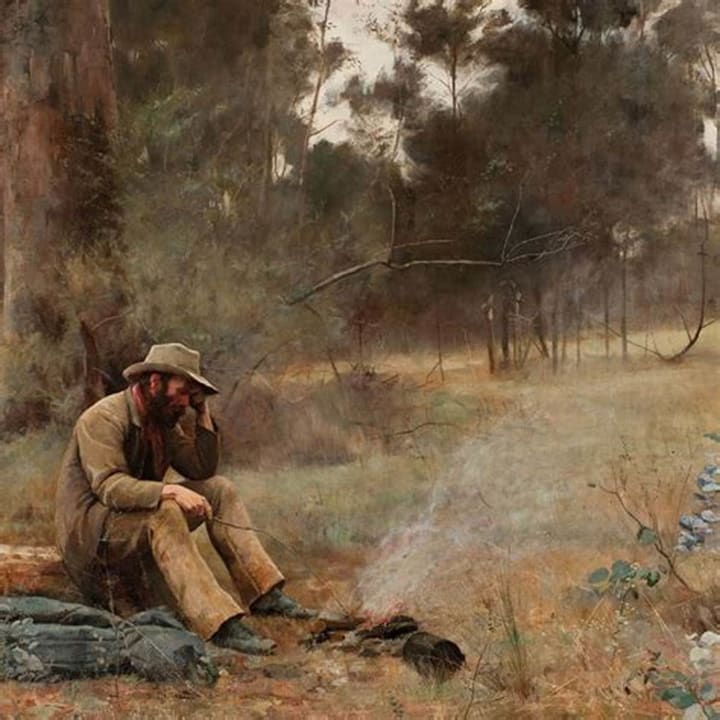
Australian artist Frederick McCubbin created this artwork in 1889. It depicts a disappointed swagman sitting beside a campfire in the middle of nowhere, thinking over his misfortune. McCubbin’s model was a friend and prominent tobacconist in Melbourne. The setting is the Box Hill artist’s camp outside of Melbourne.
The Pioneer Frederick McCubbin
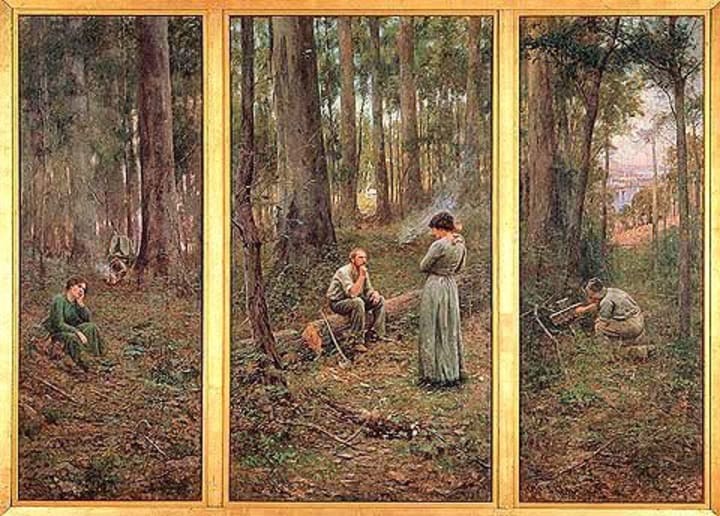
Australian artist Frederick McCubbin created this artwork in 1904. It is a triptych with three panels showing a family making a living in the Australian wilderness. The three panels depict a farmer who has selected land to clear and cultivate and his family.
The Big Picture Tom Roberts
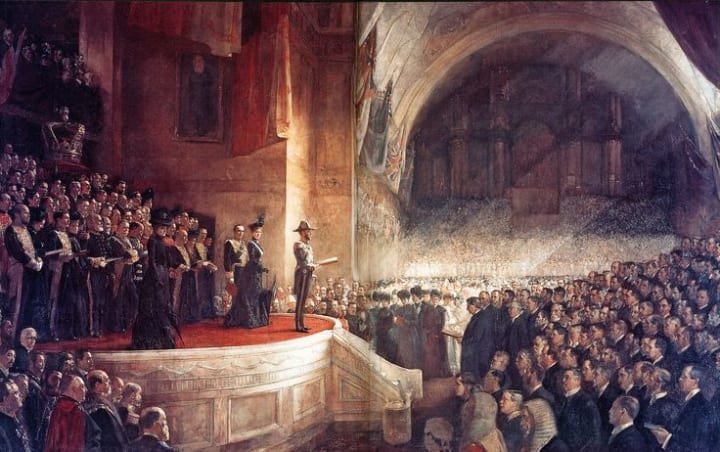
English-born Australian artist Tom Roberts created this artwork in 1903. The painting depicts the inauguration of the First Parliament in Australia on May 9, 1901, at the Royal Exhibition Building in Melbourne. Officially the painting could be titled The Opening of the First Parliament of the Commonwealth of Australia by H.R.H. The Duke of Cornwall and York, later H.M. King George V.
The Sock Knitter Grace Cossington Smith
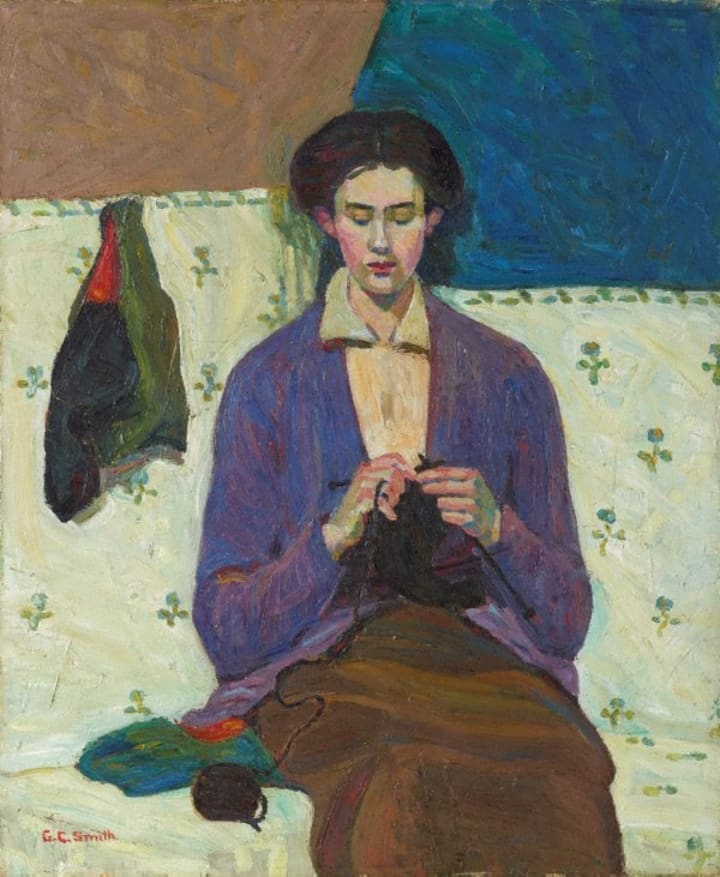
Australian artist and pioneer of modernist painting in Australia Grace Cossington Smith created this artwork in 1915. It depicts a lady thought to be her sister knitting a sock. It was Smith’s first artwork to be displayed and is regarded as the first post-Impressionist painting exhibited in Australia.
Central Australian Landscape Albert Namatjira
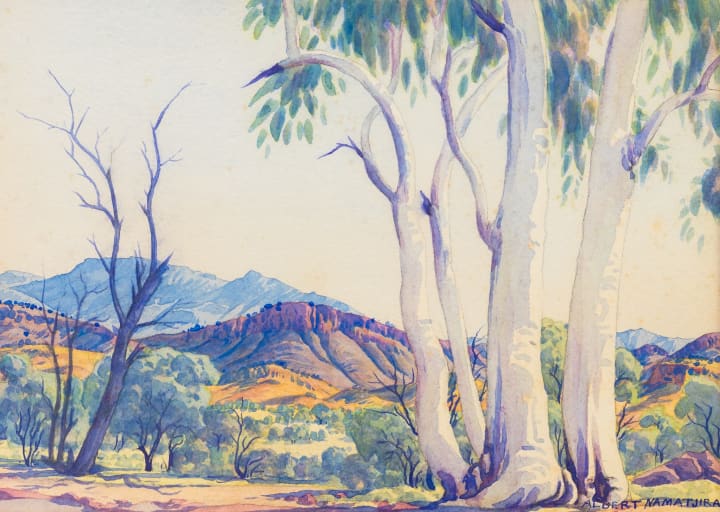
Arrernte artist Albert Namatjira came from the MacDonnell Ranges in Central Australia. He is considered to be one of the most notable Australian artists. He was fascinated by the Central Australian landscape and one of his earliest landscapes in 1936 depicts a country of rolling green hills. In 1934 Namatjira became attracted to Western-style painting influenced by two artists from Melbourne, Australia, Rex Battarbee and John Gardner. In his artwork, he emphasizes on both the harsh geological characteristics of the land and the unique Australian flora.
Collins St. 5 PM John Brack
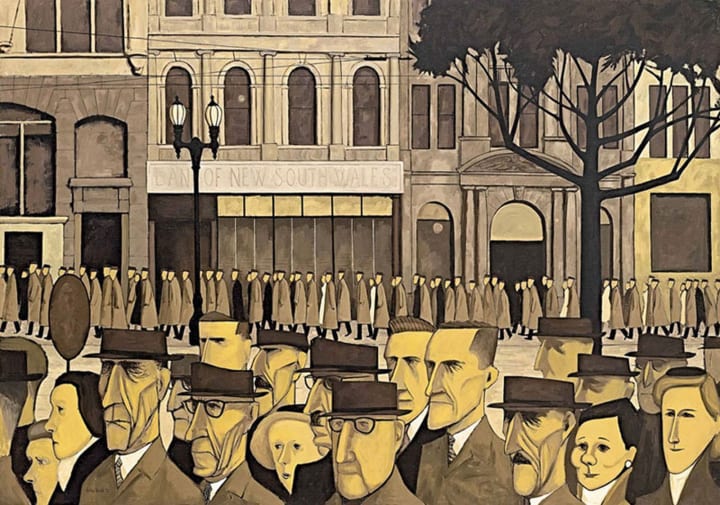
Australian artist John Brack created this artwork in 1955. It depicts office employees walking along popular Collins Street in Melbourne, Australia at the end of the work day. He shows the workers to be wandering like sleepwalkers, thinking only of getting home. Brack was inspired to create this painting after reading “The Waste Land” a 1922 poem by T.S. Eliot.
Art, Life, and the Other Thing Brett Whiteley
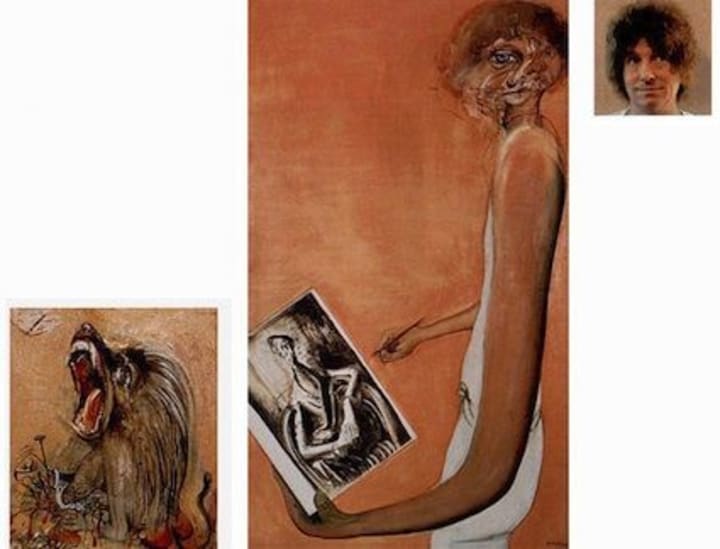
Australian artist Brett Whiteley created a triptych painting that was awarded the Archibald Prize in 1978. In the artwork, the figure's features are confused and exaggerated, his arms, legs, and torso and too long and lanky. In his hands is a portrait of the artist himself. On the left side of the triptych is a medium-sized oil painting depicting a crazy baboon, imprisoned and chained, with cuts and wounds that have been inflicted by the nails piercing its hands and wrists. It has crazy eyes and a gaping mouth.
Big Yam Dreaming Emily Kame Kngwarreye
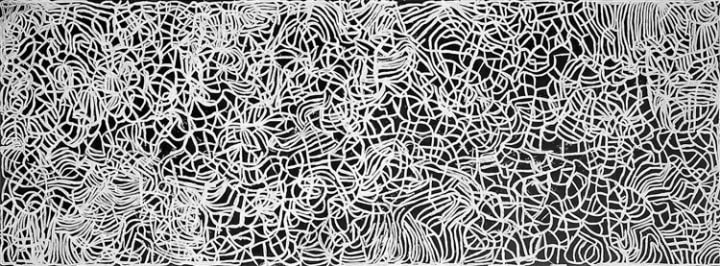
Aboriginal Australian artist Emily Kame Kngwarreye came from the Utopia community in the Northern Territory. She completed this large artwork over two days. The artist had assistants prime the canvas in black and once it dried she sat on the canvas and completed the artwork. Her creations often included yam tracks since the yam plant was an essential source of sustenance for the Aboriginal inhabitants. Her middle name Kame refers to the golden bloom of the yam plant that grows above ground.
About the Creator
Rasma Raisters
My passions are writing and creating poetry. I write for several sites online and have four themed blogs on Wordpress. Please follow me on Twitter.
Keep reading
More stories from Rasma Raisters and writers in Art and other communities.
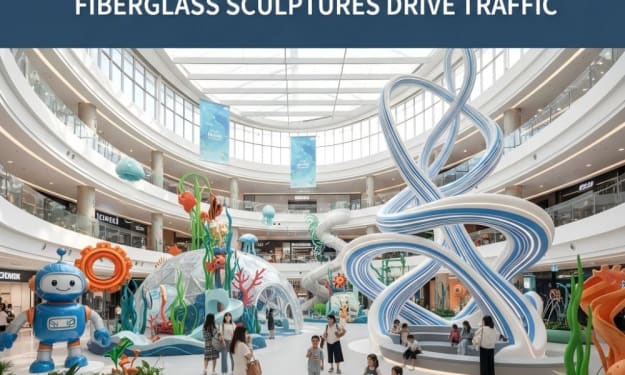
2026 Commercial Space Design:How Fbierglass Sculpture Drives Traffic
Today, offline commercial spaces are facing continuous pressure. With e-commerce offering convenient and fast services, physical stores must showcase unique features to attract customers. In this context, fiberglass sculptures are no longer merely decorative items; they have become visual focal points in shopping malls, brand stores, pop-up shops, and mixed-use commercial projects, playing a crucial role in increasing foot traffic.
By Shenzhen Ruiheng Crafts2 days ago in Art
Why Strategic Branding Is Essential for Long-Term Business Growth
In today’s fast-paced digital environment, businesses face constant pressure to stand out. Consumers are exposed to endless choices every day, making attention harder to earn and trust harder to keep. While quality products and services are important, they are no longer the only factors that determine success. Strategic branding plays a key role in helping businesses grow steadily and remain relevant over time.
By Ayush Bagwari2 days ago in Art


Comments
There are no comments for this story
Be the first to respond and start the conversation.