
Exploring the Timeless Beauty of Utagawa Hiroshige's Artwork
Utagawa Hiroshige's Top 5

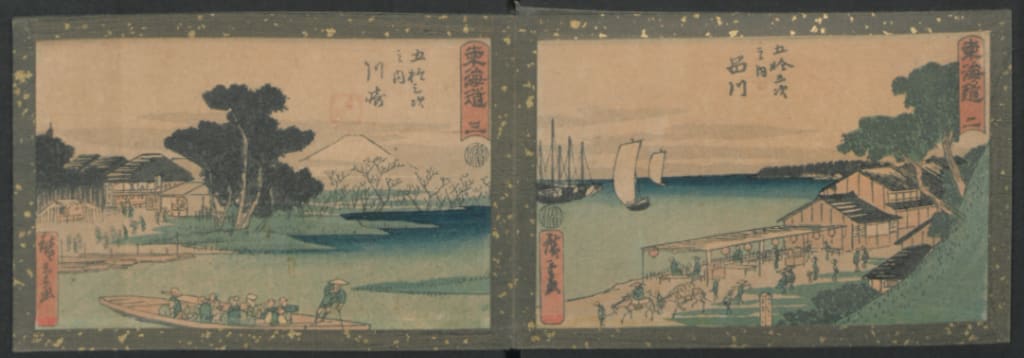
Utagawa Hiroshige, a master of the Japanese ukiyo-e woodblock print, with his evocative depictions of landscapes, cityscapes, and scenes from everyday life. Born in 1797 in Edo (present-day Tokyo), Hiroshige's prolific career spanned the early to mid-19th century, during which he produced an extensive collection of work. Let's delve into some of Hiroshige's most renowned artwork pieces and their publication dates, which showcase his unparalleled talent and artistic vision.
1. "The Fifty-three Stations of the Tōkaidō" (1833-1834):
Hiroshige's "The Fifty-three Stations of the Tōkaidō" is perhaps one of his most famous series, comprising 55 prints (including two additional stations). Published between 1833 and 1834, this series depicts the journey along the Tōkaidō, the ancient highway that connected the shogun's capital of Edo (Tokyo) with the imperial capital of Kyoto. Each print captures the essence of a particular station along the route, showcasing Hiroshige's mastery of composition, perspective, and color. From bustling roadside inns to serene landscapes and iconic landmarks, these prints offer a fascinating glimpse into life during Japan's Edo period.
2. "The Sixty-nine Stations of the Kisokaidō" (1835-1836):
Following the success of "The Fifty-three Stations of the Tōkaidō," Hiroshige embarked on another ambitious series, "The Sixty-nine Stations of the Kisokaidō." Published between 1835 and 1836, this series depicts the journey along the Kisokaidō, a lesser-known highway that connected Edo with the city of Kyoto via a more northern route. Like its predecessor, this series features Hiroshige's signature style, with vivid landscapes, intricate details, and a sense of movement that brings each scene to life. From snow-covered mountains to lush forests and tranquil rivers, these prints showcase the natural beauty of Japan in all its glory.
3. "One Hundred Famous Views of Edo" (1856-1858):
Towards the end of his career, Hiroshige produced what is perhaps his most celebrated series, "One Hundred Famous Views of Edo." Published between 1856 and 1858, this series comprises 118 prints (including some later additions), each offering a unique perspective on life in Edo. From bustling street scenes and bustling markets to tranquil gardens and iconic landmarks, these prints capture the vibrancy and diversity of Japan's capital city during the Edo period. Hiroshige's keen eye for detail and his ability to evoke mood and atmosphere are on full display in this series, which remains a testament to his enduring legacy as one of Japan's greatest printmakers.
4. "Eight Views of Ōmi" (1834):
In addition to his larger series, Hiroshige also produced numerous smaller sets and individual prints throughout his career. "Eight Views of Ōmi," published in 1834, is one such example. This series depicts scenic views around Lake Biwa in Ōmi Province (present-day Shiga Prefecture), each imbued with a sense of tranquility and serenity. From misty mornings on the lake to moonlit nights and vibrant sunsets, these prints showcase Hiroshige's ability to capture the fleeting beauty of nature with grace and elegance.
5. "The Plum Garden in Kamata" (1857):
Another notable work by Hiroshige is "The Plum Garden in Kamata," a single-sheet print published in 1857. This print depicts a tranquil garden scene with blooming plum trees, a popular motif in Japanese art symbolizing the arrival of spring and the renewal of life. Hiroshige's delicate brushwork and subtle use of color imbue the scene with a sense of quiet contemplation, inviting viewers to pause and savor the beauty of the moment.
In conclusion, Utagawa Hiroshige's artwork continues to enchant audiences with its timeless beauty and evocative imagery. From his iconic series depicting Japan's famous highways to his intimate portrayals of everyday life and nature, Hiroshige's prints offer a window into the rich cultural heritage of Japan during the Edo period. Whether capturing the majesty of Mount Fuji or the tranquility of a moonlit garden, Hiroshige's art reminds us of the enduring power of beauty and the importance of preserving and appreciating the natural world.
About the Creator
Janie
Passionate about unraveling the intricate tapestry of art history and contemporary artistic expressions. Beyond brushstrokes and colors, into the mental and physical struggles of artists.
'Till Death We Do Art
There would be nothing divine in this world without art. Nature may surpass the divine to all intents and purposes, but like everything it absorbs and is absorbed by, it remains here, stuck on the surface of this world, ever-present, physically bound to the universe.
By Avocado Nunzella BSc (Psych) -- M.A.P 27 days ago in Art
The Stolen Smile: The True Story Behind the Mona Lisa Theft
In the summer of 1911, the art world experienced one of the most shocking and mysterious events in history when the most famous painting in the Louvre Museum suddenly vanished without anyone noticing until it was already gone. The painting was the Mona Lisa, the masterpiece created by the legendary Renaissance artist Leonardo da Vinci, and at that time it was already admired by artists and historians even though it had not yet achieved the global fame it holds today.
By The Curious Writer2 days ago in Art



Comments