
Exploring How Nature's Balance Shapes Design
r/K Selection Theory in Action

In today's ever-expanding economic realm, the proliferation of design objects flooding the market has emerged as a cause for concern. Regrettably, consumer perspectives have become ensnared by manipulative marketing ploys and advertisements, leading to the accumulation of items with little genuine value. As consumerism evolves into a cultural phenomenon, manufacturers are locked in a perpetual race to unveil the next "must-have" product. This frenzy culminates in a deluge of hastily manufactured design objects, bearing an unsettling resemblance to an overflowing landfill.
To truly fathom the far-reaching implications of this unchecked proliferation, we turn to nature for insight—an ecological principle known as the r/K selection theory. This theory draws parallels between species that prioritize quantity versus those that champion quality. The framework examines numerous factors including environment, mortality rates, survival strategies, lifespan, population dynamics, intra- and interspecies competition, and interactions with other species.
In the 1960s, ecologists Robert MacArthur and Edward O. Wilson introduced the "r-selection" strategy as a response to volatile environments and unforeseen losses. Creatures embracing this strategy prioritize elevating their inherent quality over sheer numerical proliferation. Their focus lies in acquiring essential resources and ensuring their survival. Conversely, the "K-selection" strategy suggests that organisms breed in proportion to the availability of resources, optimizing life within stable conditions. When populations approach their ecological thresholds, their purpose pivots toward adapting to their environment and mastering the art of survival within it.
This contrast between the two strategies was vividly outlined by American biologist Eric R. Pianka in his seminal work "On r/K Selection Theory":
r-selection:
Flourishes in unpredictable climates.
Faces the specter of catastrophic mortality.
Exhibits fluid and unstable population dynamics.
Navigates a competitive landscape with a more relaxed demeanor.
Favors attributes such as rapid development, high "r max," early reproduction, small body size, and single reproduction.
Embraces a shorter lifespan that emphasizes productivity.
K-selection:
Thrives in relatively stable climates.
Encounters mortality linked to population density.
Sustains a more stable and consistent population dynamic.
Engages in heightened competition.
Favors attributes such as slower development, lower resource thresholds, delayed reproduction, larger body size, and repeated reproductions.
Enjoys a more extended lifespan that underscores efficiency.
The r/K selection theory underscores the success of the K selection strategy within secure, stable environments. For these populations, reproduction wanes in significance upon reaching ecological thresholds. The focus shifts toward meticulous resource management and the cultivation of sustainable practices. When applied to industrial design, the K selection strategy champions qualities like supremacy in craftsmanship, optimal production quantities, fierce competitiveness, and long-lasting durability. Despite the intricate production processes and time investments these products entail, they offer heightened user satisfaction and increased endurance.
Conversely, strategy r thrives within unforeseen and dynamic scenarios, prioritizing rapid reproduction as a response to unstable conditions. From an evolutionary standpoint, strategy r demands early growth to mitigate the risk of losing valuable time and resources. Conversely, strategy K involves a more intricate production system, encouraging the development of sophisticated designs. In an era characterized by the ubiquity of design, guiding audiences toward discernment and selectivity becomes crucial.
By infusing design objects with artistic aesthetics, even in the context of simplicity, affordability, and accessibility, a logical and sustainable essence emerges. The outcome? A user experience that is more gratifying, while simultaneously acting as a remedy for the affliction of a "garbage pail of design objects."
For Further Exploration: Alessi's "The Design Factory"
For those eager to explore the intricate relationship between nature and design further, a highly recommended resource is "The Design Factory" by Alessi. Within its pages lies an exploration of how design transcends the boundaries of theory and practice, inviting readers to embark on a journey where innovation and aesthetics intertwine harmoniously. Alessi's insights resonate with the principles encapsulated in the r/K selection theory, accentuating how the pursuit of quality over quantity shapes not just the natural world, but also the captivating realm of design.
About the Creator
Keep reading
More stories from Efe Türkel and writers in Art and other communities.
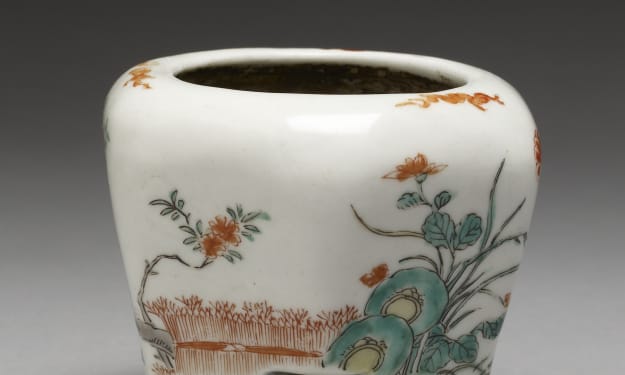
A Migration-Born Tradition: Japanese Porcelains
Japanese art, when evaluated as an artistic style and a unique set of values in the Far East, possesses a distinct language while also engaging in substantial interaction with the surrounding civilizations due to its geographical location. Especially Japan, China, and Korea have been the civilizations that experienced this interaction most extensively, partly owing to forced migrations resulting from wars and cultural exchanges through trade during peacetime. Among these three civilizations, Korea played an undefined role, serving as a geographical and socio-cultural bridge between China and Japan. Although Korean art is not as famous and renowned as Chinese and Japanese arts, it boasts a rich foundation and history comparable to these two civilizations.
By Efe Türkel2 years ago in Art



Comments
There are no comments for this story
Be the first to respond and start the conversation.