
Essential Tips for Towing a Motorcycle with Another Bike
Tow a Motorcycle with Another Motorcycle: A Complete Explanation?

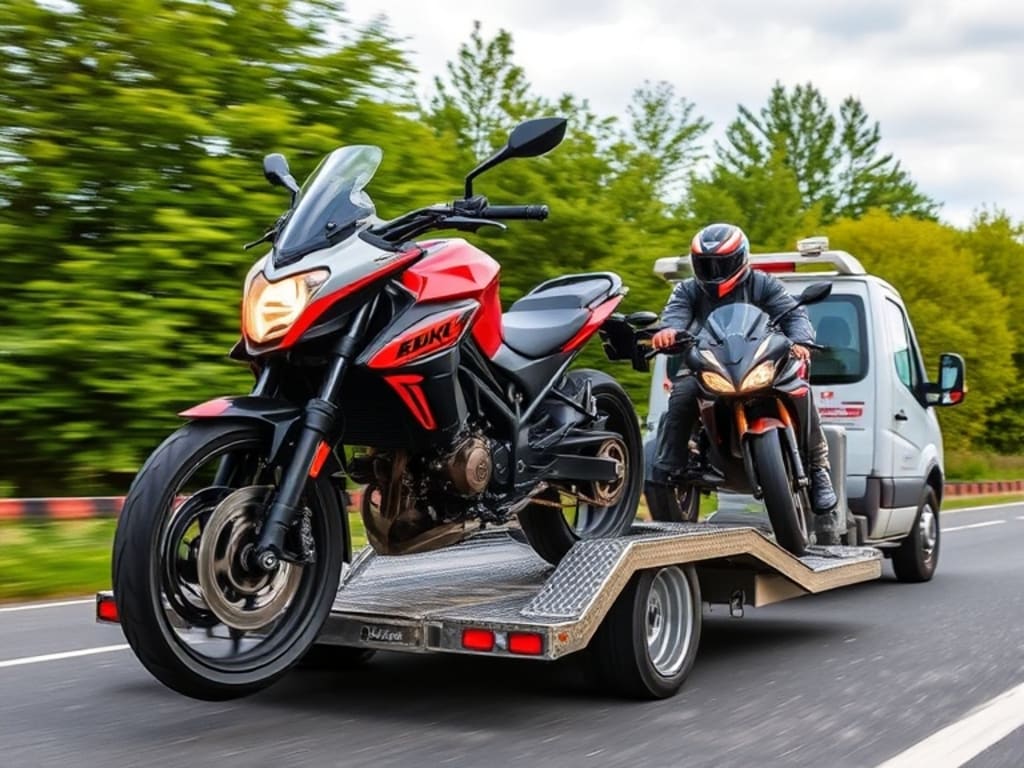
Towing a motorcycle using another motorcycle might seem challenging, but with the right techniques and safety precautions, it can be done effectively. Although most towing is done with a car or truck, sometimes a second motorcycle is the only available option—like when one bike breaks down on a road adventure. Here’s a comprehensive guide on how to safely tow a motorcycle with another motorcycle. The Towing Capacity of motorbike is not very well as compared to car and truck.

Important Considerations
Towing one motorcycle with another is tricky and can even be dangerous if not done correctly. To avoid accidents or damage:
Proper Attachment: Securely attach the tow rope to the rear of the towing bike, making sure it’s aligned with the centerline. For the towed bike, feed the rope between the handlebars and the instrument panel but don’t tie it. Instead, wrap the rope around the handlebars a couple of times and hold it with your left hand, allowing you to release it quickly in an emergency.
Suitable Riders: Both riders should be comfortable and somewhat experienced, as this setup requires quick reflexes and good communication.
Scenario: Towing with a Kawasaki Ninja 250
If you plan to tow a dirt bike like a CRF250R with a street bike, such as a Kawasaki Ninja 250, extra care is necessary:
Weight and Power Considerations: A Ninja 250 has limited towing capacity and may struggle, especially on longer trips or inclines. Towing should ideally be done in short spurts, with frequent breaks to prevent overheating.
Tow Rope or Strap: Attach the rope to a sturdy part of the Ninja’s frame or passenger peg mounts, which can handle the load without damaging the bike.
Planning Stops: Due to the Ninja’s smaller engine, make stops at regular intervals to reduce strain on both bikes.
What You’ll Need
Tow Strap or Rope: Choose a strong, durable nylon strap rated for towing, and long enough to keep a safe distance between the bikes.
Anchor Points: Make sure each motorcycle has secure points to attach the tow strap without damaging parts.
Protective Gear: Both riders should wear full protective gear, including helmets, gloves, and jackets.
Clear Communication Plan: Set up hand signals or a communication system for coordination and emergencies.
Step-by-Step Guide for Towing
Step 1: Secure the Tow Strap
Find solid anchor points on both motorcycles:
Attach the strap securely to the rear frame of the towing motorcycle, ensuring it’s centered and stable.
On the towed bike, feed the strap between the instrument panel and under the handlebars. Wrap it a couple of times around the handlebars and hold the end in your left hand. This method allows for quick release in case of trouble.
Step 2: Maintain a Safe Distance
Keep the strap length around 6-8 feet, providing enough space between the bikes to allow for smooth braking.
Maintain the strap’s tension to avoid jerking, especially when starting or stopping.
Step 3: Communicate and Coordinate with the Other Rider
Agree on hand signals for turns, stops, and speed adjustments.
Both riders should stay alert to road conditions to prevent sudden jerks or potential hazards.
Step 4: Start Slowly
The towing motorcycle should ease into motion gently, preventing strain on the tow strap and ensuring the towed bike starts smoothly.
The rider on the towed motorcycle should keep their feet down initially and let the towing motorcycle take on the primary load until momentum builds.
Step 5: Ride with Caution
Avoid sudden stops, sharp turns, or high speeds. The lead motorcycle should maintain a steady, moderate pace and signal clearly before slowing or stopping.
Both riders should stay focused, aware of surroundings, and watchful for any potential road hazards.
Step 6: Regularly Check Strap Tension
The towed motorcycle rider should monitor the tension of the tow strap.
If the strap becomes too loose or tangled, both bikes should stop, readjust, and ensure everything is properly secured before continuing.
Tips for a Safe Towing Experience
Choose a Safe Route: Use low-traffic roads with minimal turns, intersections, or stops. Avoid highways and crowded areas where maneuvering is challenging.
Use Mirrors: Both riders should regularly check mirrors to monitor traffic and the strap’s condition.
Stay Alert for Hazards: Watch for potholes, debris, or road obstacles that could destabilize the towing setup.
Practice Emergency Stops: Before setting out, practice a few stops in a safe area to understand how the setup handles braking.
When Not to Tow with Another Motorcycle
There are times when towing with a motorcycle is not safe. Avoid towing if:
Steep Inclines or Declines: Steep slopes put extra strain on both motorcycles and complicate braking.
Rough Terrain: Uneven or off-road surfaces make towing dangerous as they increase the risk of strap snapping or instability.
Long Distances: Towing over long distances can stress the engines and towing mechanisms on both bikes. In such cases, consider calling for roadside assistance.
Final Thoughts
Towing a motorcycle with another motorcycle is best for short distances and emergencies. With the right equipment, clear communication, and safety precautions, it’s possible to transport a disabled bike to a secure location or repair facility. To ensure a safe journey:
Ride Slowly and Carefully: Keep a moderate speed, avoid sudden movements, and signal clearly.
Communicate Effectively: Use hand signals or a communication device to stay in sync with the other rider.
Stay Aware of Surroundings: Keep an eye on road conditions and potential hazards.
In my experience, I’ve successfully used this technique to tow multiple bikes in difficult situations. The most recent case was towing an MV Agusta 750/4 that had a dropped clutch. While towing motorcycles can be challenging, with careful technique, safety measures, and focus, it can be a reliable solution when you’re in a pinch.
Quick Tips to Remember
Towing Distance: Keep it short, especially with smaller bikes.
Safety Gear: Always wear full gear.
Emergency Release: Keep the rope wrapped but easily releasable.
Towing one motorcycle with another should always be a last resort, but with these precautions and methods, you can navigate a tough situation more safely and effectively.
About the Creator
car towing service
Abdullah is the owner of a car recovery and towing service company operating across the UAE.
Abdullah Car Recovery and Towing Service
Keep reading
More stories from writers in Art and other communities.
The Best Philosophy in the World Is the One You Can Live
Ask ten philosophers what the best philosophy in the world is, and you will receive at least ten different answers—possibly delivered with footnotes, counterarguments, and mild contempt for the other nine. This disagreement is not a flaw of philosophy; it is its essence. Philosophy was never meant to be a universal prescription handed down like a rulebook. It exists to help human beings live better lives. By that standard, the best philosophy in the world is not the most elegant or complex—it is the one that can be lived.
By Fred Bradford5 days ago in Art
When the Artist Becomes the Art
We like to think we can separate the art from the artist, but can we, really? Art is born from the same place as sin. It mainly emerges from conflict: between what is felt and what is permitted, between the self that is lived and the self that must be hidden. No figure embodies this tension more vividly than Oscar Wilde: a man who transformed his own contradictions into style, wit, and devastating clarity. His novel The Picture of Dorian Gray is not merely a tale of aesthetic decadence but the battleground on which this question is fought.
By Yasmine Lagrasabout 15 hours ago in Art
How to Succeed at the Benson Directory®
Congratulations and welcome to the Benson Directory® employee #22391! As our newest call handler, you will have the privilege of speaking with dozens of unique and interesting people on a daily basis as well as the opportunity to earn bonuses for high performance. Contained within this handbook you will find a set of ease to follow instructions designed to help you settle in to your new role and begin paving the way to success.
By S. A. Crawford4 days ago in Fiction




Comments
There are no comments for this story
Be the first to respond and start the conversation.